
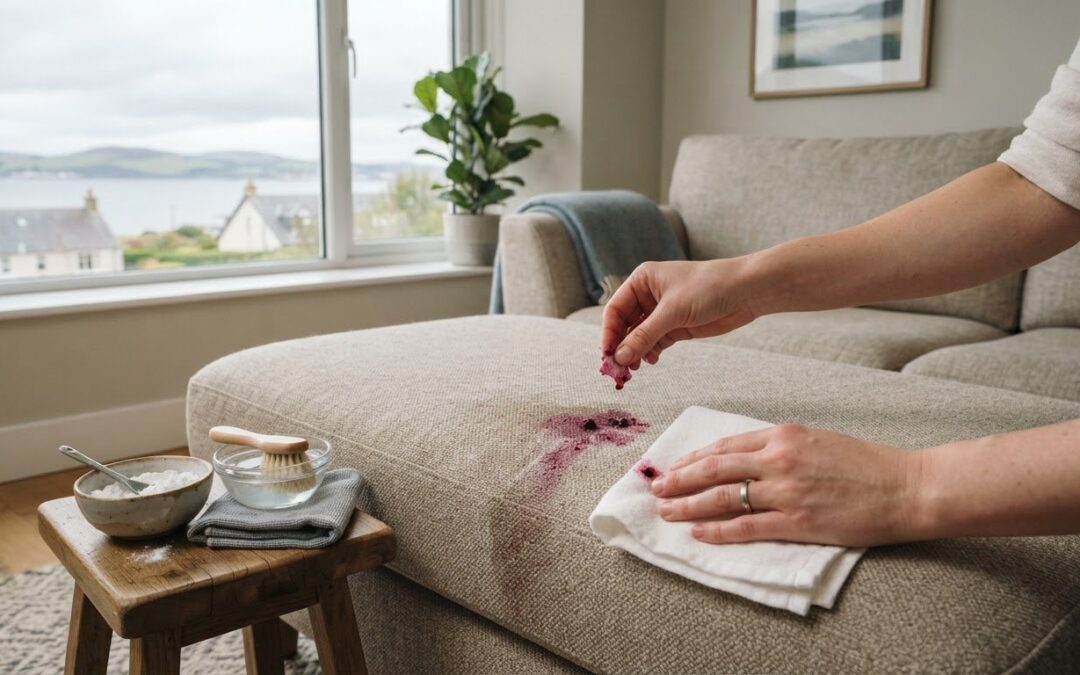
The quickest way to tackle a food stain on a sofa is often to resist the urge to scrub. When removing food stains from a sofa in Fife, lift away any solid food, then blot from the edge of the mark towards the centre with clean absorbent towelling. For blackcurrant juice, dab gently with cold water, then blot dry.
It’s tempting to reach for a cleaning product as soon as a vivid spill lands on upholstery. But the right approach depends on the fabric, and rubbing can spread the mark or damage fibres. This guide explains how to act promptly, test a cleaner discreetly and prevent future marks, with practical steps for grease, blackcurrant juice, chow mein and soy sauce. A careful response can keep a small accident from becoming a larger one.
Key Takeaways
- For grease, use an absorbent powder before vacuuming, and avoid hot water that can drive the mark deeper into upholstery.
- Blot spills promptly rather than rubbing, and work from the outside of the mark towards its centre.
- For blackcurrant juice, gently dab with a clean cloth and cold water, then blot the area dry.
- Lift chow mein and other solid food carefully, then blot away excess moisture before treating the remaining mark.
- Choose a cleaning approach suited to the sofa fabric, and test any stain remover on a discreet area first.
Removing oil, fat and grease from upholstery
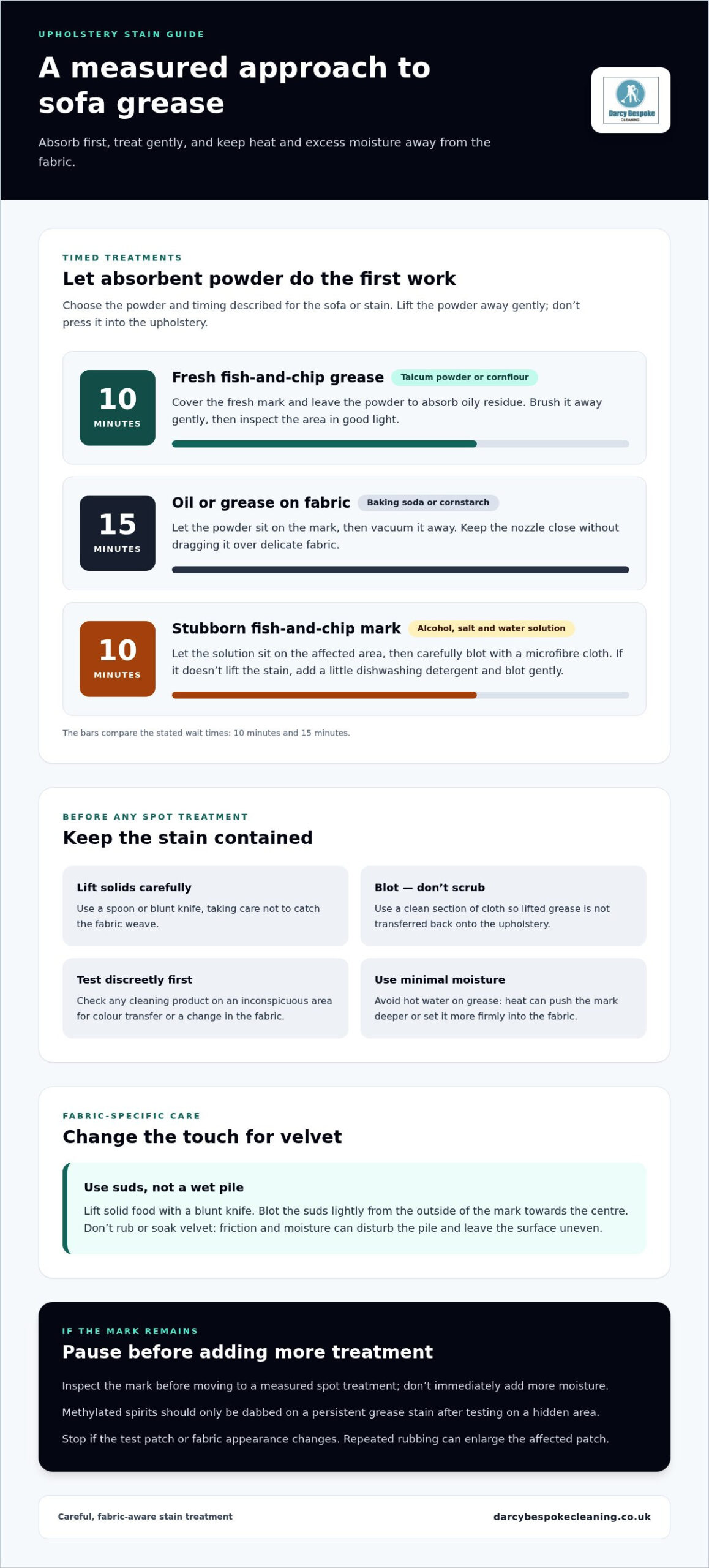
Start by absorbing the spill, then consider careful spot treatment, keeping excess moisture away from the sofa. Avoid hot water on grease, as it can push the mark deeper into the fabric.
-
Absorb Fish-and-Chip Grease with Powder
Cover fresh fish-and-chip grease with talcum powder or cornflour and leave it for 10 minutes. The powder helps absorb oily residue before you brush it away gently. Avoid pressing it into the fabric, which can spread grease through the fibres. Once the powder is removed, inspect the mark in good light; if it remains, move to a measured spot treatment rather than adding more moisture immediately.
-
Tackle Grease with Dishwashing Detergent
For a stubborn fish-and-chip mark, let an alcohol, salt and water solution sit on the affected area for 10 minutes, then carefully blot it with a microfibre cloth. If the treatment doesn’t lift the stain, add a little dishwashing detergent and blot gently. Don’t scrub or pour detergent directly over a wide area. Use a clean section of cloth as you work, so lifted grease isn’t transferred back onto the upholstery.
-
Remove Grease from Fabric Sofas
On a fabric sofa, first lift any solid residue with a spoon or blunt knife, taking care not to catch the weave. For oil or grease, baking soda or cornstarch can sit on the mark for 15 minutes before vacuuming. Keep the vacuum nozzle close without dragging it across delicate fabric. Avoid hot water: heat can set grease more deeply, making the remaining mark harder to treat.
-
Handle Velvet with a Light Touch
On velvet, gently lift solid food with a blunt knife, then use the suds of a cleaning solution rather than wetting the pile. Blot from the outside of the mark towards the centre with light pressure. This helps contain residue while limiting rough handling. Don’t rub or soak velvet: friction and moisture can disturb the pile and leave the surface uneven.
-
Assess Persistent Oil Marks Carefully
If grease remains after powder treatment, don’t apply heat or repeatedly wet the upholstery. Test any cleaning product on an inconspicuous area before treating a persistent grease mark. Check for colour transfer or a change in the fabric before treating the stain. Dab carefully and stop if the material’s appearance changes. Further rubbing can enlarge the affected patch.
For fish-and-chip grease, carefully blot the alcohol, salt and water solution with a microfibre cloth. If it doesn’t work, try a little dishwashing detergent. On upholstery, cover a grease mark with talcum powder, let it dry, then vacuum it away.
For a persistent grease stain on upholstery, dab with methylated spirits only after testing them on a hidden area. For oil, fat or grease on fabric, work liquid detergent or stain treatment into the mark, then wash at as hot a temperature as the fabric allows.
How Can I Prevent Future Sofa Stains?
Reduce avoidable marks by checking the upholstery instructions, keeping food away from delicate fabrics and dealing with spills promptly. A clean paper towel and a tested cleaning method are more useful than vigorous scrubbing.
Check the sofa’s care label before choosing a cleaner, then test it on a small, hidden area. Follow the label’s instructions and check for colour transfer or texture changes before treating a visible stain.
For food stains on leather, use a suitable cleaner cautiously and follow the sofa’s care instructions. Avoid soaking the leather or applying a product you haven’t tested.
-
Check Care Labels and Test Removers
Read the upholstery care label before treating a mark, as its instructions help determine the right approach for the fabric. Apply a small amount of stain remover to a discreet area first, then check for colour transfer or changes in texture. Treat the visible stain only if the test patch looks unaffected, and continue to follow the label’s guidance.
-
Know When to Call a Professional
Stop DIY treatment if the fabric’s care instructions rule out your method, a test patch changes the material, or careful blotting leaves the stain. Repeated products and rubbing can spread a mark or affect upholstery fibres. For a stubborn stain or uncertainty about safe treatment, professional stain removal can help protect the sofa. This is especially useful for delicate or unfamiliar fabrics.
- Keep meals and drinks on a stable table rather than balancing them over a fabric sofa. If a spill happens, lift solid food with a spoon and absorb liquid with clean paper towel. Blot rather than rub, working from the outside of the mark towards the centre. A prompt, controlled response helps limit how far residue travels through the upholstery.
- For red wine on fabric, blot excess liquid with a towel, dab gently with cold water, then wash as usual if the fabric can be removed and laundered. On carpet, blot immediately, sprinkle salt over the stain, leave it for a few minutes, then vacuum. Once the salt is removed, blot with one part white vinegar and two parts water.
- Rinse a treated fabric sofa by blotting with a clean cloth dampened with water to lift soap residue. Avoid soaking the upholstery, and press with a dry towel afterwards to absorb remaining moisture. Let the area dry fully before using the seat. For ink, don’t rub or use an untested solvent; blot carefully and test any remover on a hidden patch first.
For added support with prevention, fabric protection for upholstery may suit a sofa that sees regular use.
Removing blackcurrant juice from upholstery
When removing food stains from a sofa in Fife, blackcurrant juice calls for a calm, controlled response. Its strong colour can spread if rubbed, so use clean cloths and keep each treatment within the affected area.
- Lift pulp or solid residue with a spoon before treating the juice. Don’t press it into the upholstery, especially near seams where residue can collect. Blot the liquid with a clean microfibre cloth, switching to a dry section as it absorbs the spill. Don’t rub back and forth: friction can spread the colour and disturb the fabric’s fibres.
- Dab the mark gently with a clean cloth dampened with cold water. Start at the outer edge and move towards the centre with small, controlled touches. This helps contain the juice rather than spreading it into a wider patch. Afterwards, blot with a dry cloth to lift moisture from the upholstery instead of scrubbing the surface.
- If colour remains, apply a little mild dish soap mixed with warm water to a clean cloth. Dab the affected area rather than pouring the solution onto the sofa. Work in light passes and check the cloth as you go: visible colour transfer means juice is lifting. Avoid making the upholstery wet, as excess liquid can carry residue deeper into the fabric.
- Lift soap residue by blotting with another clean cloth dampened with plain water. Use a fresh section of cloth for each pass so detergent and loosened juice aren’t transferred back. Press a dry towel over the treated area to absorb moisture. Let the fabric dry before judging the result, as damp upholstery can make any remaining mark difficult to assess.
- Test any dedicated sofa stain remover on a small, inconspicuous patch before using it on blackcurrant juice. Check for colour transfer or changes in texture, and follow the product directions only if the test area remains unaffected. Don’t combine cleaners or apply an untested product to the stain: upholstery materials can respond differently to the same treatment.
- If considering hydrogen peroxide for a persistent blackcurrant mark, test it on a hidden area first to check that it doesn’t bleach the fabric. Treat the visible stain only if the test patch shows no colour change. Apply cautiously and blot rather than rubbing. When removing food stains from a sofa in Fife, stop if the fabric lightens or its texture changes; further treatment could enlarge the affected area.
Removing chow mein and soy sauce stains
After a takeaway spill, lift the food first, then treat the remaining mark carefully. Chow mein can leave solid residue and moisture, while soy sauce calls for controlled blotting.
- Pick up dropped chow mein with a spoon, lifting noodles and vegetables without dragging them across the sofa. Remove small fragments separately so they don’t smear sauce onto clean upholstery. Carefully lift food caught between cushions before wiping the area. Avoid pressing the spill down, which can push residue further into the fabric and enlarge the affected patch.
- Blot excess moisture from the spill with a clean, absorbent cloth. Press vertically, then lift the cloth; don’t rub back and forth over the sofa. Switch to a dry section as the cloth picks up sauce. This controlled approach helps prevent liquid from spreading across the furniture or deeper into the upholstery.
- For a chow mein or stir-fry mark, lightly apply a water-and-vinegar solution to the affected area, then blot it dry. Use only a little, rather than saturating the fabric, and keep the treatment within the visible spill. Check the sofa’s care instructions and test the solution on a hidden patch first, especially if the upholstery is delicate or richly coloured.
- For soy sauce, gently blot the dark liquid with a clean microfibre cloth. Then dab with mild dish soap mixed with warm water, using a fresh part of the cloth for each pass. Don’t pour the mixture directly onto the sofa. Work from the stain’s edge towards its centre, so the treatment doesn’t carry colour into unaffected upholstery.
- Lift soap residue by blotting with a clean cloth dampened with plain water. Follow with a dry towel, pressing lightly to absorb remaining moisture. Don’t leave detergent in the fabric, as residue can attract dirt. Let the treated patch dry before checking whether the soy sauce or chow mein mark remains.
- Keep baking soda advice specific to the surface: it may be recommended for chow mein or stir-fry spills on carpet, but it isn’t a default sofa treatment. Upholstery varies in fibre and finish. Use a method suited to the sofa’s care instructions, and avoid combining cleaning solutions or repeatedly wetting a stubborn mark.
- Stop if a test patch changes colour or texture, or careful blotting leaves a stubborn stain. Repeated scrubbing can damage fibres and spread residue beyond the original mark. For unfamiliar upholstery or a persistent takeaway spill, professional stain treatment is a practical next step, particularly if home methods risk altering the sofa’s appearance.
Which cleaning products are safe for different sofa fabrics
Choose a cleaning method based on the sofa’s material and care instructions, not just the stain. A product suitable for one fabric may discolour or mark another.
- Read the upholstery care label before applying water, detergent or stain remover. Follow its cleaning guidance and avoid products that conflict with it. If the label is missing or unclear, don’t guess with a strong solution. Fabric type, colour and finish all affect how a sofa responds to cleaning.
- Test a stain remover on a small, concealed patch, such as the back of a cushion or beneath the seat. Apply a little, then check for colour transfer, fading or a change in texture. Let the patch dry before judging the result. If it looks different, don’t use that product on the visible stain.
- For food and drink marks on leather, use a damp cloth with equal parts water and dish soap. Wring the cloth so it’s damp, not dripping, then dab the mark gently. Don’t soak the leather or pour the mixture directly onto it. Work in a small area, using a clean part of the cloth as residue lifts.
- For fabric upholstery, start with a clean cloth and a small amount of suitable cleaner. For fabric upholstery, use only a cleaner compatible with the sofa’s care instructions and test it first. Blot rather than scrub, then use a separate water-dampened cloth to lift soap residue. Press with a dry towel to absorb moisture.
- Treat velvet with particular care, as rubbing and excess water can disturb its pile. If there’s dried food, lift the solid residue with a blunt knife, keeping the blade shallow. Use only the suds of a cleaning solution, then blot from the outside of the stain towards the centre. Don’t saturate the velvet or brush the pile aggressively.
- Don’t combine cleaning products or immediately switch to a stronger solution if a mark remains. Fibres and finishes can react differently, and repeated wetting may spread residue. Check the sofa’s care label again, and stop if a test area changes colour or texture. For delicate upholstery, a fabric-specific approach is safer than experimenting with household chemicals.
- For continued care after stain removal, consider professional fabric protection for upholstery. It can form part of a considered maintenance routine, alongside prompt blotting and care-label-led cleaning. A suitable option depends on the fabric and its finish, so keep the sofa’s material in view when deciding how to protect it.
Darcy Bespoke Cleaning: Domestic Carpet Cleaning
Darcy Bespoke Cleaning provides Sofa Cleaning for food marks that remain after careful home treatment or need a fabric-conscious approach. Its Domestic Carpet Cleaning can also help address spills that reach the carpet, so the wider area affected by a mealtime accident is treated.
Professional cleaning is a sensible next step when a stain persists, the upholstery is delicate, or more DIY treatment could affect its colour or texture. Darcy Bespoke Cleaning serves domestic clients across Fife and the surrounding areas, tailoring its cleaning to the upholstery and material.
For support with a sofa or carpet stain, contact Darcy Bespoke Cleaning.
Keep Your Sofa Ready for Everyday Living
A considered care routine can help preserve the comfort and appearance of your living space. Keep a clean cloth close at hand, follow the upholstery care label and treat each mark according to the fabric instead of reaching for the strongest cleaner. If a stain resists careful home treatment, professional cleaning offers a practical next step without further experimentation.
If you need help removing food stains from a sofa in Fife, Darcy Bespoke Cleaning offers Sofa Cleaning, Domestic Carpet Cleaning and Commercial Carpet Cleaning. The right service depends on whether the stain is on upholstery, a household carpet or a commercial interior.
Take the next step at your own pace. Arrange a conversation with Darcy Bespoke Cleaning about the cleaning support that suits your space. With a thoughtful approach, you can keep your home feeling welcoming and make future spills easier to manage.
Frequently Asked Questions
How to remove fresh food stains from a fabric sofa safely?
Lift solid food with a spoon without spreading it, then blot the mark with clean, absorbent towelling. Don’t scrub or use abrasive materials: friction can damage the fabric and push residue deeper. If a cleaning product suits the sofa’s care instructions, test it on a hidden area first. Use as little liquid as possible, and flush away product only with clean, warm water.
How to remove dried food stains from sofa upholstery?
Gently lift loose, dried residue with a blunt edge without scraping the upholstery. Then dab the remaining mark with a small amount of appropriate fabric cleaner on absorbent towelling, working towards the centre with circular motions. Don’t soak the area or scrub, as this can spread the stain or disturb the pile. Check the sofa’s care label first, and arrange professional stain removal if the fabric is delicate or the mark persists.
How to remove grease, tomato, chocolate and curry stains from a sofa?
Treat each stain according to its residue: carefully lift solid chocolate or sauce, then blot rather than rub. For grease, avoid adding water straight away, as it may spread the oily mark; use a product suitable for the upholstery and test it out of sight first. Tomato and curry can leave strong colour, so work gently and don’t use household bleach. For removing food stains from a sofa in Fife, professional treatment can help with stubborn marks or delicate fabrics.
Are sofa cleaning services in Fife available for food stain removal?
Yes. Darcy Bespoke Cleaning offers Sofa Cleaning and Stain Removal Services in Fife, with treatment selected for the upholstery and the type of mark. This can be useful when a stain has dried, covers a larger area, or remains after careful blotting at home. Share what caused it and any cleaning products already used when you enquire. The team can advise on the next step; call 07592 054756.