
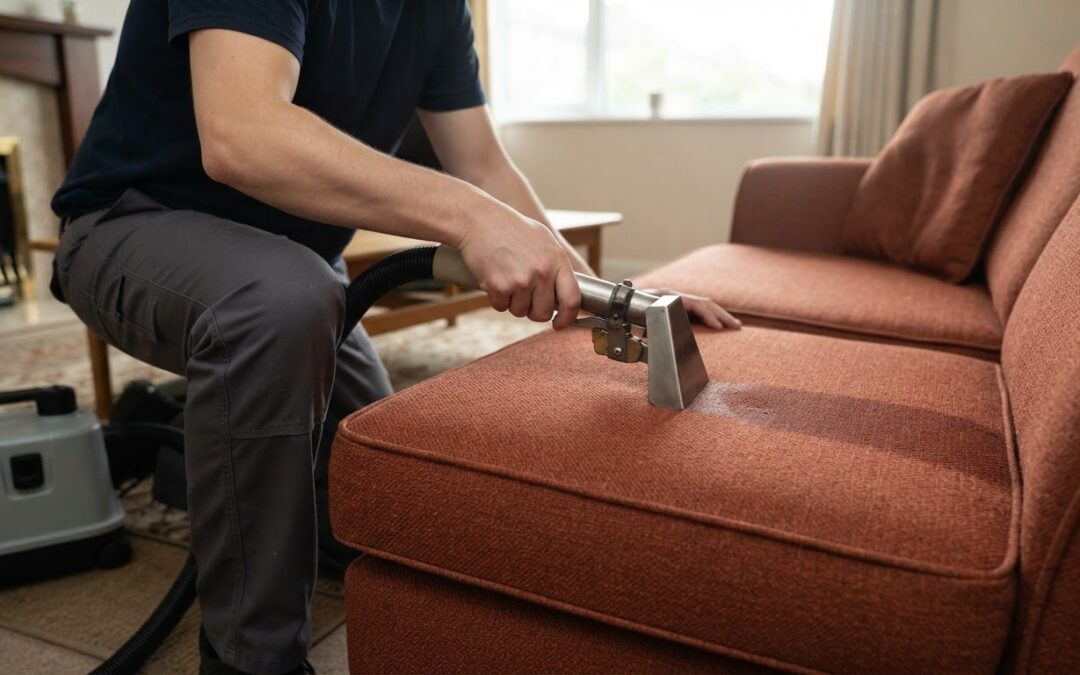
A fixed cover doesn’t automatically rule out a professional clean. In many cases, you can have a sofa with a non-removable cover professionally cleaned, with the method chosen to suit its fabric and condition.
It’s understandable to worry that spills, everyday soil or lingering odours may be difficult to tackle when the covers can’t be taken off. The key is to avoid treating every fabric the same: the material and its care instructions help determine whether deep cleaning or upholstery dry cleaning is the more suitable approach.
This guide explains what a professional can do, what affects the cleaning method and how to care for your sofa between cleans. You’ll also learn when upholstery may need more than routine upkeep, so you can make an informed decision and care for it with confidence.
Key Takeaways
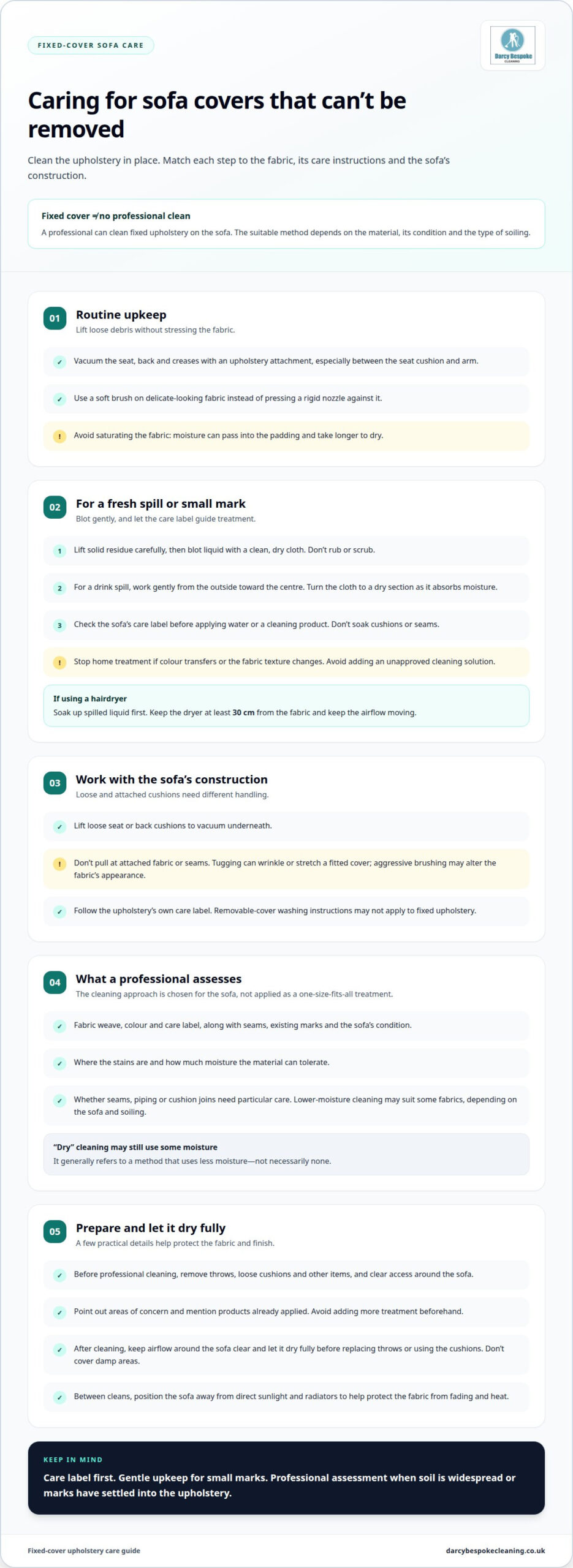
- Blot a spill with a dry cloth as soon as possible; if you use a hairdryer, keep it at least 30 cm from the fabric.
- Reduce fading and heat exposure by positioning your sofa away from direct sunlight and radiators.
- Learn what a professional deep clean can address when a sofa’s covers cannot be removed.
- Understand how upholstery dry cleaning may suit some fixed-cover sofas and what the method involves.
1. Are fabric sofas hard to keep clean?
Fabric sofas collect crumbs, dust and everyday marks, but prompt, careful attention can limit visible staining. A spill may show more clearly on a plain cushion than on a patterned arm, while textured upholstery can hold debris between its fibres. The right response depends on the substance, the fabric and the sofa’s care instructions.
Act promptly when liquid lands on the upholstery. Blot with a clean, dry cloth, lifting the moisture rather than rubbing it across the fabric. For a drink spill, work gently from the outside towards the centre to help prevent the damp patch from spreading. Turn the cloth to a dry section as it absorbs liquid. Don’t scrub: this can disturb the surface and push residue further into the fibres.
Soak up spilled liquid with a dry cloth before using a hair dryer, which helps avoid water marks. If you use a dryer to dry sofa fabric, keep it at least 30 cm away. Keep the airflow moving rather than holding it over one spot. Follow the sofa’s care-label instructions before applying any cleaning product or moisture, as different fabrics can need different treatment.
For food or a muddy paw print, carefully lift away any solid residue before blotting. Don’t add a cleaning solution without checking the fabric’s care instructions; excess liquid or an unsuitable product can leave another mark. Since a fixed cover can’t be removed for separate washing, avoid soaking the cushion or its seams.
2. Hiring a professional for a fabric sofa deep clean
A professional clean can address soil across fixed upholstery without removing the cover. To assess the fabric, an upholstery cleaner examines its weave, colour, care label, seams and existing marks. These details help determine a suitable method and how much moisture the material can tolerate.
To prepare a sofa with a non-removable cover, remove throws, cushions and loose items, then clear access around the furniture. Point out areas of concern and mention any products already applied. Avoid adding more treatment beforehand, as residues can affect how the fabric responds to cleaning.
Drying is part of the process. A professional manages moisture during cleaning and considers airflow around the sofa afterwards; trapped dampness can prolong drying and affect the finish. Follow the upholstery’s care instructions, including guidance on products and drying. The care label is a useful reference, but it doesn’t mean a general-purpose cleaner is automatically suitable.
Fabric care kits and fabric protection products also need careful use. Read each product’s instructions and check that it suits the sofa’s fabric before applying it. A kit may help with routine spot care, but it doesn’t replace a deep clean when soil is widespread or marks have settled into the upholstery.
A reputable UK upholstery cleaner explains the fabric assessment, proposed method and preparation needed before work begins. Clear communication about stain treatment and drying helps set practical expectations. For guidance tailored to a fixed-cover sofa, arrange a professional fabric assessment before choosing a cleaning method.
3. Cleaning fixed sofa covers
A fixed cover stays attached to the sofa frame, so cleaning must suit the upholstery in place. For routine care, vacuum the seat, back and creases with an upholstery attachment. Pay particular attention to the gap between the seat cushion and arm, where crumbs and dust collect. Use a soft brush on delicate-looking fabric instead of pressing a rigid nozzle against it.
Clean regularly, but avoid saturating the fabric during routine care. Moisture can pass through the cover into the padding, where it may take longer to dry. For a small, fresh mark, blot gently with a clean cloth and stop if the colour transfers or the texture changes. That’s a sign to avoid further home treatment.
Some fixed-cover sofas have loose seat or back cushions, while others have cushions attached to the frame. Treat each part according to its construction: lift loose cushions to vacuum underneath, but don’t pull at attached fabric or seams. Tugging can wrinkle or stretch a fitted cover, while aggressive brushing may leave a visibly altered patch.
Check the sofa’s care label before applying water or a cleaning product. Follow its instructions, and don’t assume that washing instructions for a removable cover apply to upholstery that can’t be taken off. If the label directs dry cleaning or restricts water-based treatment, use that guidance rather than testing a household cleaner on the visible seat.
After cleaning, allow the sofa to dry fully before replacing throws or using the cushions. Keep airflow around the furniture clear, and don’t cover damp areas. These simple steps help maintain the fabric’s finish between deeper cleans.
4. Professional upholstery dry cleaning
Yes, a professional can clean a sofa with a non-removable cover. Lower-moisture cleaning is one possible approach, chosen according to the fabric, its care instructions and the type of soil. “Dry” cleaning doesn’t necessarily mean no moisture is used; it generally refers to a method that uses less moisture.
Before selecting a method, a cleaner can inspect the sofa’s label, weave, colour and construction. A delicate fabric or a mark around piping may need different handling from general soil across a sturdy seat. The assessment also helps determine whether dry cleaning suits the whole sofa or only particular areas.
A professional clean typically starts by vacuuming loose dust and debris from the upholstery, including creases and cushion joins. The cleaner then selects a method suited to the fabric and treats the surface in a controlled way. With a lower-moisture approach, limiting dampness can be useful when the cover is fixed and cannot be washed separately.
Dry cleaning isn’t a universal solution for every mark. Grease, dried food and water-based spills can respond differently, while old residues may need targeted treatment. The cleaner considers the type and location of the soil alongside the sofa’s care instructions. This helps avoid applying the same product or technique to every cushion, arm and back panel.
After treatment, the sofa still needs suitable airflow and time to dry before regular use. Keep throws off the upholstery, and don’t place cushions back against damp areas. For a tailored clean that respects your sofa’s fixed cover and fabric, arrange professional sofa cleaning.
Darcy Bespoke Cleaning: Sofa Cleaning
Darcy Bespoke Cleaning provides sofa cleaning for fabric upholstery, including sofas with fixed covers. A professional clean can help address accumulated soil and stubborn stains without removing the cover, using an approach suited to the fabric and its condition.
Consider a professional clean when regular vacuuming no longer refreshes the upholstery, a stain remains after careful blotting, or the sofa needs attention across its seats and cushions. The fabric’s care instructions and construction guide how it should be treated. This is especially useful for fixed covers, which can’t be removed for separate washing.
For a fabric sofa that needs careful cleaning, contact Darcy Bespoke Cleaning to discuss sofa cleaning.
Choose a considered next step for your sofa
A fixed cover doesn’t mean leaving a much-loved sofa untreated. If you’re wondering whether a professional can clean a sofa with a non-removable cover, discuss its fabric and condition as part of a sofa cleaning service. This helps tailor the approach to the sofa instead of relying on a one-size-fits-all routine.
Darcy Bespoke Cleaning also provides domestic and commercial carpet cleaning in Fife, applying its fabric-cleaning expertise across different settings. For your sofa, describing your main concern, such as general dullness or a particular stain, can help guide the discussion towards a suitable treatment.
Give your upholstery thoughtful care and decide on the next step at your own pace. Contact Darcy Bespoke Cleaning today to discuss your sofa, and take a confident step towards a fresher living space.
Frequently Asked Questions
Are fabric sofas hard to keep clean?
Fabric sofas need regular care, but a simple routine helps manage everyday dirt. Vacuum beneath loose seat cushions and along seams where crumbs collect. Light-coloured or textured upholstery may show marks more readily, so deal with spills promptly. If a mark remains or covers a large area, avoid repeated spot treatments that could leave a noticeable patch.
How do you maintain a fabric sofa?
Maintain a fabric sofa by regularly vacuuming the upholstery and crevices, rotating loose cushions where their design allows, and keeping food and drinks away from vulnerable areas. Use the care label to guide your choice of cleaning products, and avoid rubbing marks into the fabric. A throw can protect a favourite seat, but wash it separately so trapped grit doesn’t rub against the upholstery underneath.
What cleaning methods are used for fixed-cover sofas in the UK?
Professional methods for fixed-cover sofas can include lower-moisture cleaning or water-based extraction, depending on the fabric and its care instructions. A cleaner may vacuum first, then select and apply a suitable treatment to the upholstery in place. The right method depends on the material, construction and type of soiling; no single technique suits every sofa.
What do sofa cleaning care labels W, S, WS and X mean?
These codes indicate which cleaning approaches the upholstery can tolerate: W generally permits water-based cleaning, S calls for solvent-based products, and WS allows either type. X indicates vacuuming or brushing only, rather than liquid cleaning. Check the sofa’s own label before treating a mark, as the wrong product can damage the fabric or leave residue.
How long does a professionally cleaned sofa take to dry?
Drying time varies with the cleaning method, upholstery fabric, room temperature, ventilation and the amount of moisture used. A thick cushion in a cool, poorly ventilated room will generally dry more slowly than a lightly treated surface with good airflow. Keep the sofa uncovered and allow air to circulate; wait until the fabric feels fully dry before replacing throws.
Can fixed-cover sofas be steam cleaned safely?
Steam cleaning isn’t suitable for every fixed-cover sofa. Heat and moisture may affect some fabrics, dyes, adhesives or internal padding, so the care label and upholstery’s condition matter. A professional assesses these factors before choosing a method. If the label restricts water or heat, don’t assume steam is safe simply because the cover can’t be removed.