
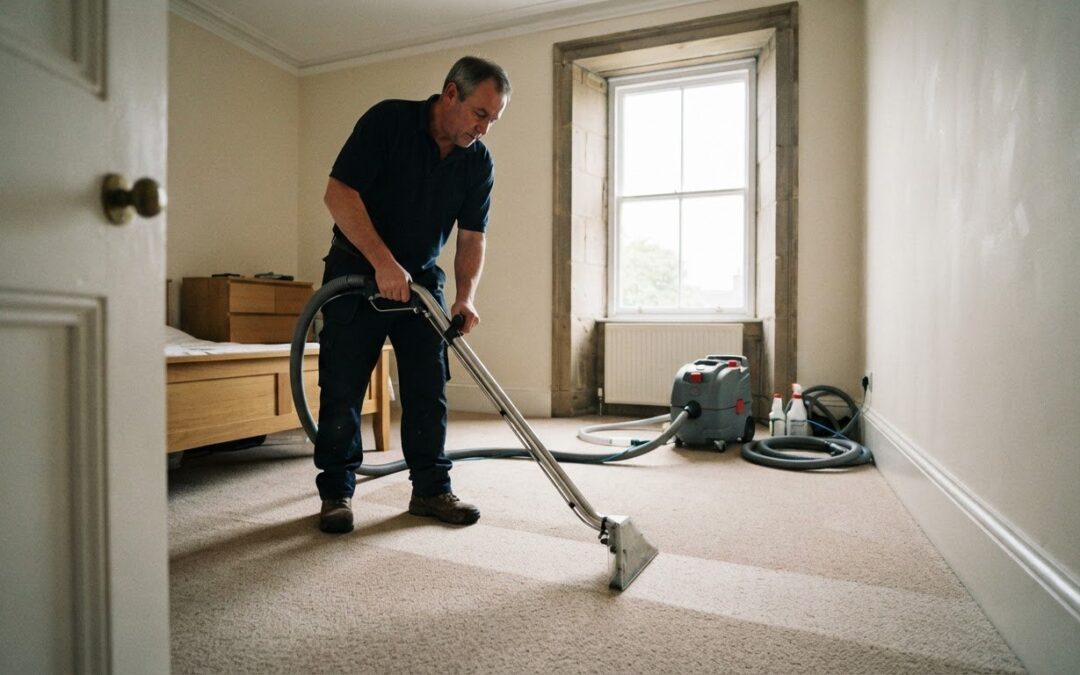
A freshly cleaned carpet may be ready to use sooner than you expect. For carpet cleaning for allergy sufferers in Dunfermline, drying after hot water extraction typically takes around 3 to 4 hours, although thicker carpets or specialist treatments can take up to 24 hours.
If allergies are a concern, it’s natural to want a thorough clean without lingering dampness or uncertainty about how stains will be treated. This guide explains how the cleaning process works, what influences stain removal and drying time, and which Dunfermline and Fife areas are covered. You’ll also learn how the carpet’s fibre and condition help determine the right approach, so you can plan for a cleaner, more comfortable home with confidence.
Key Takeaways
- Learn why carpet fibres can hold dust and other common allergens, and how professional cleaning can help address them.
- See how carpet fibre and condition guide the cleaning method, while the stain itself shapes the treatment approach.
- Plan around drying time by understanding how carpet thickness and the cleaning treatment can affect when rooms are ready to use.
- Find out which Dunfermline postcodes and nearby Fife areas are covered, including service availability in KY11 and KY12.
How long will it take for my carpet to dry after cleaning?
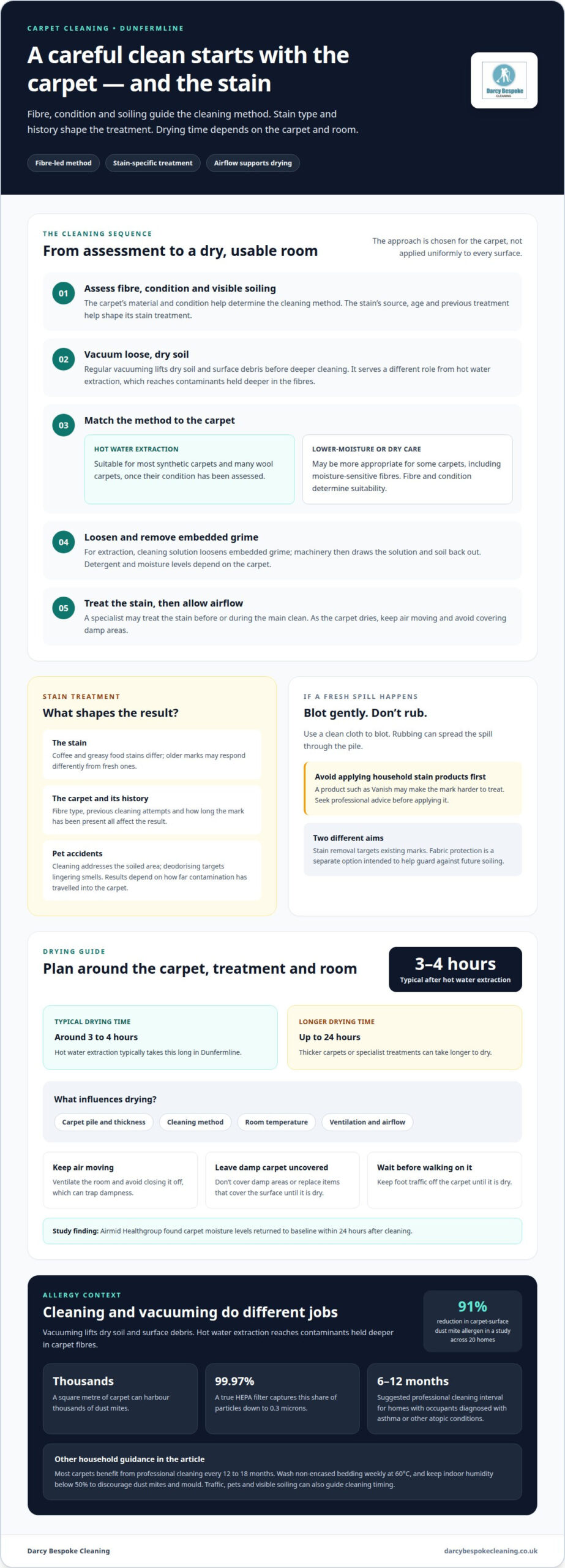
After hot water extraction, carpets in Dunfermline typically take 3 to 4 hours to dry. Thicker carpets or specialist treatments can take up to 24 hours. Keeping air moving through the room helps moisture evaporate; avoid trapping dampness by closing the space off.
Drying matters, but so does what cleaning lifts from the fibres. A square metre of carpet can harbour thousands of dust mites, while house dust mites common in UK homes measure roughly 0.25 mm. Allergy UK identifies dust mites as the biggest indoor allergen trigger in British homes. In an Airmid Healthgroup study across 20 homes, hot water extraction reduced carpet-surface dust mite allergen by 91%.
Professional cleaning and HEPA vacuuming play different roles. Regular vacuuming lifts dry soil and surface debris, while hot water extraction reaches contaminants held deeper in carpet fibres; DIY spot cleaning addresses local stains, not a full carpet clean. A true HEPA filter captures 99.97% of particles down to 0.3 microns, making vacuuming a useful routine between professional cleans.
For carpet cleaning for allergy sufferers in Dunfermline, frequency depends on household needs. Homes with occupants diagnosed with asthma or other atopic conditions are advised to arrange professional cleaning every 6 to 12 months; most carpets benefit every 12 to 18 months. Traffic, pets and visible soiling can also guide the timing.
Dust-mite control extends beyond the floor. Wash non-encased bedding weekly at 60°C, and keep indoor humidity below 50% to discourage dust mites and mould. A single mattress can harbour up to 10 million mites, so bedding hygiene matters alongside clean carpets. Rugs also collect dust: suitable rug cleaning removes embedded soil, with the method guided by the rug’s fibres and condition.
Airmid Healthgroup found carpet moisture levels returned to baseline within 24 hours after cleaning. Maintain airflow as the carpet dries and avoid covering damp areas; these steps help prevent moisture lingering and creating conditions that encourage mould.
Carpet cleaning process and stain treatment
A careful clean starts with identifying the carpet’s fibre, condition and visible soiling. Hot water extraction suits most synthetic carpets and many wool carpets, once their condition has been assessed. For moisture-sensitive fibres, dry care may be more appropriate. The cleaning method and treatment are chosen for the material rather than applied uniformly to every surface.
Regular vacuuming removes loose, dry soil before deeper cleaning. During extraction, cleaning solution loosens embedded grime, then machinery draws the solution and soil back out. The detergent and moisture level depend on the carpet. Professional detergents are suitable for homes with children and pets when used as directed.
Stain treatment requires more than applying extra product. Coffee and greasy food stains differ, and older marks may respond differently from fresh ones. Fibre type, the source of the stain, previous cleaning attempts and how long it has been present all affect the result. A specialist assesses these factors and treats the area before or during the main clean. Stain removal targets existing marks; fabric protection is a separate option intended to help guard against future soiling.
Pet accidents can leave visible marks and persistent odours. Cleaning addresses the soiled area, while deodorising treatment targets lingering smells. Results depend on how far the contamination has travelled into the carpet. For a fresh spill, blot gently with a clean cloth rather than rubbing, which can spread it through the pile. Avoid applying a household stain product such as Vanish before seeking professional advice, as it may make the mark harder to treat.
For tailored carpet stain treatment, the appropriate method follows the carpet and the stain, not guesswork. A considered assessment helps protect delicate fibres while addressing stubborn marks and odours.
Carpet drying time
In Dunfermline, drying depends on the cleaning method, carpet construction and room conditions. Hot water extraction typically takes around 3 to 4 hours, while thicker carpets or specialist treatments can take up to 24 hours.
Low-moisture cleaning and drying
Low-moisture cleaning uses less water than hot water extraction, leaving less moisture to evaporate. It may suit some carpets, but the fibre and condition determine whether it is appropriate. Dry care may be recommended for moisture-sensitive fibres. The method should suit the carpet while addressing embedded soil.
Moisture and allergy considerations
Cleaning solutions and residual moisture matter to people with asthma or allergies. Professional detergents are suitable for homes with children and pets when used as directed, although individual sensitivities vary. Follow product directions and ventilate the room as the carpet dries. Don’t cover damp carpet or restrict airflow, as trapped moisture can encourage mould growth.
With hot water extraction, the carpet’s pile, thickness, room temperature and ventilation all influence drying. Airmid Healthgroup found carpet moisture levels returned to baseline within 24 hours after cleaning. Keep air moving through the room, and wait until the carpet is dry before replacing items that cover its surface. This helps prevent dampness from lingering beneath furniture.
Upholstery drying times vary too. Dense sofa fabric may retain moisture longer than a lightly upholstered dining chair because material and construction affect evaporation. The cleaning solution, amount applied and airflow around the furniture also matter. Leave space around cushions and avoid sitting on damp upholstery so air can reach the fabric as it dries.
For allergy-sensitive households, planning for drying makes it easier to manage room use. Arrange cleaning when you can ventilate the room, and keep foot traffic off damp carpet until it is dry. These practical steps support a thorough clean while limiting lingering moisture.
Carpet cleaning service areas around Dunfermline and Fife
Carpet cleaning availability is listed in Dunfermline postcodes KY11 and KY12, subject to a live postcode check. Darcy Bespoke Cleaning serves domestic and commercial clients across Fife and surrounding areas, so the exact postcode is the clearest starting point for understanding local coverage.
Postcodes help distinguish nearby addresses that may sit in different service areas. If your home or business is in KY11 or KY12, use the postcode check to establish whether the address is covered. For another Fife location, the same step helps clarify whether the cleaning service reaches your area. Avoid assuming that a nearby postcode has identical coverage.
The right cleaning method is separate from whether your address is in the service area. Once your Dunfermline address is established, the carpet’s fibre, condition and visible soiling guide the approach. Hot water extraction suits most synthetic carpets and many wool carpets after assessment; moisture-sensitive fibres may call for dry care. Rather than relying on the general term “steam cleaning”, focus on which method suits your carpet.
For allergy-conscious households, the equipment and treatment should serve a clear purpose: reaching dirt and allergens held in carpet fibres while respecting the material. Darcy Bespoke Cleaning uses machines including the Alltec Advance 600 and Rotovac 360i. These are used for deep cleaning carpets, rugs and upholstery, with the cleaning approach tailored to the fabric and soiling.
Before arranging a clean, have the property postcode and type ready, such as a home or commercial premises. Describe the carpeted rooms and any particular concerns, including persistent stains or heavy foot traffic. These details help establish the cleaning needs and keep them distinct from the choice of method.
For carpet cleaning in Dunfermline or elsewhere across Fife, enquire about carpet cleaning with the property postcode and your requirements.
Darcy Bespoke Cleaning
Darcy Bespoke Cleaning provides carpet and upholstery cleaning for homes and businesses in Dunfermline and across Fife. If embedded dirt, stains or household allergens are a concern, the team considers the material, condition and soiling to select a suitable cleaning method and drying plan for each space.
Consider professional cleaning when vacuuming no longer addresses the carpet’s soiling, a mark needs specialist treatment, or you want to plan a clean around allergy concerns. Domestic and commercial carpet cleaning, as well as sofa and armchair cleaning, can refresh the rooms and furnishings you use every day.
When you enquire, share the property postcode, the items you’d like cleaned and any concerns, such as delicate fibres or persistent odours. Contact Darcy Bespoke Cleaning to discuss your carpet or upholstery cleaning needs.
Plan a cleaner, more comfortable space
Before the clean, turn your household’s priorities into a clear brief. Note which rooms matter most, whether pets or recurring spills affect them, and which fabrics need particular care. This gives the cleaning plan a practical starting point instead of treating every surface alike.
When arranging carpet cleaning for allergy sufferers in Dunfermline, consider how the visit fits your routine: when rooms can be cleared, how you’ll maintain airflow and how long spaces can remain out of use. Sharing these details helps the team plan around your home and priorities.
If a particular stain, lingering odour or allergy concern informs your decision, mention it in your enquiry. Darcy Bespoke Cleaning can discuss the needs of your home or workplace and the appropriate next step.
Contact Darcy Bespoke Cleaning to begin the conversation at a pace that suits you.
Frequently Asked Questions
Can you guarantee that stains will be removed?
No. Darcy Bespoke Cleaning cannot guarantee that every stain will disappear. Results depend on the carpet fibre, stain type and age, and any previous treatment. The business does offer a satisfaction guarantee: if you’re unhappy with the result, the area will be re-cleaned free. This is a commitment to address the work, not a promise that every mark can be fully removed.
Do you move my furniture?
Before the visit, clear small items and breakables from the carpet, and don’t assume heavy furniture will be moved. Consider which areas will be accessible around larger pieces, then share any access needs when arranging the clean. This helps establish a practical plan for the rooms and surfaces you want treated.
Is there anything I should prepare before the technician arrives?
Make carpeted areas accessible by clearing small belongings, toys and breakable objects. If there’s a stain, note its cause and whether you’ve applied a household product, as this information helps guide treatment. You can also mention delicate materials or allergy-related concerns in advance, so the team understands these priorities before work begins.
Which carpet cleaning methods are best for allergy sufferers?
The suitable method depends on the carpet’s fibre and condition. Hot water extraction suits most synthetic carpets and many wool carpets after assessment, while dry care may suit moisture-sensitive fibres. For allergy concerns, the key is to select a compatible method that addresses embedded soil without using an unsuitable process for the material. No single approach suits every carpet.
Can professional carpet cleaning remove dust mites, pollen and pet dander?
Professional cleaning can lift dirt and allergens held within carpet fibres, including residue associated with pets and household dust. It can reduce material accumulated in the carpet, but it cannot guarantee that every allergen will be eliminated. Regular vacuuming and clean bedding can complement a professional clean as part of household allergen management.
What carpet cleaning services for allergy sufferers are available in Dunfermline?
Darcy Bespoke Cleaning provides domestic and commercial carpet cleaning in Dunfermline, with stain removal, deodorising and sanitising treatments. Sofa and armchair cleaning can also address upholstered surfaces where household dust and pet residue collect. The appropriate treatment depends on the material and the concern, so the work can be planned around the carpets and furnishings that need attention.