
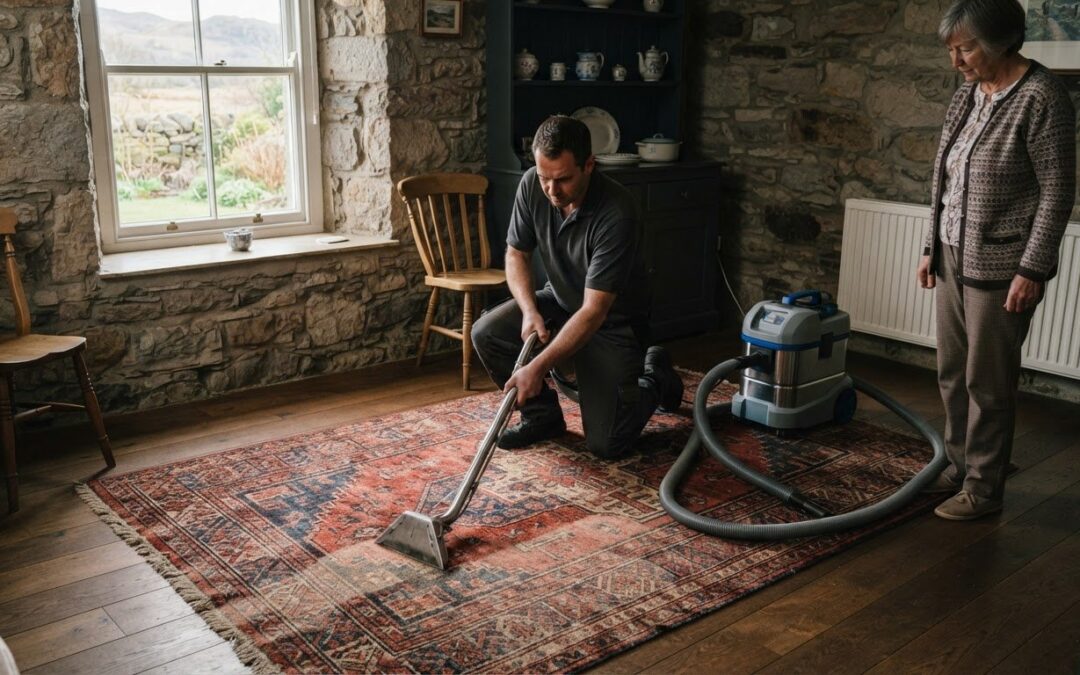
The lowest-cost clean isn’t always the gentlest choice for a rug. DIY can suit light, surface-level soiling on a small synthetic rug, while professional cleaning is often the more considered option for delicate or valuable rugs, stubborn stains, lingering odours and embedded dirt. The benefits of professional rug cleaning vs DIY become clearer when you weigh the risk of overwetting or using the wrong product against the equipment and effort required.
It’s understandable to reach for a home cleaning solution when a spill appears or a rug looks dull. Prompt, careful attention may be enough for fresh, minor marks; deeper soiling and persistent smells can call for a more tailored approach. The right choice depends on the rug’s fibres, condition and level of soiling, as well as the time and effort you’re prepared to invest.
This comparison explains how each method handles stains, odours and embedded dirt, what affects the cost without quoting service prices, and how cleaning choices can influence a rug’s lifespan. You’ll also find a practical guide to choosing the right approach for your rug.
Key Takeaways
- Match the cleaning method to the rug’s fibres, condition and level of soiling; light surface dirt is a different challenge from set-in stains or odours.
- Use care with moisture and cleaning products, as residue or overwetting can leave fibres stiff, attract dirt or cause damage.
- Weigh DIY’s lower upfront outlay against the time, equipment and potential cost of correcting damage when deciding what offers better long-term value.
- Choose professional cleaning when a rug needs a deeper, more tailored clean, and learn how routine care can help preserve its appearance between cleans.
Stain and odour removal
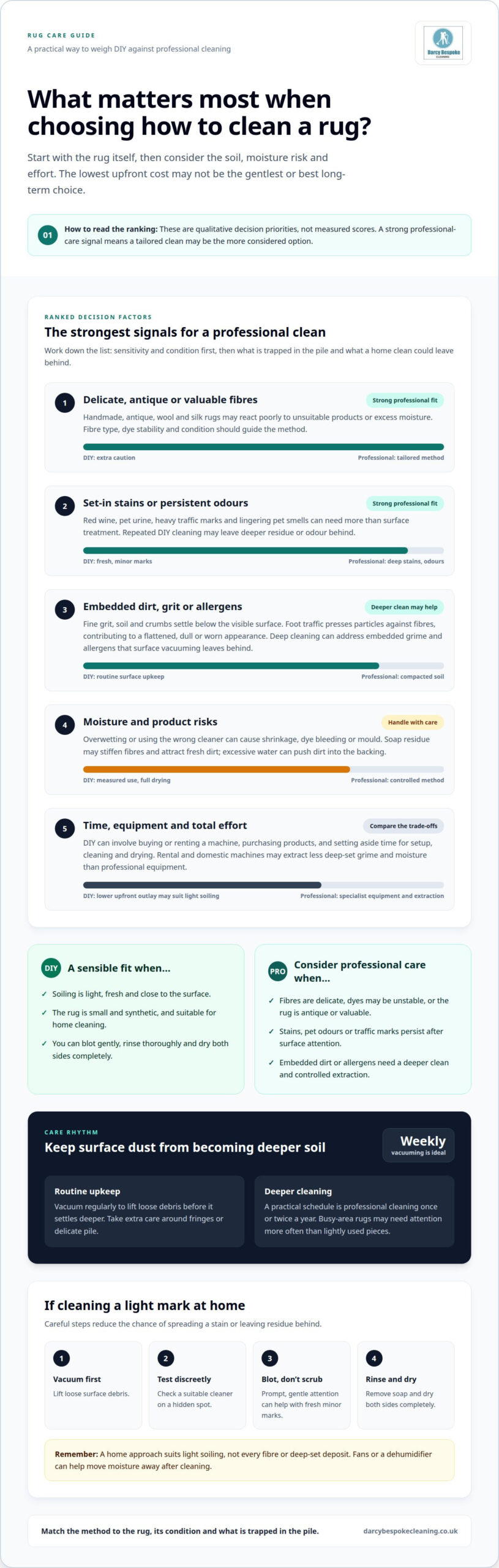
Fresh tea or food spills are easier to address before they set. Blot promptly with a clean cloth and avoid vigorous scrubbing, which can distort fibres and spread the stain. For red wine, pet urine or heavy traffic marks, professional methods can target visible staining and odour sources. DIY products may clean the surface but leave deeper residue or smells behind.
Handmade, antique, wool and silk rugs need particular care. Their fibres and dyes can react poorly to unsuitable products or excess moisture, so a tailored method is preferable to household detergent. Rugs with persistent pet odours or extensive staining may also benefit from professional treatment rather than repeated surface cleaning.
DIY cleaning can cause shrinkage, dye bleeding or mould if a rug is overwet, treated with the wrong product or left damp. Soap residue may stiffen fibres and attract fresh dirt. After a home clean, rinse thoroughly and dry both sides completely; fans or a dehumidifier can help move moisture away.
A practical schedule is to have rugs professionally cleaned once or twice a year. Rugs in busy areas may need attention more often than lightly used pieces, while routine vacuuming helps remove surface dust between cleans.
A rug cleaning service should assess fibre type, dye stability and condition before choosing a method. This matters for dust mites, pollen and pet dander trapped within the pile: deep cleaning can address embedded allergens that surface vacuuming leaves behind.
| Option | Stains and odours | Rug suitability | Moisture control |
|---|---|---|---|
| DIY | Fresh, light marks | Small, inexpensive synthetic rugs | Dry thoroughly on both sides |
| Professional | Deep stains, pet odours | Delicate, antique or valuable rugs | Method tailored to rug condition |
Choose DIY for light, fresh soiling on a suitable rug; seek professional care for delicate fibres, persistent odours or embedded dirt.
How embedded dirt contributes to fibre wear
For a light spill or surface mark, clean a rug at home in careful stages: vacuum first, test a suitable cleaner on a hidden spot, then blot the mark rather than scrubbing. Use only the amount stated on the product, rinse thoroughly to remove soap, and dry the rug completely. This approach suits light soiling, not every fibre or deep-set deposit.
Cleaning solutions can create a second problem if residue remains. Soap left in the pile may make fibres feel stiff and attract dirt more quickly, so a cleaned patch can look soiled again. Rinsing matters, but excessive water can also push dirt further into the backing. Controlled application and thorough extraction are essential.
For compacted dirt or repeated traffic marks, a deeper clean can reach beyond the surface and remove more trapped debris. If embedded soil is affecting a treasured rug, professional rug cleaning can provide a considered alternative to repeated home treatments. Between deeper cleans, regular vacuuming helps limit the grit carried into the fibres.
Professional deep cleaning equipment and techniques
Professional deep cleaning begins with an assessment of fibre type, dye stability and rug condition. These details guide the choice of cleaning method, moisture level and products. Specialist equipment can include dusting machines to loosen dry soil, hot water extraction units to flush fibres, and centrifuges to remove moisture. Each tool has a distinct role, rather than treating every rug like wall-to-wall carpet.
Home and rental machines can handle some surface cleaning, but their suction and water pressure may be lower than professional equipment. That can limit how much deep-set grime and allergens they extract. Professional systems use stronger suction and higher water temperatures, helping lift soil from within the pile while drawing out more moisture. The equipment alone isn’t the whole method: suitable preparation and controlled extraction matter too.
DIY cleaning involves practical costs beyond the solution. You may need to buy or rent a machine, purchase cleaning products and set aside time for setup, cleaning and drying. Costs depend on the equipment you already own, how often you clean, and the rug’s size and condition. For a lightly soiled synthetic rug, hiring a machine may be reasonable; delicate fibres need more care.
Cleaning products must suit the rug and the type of soil. While suppliers like Shaun Products (Pty) Ltd provide dedicated cleaning detergents for routine household maintenance, a detergent intended for a synthetic carpet may not suit natural fibres or unstable dyes. A professional method can pair the product with suitable equipment, then extract loosened dirt and excess moisture. This is especially useful when surface cleaning hasn’t removed embedded grime or allergens. For routine upkeep, vacuuming removes loose debris; a deeper clean addresses soil settled into the pile. The right balance helps preserve the rug without an unnecessarily intensive process.
Professional cleaning costs and long-term carpet life
The lowest upfront cost doesn’t always mean the best value over a rug’s lifespan. DIY cleaning usually costs less initially, especially when you already own suitable equipment. But hiring a machine, buying cleaning solutions and setting aside time all contribute to the total. For example, renting may make sense for a one-off clean, while repeated hire adds to the outlay.
The cost of professional rug cleaning depends on the rug and the work involved. Size, fibre type, condition and soiling all affect the cleaning approach. A delicate wool rug with ingrained dirt needs different care from a small synthetic rug with light surface marks. These details shape the cost, so a generic figure wouldn’t reflect each rug’s needs.
DIY savings can be outweighed if unsuitable products or excess water damage the fibres or backing. A rug that shrinks, warps or develops persistent damp smells may need further treatment or replacement. These risks matter most with valuable, handmade or natural-fibre rugs, where mistakes may be harder to put right. Follow product directions and avoid saturating the pile.
Rug cleaning can help extend a rug’s lifespan by removing dirt that wears fibres under foot traffic. Grit trapped in a hallway runner, for instance, is repeatedly pressed against the pile as people walk over it. Routine vacuuming removes loose debris, while deeper cleaning addresses soil that remains embedded. Promptly dealing with spills and avoiding detergent residue also help maintain the rug’s appearance.
Compare the full DIY outlay with the condition and replacement value of the rug, not just the machine-hire cost. For a lightly soiled, inexpensive rug, careful home cleaning may be a sensible choice. For valuable rugs or persistent grime, the cost of professional care should be weighed against the risk of avoidable damage. Request a tailored cleaning quote when you’re weighing that decision.
Darcy Bespoke Cleaning
Darcy Bespoke Cleaning provides professional rug cleaning in Fife, alongside domestic and commercial carpet cleaning and cleaning for sofas and armchairs. The approach is suited to the fabric and its condition. Before choosing a method for a rug, consider its fibres, dye stability and level of soiling; delicate or valuable pieces need particular care. The comparison above can help you decide whether routine maintenance is sufficient or deeper cleaning is more appropriate. For surrounding carpets or upholstered furnishings, professional cleaning can address accumulated soil and persistent marks without relying on repeated DIY attempts. Contact Darcy Bespoke Cleaning to discuss your cleaning needs.
Choose the right care for your rug
The best cleaning decision suits the rug in front of you, rather than following a fixed rule for every home. A simple routine can keep everyday dust in check, while persistent soiling or uncertainty about a rug’s fibres may call for a more considered approach. Weighing the benefits of professional rug cleaning vs DIY means considering not only the immediate result, but how you want to care for the piece over time.
If you’re unsure which approach fits your rug, discuss its condition and your cleaning needs with Darcy Bespoke Cleaning. The company also provides domestic and commercial carpet cleaning and sofa cleaning, making it a practical point of contact for related fabric care.
Contact Darcy Bespoke Cleaning to discuss your requirements and move forward with confidence.
Frequently Asked Questions
What are the benefits of professional rug cleaning compared with DIY cleaning?
Professional cleaning is most valuable when a rug’s fibres, dyes or level of soiling make home treatment risky. A specialist can match the method to the material, while DIY is convenient for routine upkeep and small surface marks. For example, a delicate heirloom rug and a low-cost synthetic mat call for different levels of care. Consider the rug’s value, condition and cleaning history before choosing.
How much do DIY rug cleaning products and machine hire cost in the UK?
DIY costs include cleaning products and buying or hiring equipment. The total depends on the machine, hire period, solution required and whether you’ll clean one rug or use the equipment again. Compare the full outlay, including delivery or collection where relevant, rather than the product price alone. For a single rug, hiring may require less initial spending than buying equipment for occasional use.
How effective are professional rug cleaning methods at removing stains, odours, dust and allergens?
Professional methods can address embedded dust, allergens, persistent odours and many stubborn stains, with results shaped by the stain and rug material. Darcy Bespoke Cleaning uses Alltec Advance 600 and Rotovac 360i machinery to support thorough removal of dirt, allergens and stubborn stains. Pet urine and older marks can be more challenging than fresh spills, so treatment is tailored to the rug and the soiling.
How long does professional rug cleaning take, and how long do rugs take to dry?
Cleaning time depends on the rug’s dimensions, fibre, condition and chosen method; drying is a separate stage. Moisture extraction, room airflow, humidity and the amount of water used all affect drying. A rug needs to dry fully, including on its underside, before returning to regular use. Clear access around the rug and good ventilation can help it dry more effectively.
How do you choose a reputable rug cleaning service in the UK?
Choose a service that assesses the rug’s fibre type, dye stability and condition before selecting a cleaning method. The method should be tailored to the rug and its level of soiling.