
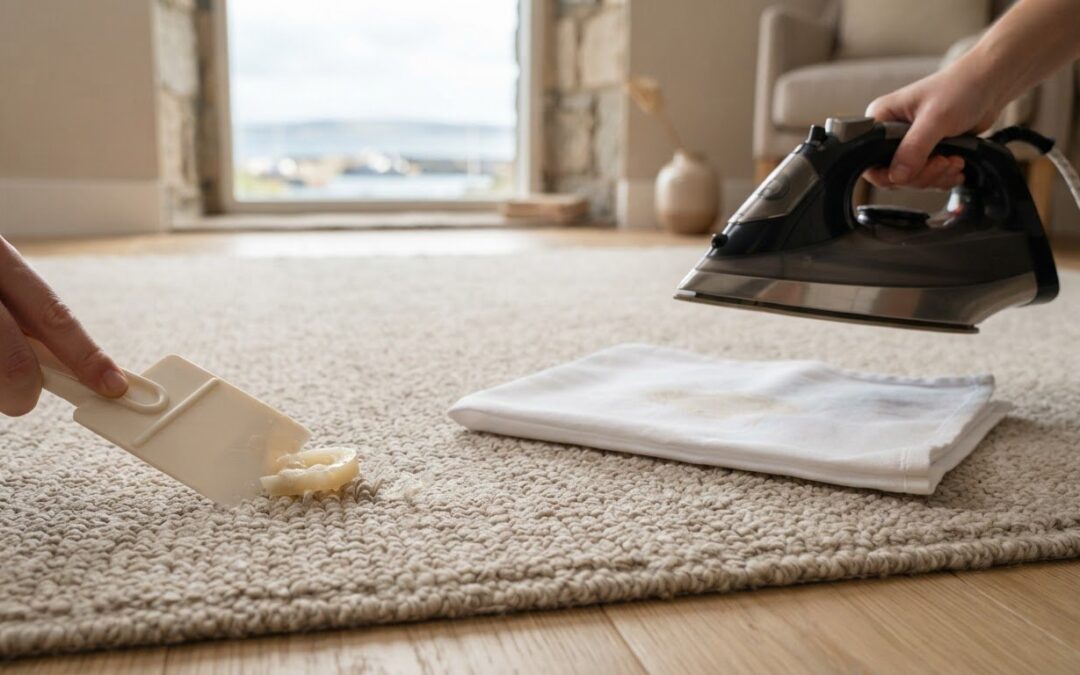
The wax is only half the problem. Knowing how to remove candle wax from carpet starts with letting it harden, gently lifting away the excess, then pressing absorbent paper or cloth over the residue with a low-to-medium iron on a no-steam setting. Any colour left behind needs separate, careful treatment.
It’s frustrating when the wax is gone but a mark remains. This guide explains how to harden and lift the spill, then use an iron carefully without letting it touch the carpet fibres.
You’ll also learn how to treat leftover colour, blot rather than scrub, and adapt your approach to the carpet fibre. The aim is to improve the carpet’s appearance without damaging its texture.
Key Takeaways
- Let the wax harden before gently scraping away the excess, taking care not to catch or damage carpet fibres.
- Use absorbent paper or cloth between the wax and a low-to-medium, no-steam iron; keep the iron off the carpet itself.
- Clean remaining residue gently, then treat any coloured mark separately by blotting from the stain’s edge towards its centre.
- For persistent marks or delicate carpet fibres, professional carpet cleaning can help address the stain with care suited to the material.
How do you get candle wax out of carpet?
To understand how to remove candle wax from carpet, first identify the fibre and check its care guidance. Test any cleaning solution on a hidden patch, looking for colour transfer or changes to the pile before treating the mark.
-
Choose a Carpet-Safe Solvent
If colour remains after lifting the wax, choose a mild water-based solution suited to the carpet. Mix ½ teaspoon of clear dishwashing detergent into one cup of warm water, or dilute white vinegar with water. Test a small amount on an inconspicuous area and check that the colour and texture remain unchanged. Avoid untested products, especially on wool, which may react differently to cleaning solutions.
-
Clean the Treated Area
Dampen a clean cloth with your chosen solution and blot the mark. Leave it for five minutes, then blot with a separate cloth dampened with clean water. Don’t scrub: friction can disturb the fibres or spread the mark. If using a carpet cleaner, follow its directions and test it on a hidden area first.
- Choose how to remove candle wax from carpet according to its material. Wool and polypropylene can respond differently to cleaning, so check the relevant fibre maintenance guidance before applying a solution. For polypropylene, use a small amount of your tested mixture and blot gently. For a washable runner, follow its care label and test a hidden corner first.
- Consider professional carpet cleaning if wax or colour remains after careful blotting, or if the carpet is delicate wool. A professional can assess the fibre, dye and mark before selecting an approach. This is particularly useful if wax has spread into the pile or home treatment hasn’t improved the appearance. Avoid layering different products over the same patch.
Does Candle Wax Stain?
Yes. Candle wax can leave a mark, while forceful scraping may pull carpet fibres and excessive heat can damage them. Don’t press tools into the pile or push softened wax deeper towards the backing.
- Let the wax harden. Wait until the spill is completely cool and firm before trying to lift it. Handling warm wax can spread it across neighbouring fibres. If the candle is still nearby, leave it in place until the wax has hardened.
- Freeze the spot if needed. Place a sealed bag of ice over the wax for 10-15 minutes. Keep condensation from wetting the carpet. Once the wax feels brittle, lift the bag and check that the spill has hardened before scraping.
- Break up the hardened wax gently. Use a blunt object, such as the back of a large spoon, to loosen it into small pieces. Work carefully, lifting rather than digging into the pile. On Berber loop carpet, take particular care not to catch or pull a loop.
- Scrape off pieces, then vacuum. Remove larger fragments by hand and vacuum the smaller chips before they soften. Don’t grind them into the carpet with your shoes or the vacuum head. If wax has been trodden in, freezing, scraping and ironing may need three or four rounds.
- Inspect before treating residue. Look closely between the fibres and vacuum any remaining fragments. Follow the relevant fibre company’s maintenance guidance, especially for wool or loop pile, since fibres can react differently to treatment. If scraping has disturbed the pile or wax remains embedded, professional carpet cleaning can address the affected area with care.
Lifting residue with an iron and absorbent paper or cloth
Use gentle, controlled heat to draw remaining wax into absorbent material, keeping the iron off the carpet fibres.
-
Use an Iron with Absorbent Paper
Lay kitchen roll or a clean, absorbent cloth over the wax residue. Set the iron to low-to-medium heat with steam switched off, then press it briefly onto the paper. The warmth softens the wax so the paper can absorb it. Lift the iron and inspect the paper before continuing. Don’t leave it resting on one spot for minutes.
-
Use the Iron Safely on Carpet
Keep the iron’s soleplate above the paper, never directly against the carpet. High heat can damage synthetic fibres, and polypropylene needs the lowest setting with presses lasting only a few seconds. If the carpet is delicate or its care guidance advises against ironing, don’t apply heat. A hair dryer may soften wax on sensitive material, but can be less effective at lifting residue.
- Move the kitchen roll to a clean section as soon as wax transfers. A fresh area absorbs residue instead of returning it to the pile. Replace the paper when it becomes waxy, then press again briefly. Repeat with clean paper until no more wax visibly transfers.
- Check the paper and carpet after each press. If wax remains, reposition the absorbent material over that patch rather than increasing the temperature. For a damp-fabric method, press through the towel for around 10 to 15 seconds, then lift it and assess the spot. Avoid prolonged heat, which can harm carpet or upholstery, particularly synthetic material.
- Let the treated patch cool before checking its texture and any remaining marks. Don’t rub softened wax across nearby fibres or use a hot iron directly on the pile. Once the wax has transferred, treat any residue or colour separately.
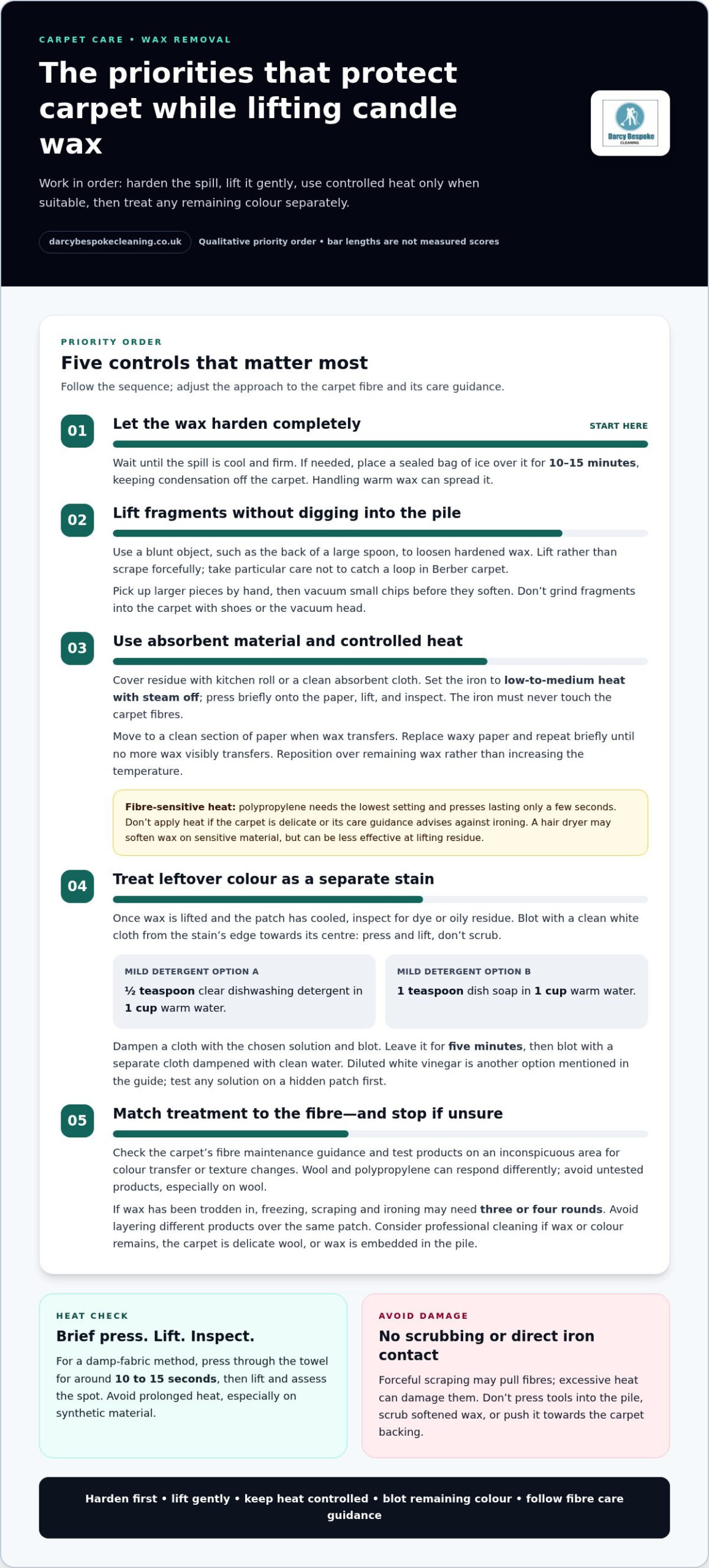
Removing residual colour and stains
Once the wax is lifted, inspect the carpet for dye or oily residue. Treat any remaining mark separately, using gentle blotting and a solution suited to the material.
- Blot from the outside in. Use a clean white cloth and work from the edge of the wax stain towards its centre. This helps contain the mark instead of spreading it across nearby fibres. Press and lift; don’t scrub, as friction can damage the pile and work colour deeper into the carpet.
- Try a mild detergent solution. Mix one teaspoon of dish soap with one cup of warm water. Alternatively, use half a teaspoon of clear dishwashing detergent in one cup of warm water. Dampen a white cloth, blot the mark, then leave the solution for five minutes before blotting again.
- Lift remaining colour carefully. For dye left by a coloured candle, apply rubbing alcohol to a white cloth or cotton ball, then dab gently. Keep the application local and avoid pouring alcohol directly onto the carpet. For a light synthetic carpet, a little 3% hydrogen peroxide may help with a remaining dye mark.
- Choose a spot cleaner for the stain. An oxygen-based carpet spot cleaner or one designed for oil stains may address residual colour or oily marks. Test the product on a hidden area first to check for colourfastness. Follow its directions, then blot with a clean cloth rather than rubbing the treated material.
- Let the area dry fully. Avoid treating the same patch again while it’s damp; assess the result after it dries. Once dry, run a hoover over the area to restore the carpet’s texture. If the stain remains, request professional stain removal treatment rather than layering more solutions onto the fibres.
Darcy Bespoke Cleaning: Domestic Carpet Cleaning
Darcy Bespoke Cleaning provides Domestic Carpet Cleaning in Fife when candle wax or dye remains after careful home treatment. Stubborn residue, a lingering mark or delicate carpet fibres can make further DIY attempts unwise. Professional cleaning takes the material and remaining stain into account.
If the spill has also reached a sofa or armchair, Darcy Bespoke Cleaning provides upholstery cleaning for those furnishings. The right treatment depends on the fabric and mark, so avoid adding more household products when earlier attempts haven’t lifted the colour.
For help with a remaining carpet stain, contact Darcy Bespoke Cleaning.
Keep your carpet looking cared for
A wax spill is a reminder to treat carpet according to its fibres, rather than reaching for stronger heat or more cleaning products. If a mark remains after careful treatment, pause before applying another solution. Repeated products can complicate stain removal, especially when the carpet is delicate or candle dye has settled into the pile.
For future spills, take care around candles: replace the candle lid or cup the flame before blowing it out to reduce splattering. If home treatment hasn’t resolved the mark, professional help is a considered next step. Darcy Bespoke Cleaning provides Domestic Carpet Cleaning, Commercial Carpet Cleaning and Sofa Cleaning in Fife, helping care for carpets and furnishings affected by stubborn stains.
If you’re still weighing how to remove candle wax from carpet without risking further damage, contact Darcy Bespoke Cleaning to discuss professional cleaning. A measured next step can help you care for your home with confidence.
Frequently Asked Questions
Does freezing get all the wax out?
No. Freezing hardens wax so you can remove solid pieces, but it may not lift a thin film or wax lodged deeper between carpet fibres. After removing the brittle pieces, inspect the pile from different angles. A dull or greasy-looking patch can indicate residue remains, while a coloured mark may be candle dye rather than wax.
How do you get coloured wax and wax melts out?
Remove the solid wax first, then check whether colour remains. Coloured candle wax can leave dye behind even after the wax is lifted. Wax melts may also leave residue, so avoid spreading softened material across a wider area. Treat any remaining mark separately, using a product suited to the carpet and testing it on a concealed patch.
How do you get old or trodden-in wax out?
Old or trodden-in wax can be harder to lift because it may sit deeper in the pile than a fresh spill. Avoid forceful scraping or repeated heating without checking the carpet’s response. If the mark remains embedded after careful treatment, pause rather than layering on more products. A professional can assess the carpet material and remaining stain together.
How do you get wax out of a rug?
Use the rug’s fibre and construction to guide treatment, as its backing or border may respond differently from the pile. Check its care instructions and test any cleaner on a hidden area first. If it’s a valuable or delicate rug, avoid experimenting with heat or solvents. Professional rug cleaning can address the mark with the material in mind.
How do you remove wax without an iron?
Use a sealed bag of ice to make the wax brittle, then loosen it with a blunt utensil and vacuum the fragments before they soften. For a remaining thin film, a hair dryer may soften wax through absorbent material, although it can be less effective than an iron. Keep the airflow moving and avoid overheating the fibres.
Is it safe on wool, polypropylene and washable runners?
It depends on the fibre, dye and construction. Check the relevant fibre maintenance guidance before treating wool or polypropylene, and follow a washable runner’s care label rather than assuming every method is suitable. The runner’s backing may also affect how it responds to moisture or heat. Test a hidden spot and stop if colour transfers or the texture changes.