
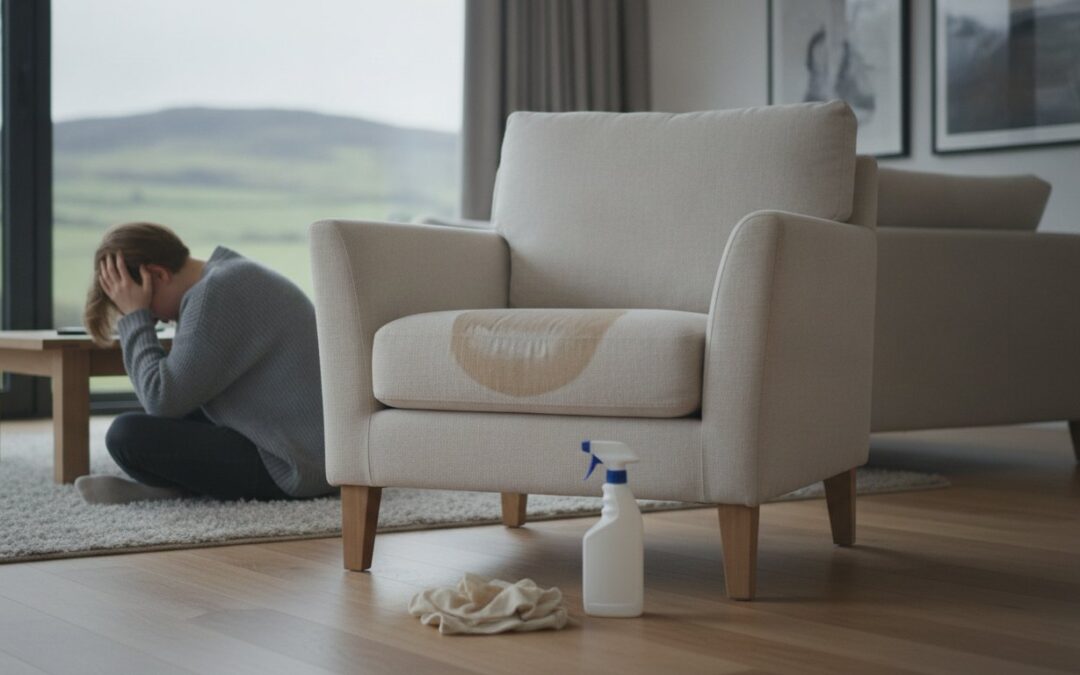
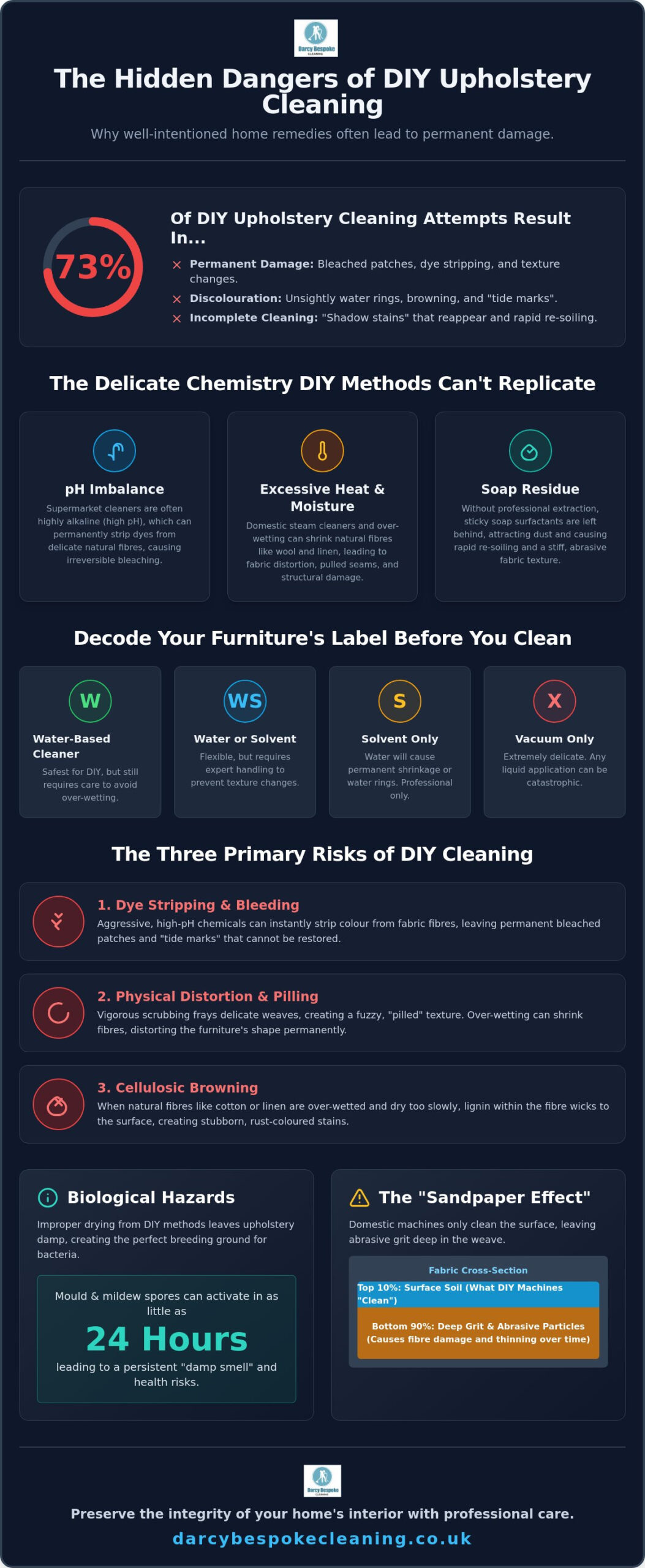
Did you know that 73% of DIY upholstery cleaning attempts result in permanent damage, discolouration, or incomplete stain removal? While the impulse to treat a spill immediately is a sign of a dedicated homeowner, the hidden risks of DIY upholstery cleaning often transform a simple mark into a lasting scar on your furniture. It’s deeply frustrating to watch a cherished armchair lose its lustre or to find yourself confused by cryptic cleaning symbols. You’ve likely felt the sting of a “shadow stain” returning just days after you thought it was gone.
We believe your home should be a sanctuary of refined comfort, where every piece of furniture is treated with professional stewardship. This article promises to help you protect your investment from the dangers of home remedies, ranging from unexpected chemical reactions to the structural risks of over-wetting. You’ll gain a clear understanding of why certain marks persist and how to avoid the common pitfalls that lead to irreversible fabric damage. We will preview the latest 2026 safety standards and fabric-specific care techniques, ensuring your environment remains both pristine and beautifully preserved.
Key Takeaways
- Understand why fine fabrics require a precise balance of pH and heat that home products simply can’t replicate.
- Learn how to identify the specific risks of DIY upholstery cleaning, including the permanent dye stripping caused by high-pH solutions.
- Discover why improper drying leads to the dreaded “damp smell” and how mould spores can activate in as little as 24 hours.
- Gain the confidence to decode fabric cleaning symbols and distinguish between resilient synthetics and delicate natural fibres.
- Explore how specialized soil recovery technology ensures a deep, restorative clean that honours the integrity of your home’s interior.
The Hidden Complexity of Upholstery: Why DIY Often Fails
Upholstery cleaning is far more than a simple manual task. It’s a delicate chemical process that requires a precise equilibrium of pH balance, temperature control, and high-performance extraction. When these elements are misaligned, the risks of DIY upholstery cleaning become a reality. Most homeowners treat their sofa as they would a carpet, yet furniture fabrics are significantly more intricate and fragile. While carpets are engineered for heavy foot traffic, upholstery often features delicate weaves of silk, linen, or fine cotton. These materials respond differently to moisture and heat. They require a bespoke approach that respects their unique composition.
There’s a common misconception that using more detergent results in a deeper clean. In reality, excessive soap volume is a primary cause of furniture degradation. Without professional-grade extraction, surfactants remain trapped in the fibres. This residue acts as a magnet for dust, leading to a cycle of rapid re-soiling that leaves the fabric feeling stiff and abrasive. We view our role as one of stewardship. It’s about preserving the long-term integrity of your home’s most intimate environment through precision and care.
Decoding the Fabric Care Labels (W, S, WS, X)
Understanding the manufacturer’s code is the first step in avoiding disaster. A “W” suggests water-based cleaners are safe, while “S” strictly mandates solvent-based solutions. Applying water to an “S” coded fabric can cause permanent shrinkage or unsightly water rings that no professional can later remove. “WS” labels offer some flexibility but still require expert handling to prevent texture changes. If you see an “X”, the fabric is exceptionally delicate. It should only be vacuumed by the owner, as any liquid application could be catastrophic. Navigating these codes incorrectly is one of the most common risks of DIY upholstery cleaning that we encounter.
The Difference Between Surface Soil and Deep Grit
Visual cleanliness is often a deceptive metric. Most domestic rental machines only address the top 10% of the fabric surface. Beneath this layer, sharp particles of grit and dust remain lodged deep within the internal weave. This creates a “sandpaper effect” where every time you sit down, these abrasive particles grind against the fibres. This structural damage is invisible until the fabric begins to thin or fray. True hygiene requires deep soil recovery that reaches the core of the piece. A visually bright sofa can still harbour significant amounts of deep-seated grit that compromises its lifespan.
Irreversible Damage: The Three Primary Risks of DIY Cleaning
Many homeowners believe that if a home cleaning attempt fails, a professional can simply step in and “undo” the result. This is a dangerous assumption. Many of the risks of DIY upholstery cleaning involve chemical or structural changes that are fundamentally irreversible. When a supermarket cleaner with an aggressively high pH level meets a delicate fabric, it can strip the dye from the fibres almost instantly. Once these dyes are compromised, the vibrant colour of your furniture is lost forever, leaving behind bleached patches or unsightly “tide marks” that no amount of professional extraction can restore.
Physical distortion is another silent consequence of well-intentioned home care. Over-agitation, such as vigorous scrubbing with a brush or cloth, can fray the delicate weave of premium fabrics. This creates “pilling” or a fuzzy texture that permanently alters the hand-feel and appearance of the piece. Cellulosic browning is a permanent brown staining caused by over-wetting natural fibres like cotton or linen. This reaction occurs as the fabric dries too slowly, causing lignin in the natural fibres to rise to the surface and oxidise into a stubborn, rust-coloured stain.
Fabric Shrinkage and Structural Distortion
Natural fibres like wool and linen are incredibly sensitive to moisture. When these materials are saturated by a domestic machine, the fibres can tighten and shrink. This often leads to the “pulled seam” effect, where the fabric becomes too small for the frame, distorting the elegant silhouette of a designer sofa. Domestic steam cleaners are frequently the culprit here. Their excessive heat and uncontrolled water flow are the enemies of fine upholstery, often causing the backing materials to warp or the internal glues to fail. Protecting your interior requires a more nuanced touch. Choosing expert sofa cleaning ensures your investment is preserved rather than endangered.
The Wicking Phenomenon: Why Stains Return
Wicking is a frustrating physics-based reaction that occurs via capillary action. When you clean a spot with a DIY machine, the moisture often penetrates deep into the internal padding. As the sofa dries over the next 24 hours, that moisture travels back to the surface, carrying dissolved soil and old spills with it. This is why a “clean” sofa can suddenly develop dark, mottled patches once it’s fully dry. Domestic extractors simply lack the vacuum power to lift moisture from the deep core of the furniture, leaving your home vulnerable to these recurring marks.
Beyond the fabric itself, the risks of DIY upholstery cleaning extend to your personal environment. Using harsh, unverified chemicals can lead to significant health risks of cleaning products, as volatile organic compounds (VOCs) are released into your living space. We believe in a cleaner, safer home where the integrity of your air is as respected as the integrity of your furniture.
Biological Hazards: The Consequences of Improper Drying
While the visible issues like wicking or shrinkage are immediate causes for concern, the most insidious risks of DIY upholstery cleaning often remain hidden beneath the surface. The “damp smell” that frequently follows a home cleaning attempt isn’t just a minor inconvenience; it’s a biological warning. Mould spores require only a 24 hour window of sustained moisture to activate within the dark, dense environment of sofa padding. Once these spores take root in the internal foam, they are incredibly difficult to eradicate, often requiring the complete replacement of the cushioning to ensure a healthy living space.
Fife’s coastal humidity often acts as a silent saboteur during these home cleaning attempts. In the moisture-laden air of the Scottish coast, the natural evaporation process slows to a crawl. What might dry in a few hours in a more arid climate can linger for days here. This extended drying time creates a perfect nursery for dust mites and fungal growth. For those who suffer from respiratory sensitivities or allergies, a damp sofa becomes a significant health hazard rather than a place of rest. Maintaining the sanctuary of your home requires an approach that prioritises rapid moisture recovery and total hygiene.
Mould and Mildew Growth in Internal Padding
It’s a common deception. The surface fabric of your armchair may feel dry to the touch, yet the internal foam remains saturated. This trapped moisture is where the true danger lies. Without the industrial suction of professional equipment, water pools in the base of the furniture, leading to structural rot and the release of harmful fungal spores into your breathing zone. We counter this risk by employing professional high airflow fans and high-performance extraction systems. These tools ensure that moisture is removed from the core of the piece, not just the surface, preserving both the furniture and your peace of mind. While our focus is on Fife homes, these principles of deep extraction are universal; for example, those maintaining luxury vehicles in regions like Dubai rely on Wipe Crew for the same level of professional interior detailing to prevent similar biological hazards.
Lingering Odours: When Clean Smells Worse
If your furniture has ever been home to a pet, a DIY clean can inadvertently make odours much worse. Adding fresh water to old, crystallised pet urine triggers a chemical reaction that releases concentrated ammonia gases. Fragranced supermarket sprays are designed to mask these scents, but they do nothing to neutralise the underlying biological issue. True restoration requires a professional Sanitising Treatment. This specialised process breaks down the bacteria at a molecular level, ensuring that your home environment is genuinely fresh rather than just temporarily perfumed.
Assessing Your Furniture: When to Put Down the Spray Bottle
Before you reach for a bottle of supermarket cleaner, take a moment to consider the composition of your furniture. Identifying the line between a manageable spill and a potential disaster is a vital act of stewardship for your home. While modern polyester blends offer a degree of resilience, natural fibres and high-end synthetics like viscose require a far more nuanced approach. Misidentifying these materials is one of the most significant risks of DIY upholstery cleaning, as the wrong solution can trigger a chemical reaction that ruins the piece before you’ve even finished the first cushion.
Professional technicians often use a “burn test” to identify fibres by their scent and ash residue. We strongly advise homeowners to avoid this theoretical method. It is far too easy to cause accidental fire damage or permanent scarring to an inconspicuous area of your furniture. Velvet and silk should never be subjected to DIY moisture due to immediate pile distortion. These luxury materials require specialized low-moisture or solvent-based care to maintain their signature texture and light-reflecting properties.
Identifying Natural vs. Synthetic Fibres
Polyester is often the most forgiving fabric, yet it can still suffer from heat damage or chemical burns if treated with the wrong surfactants. Viscose, often marketed as “artificial silk,” is perhaps the most dangerous fabric for a DIYer. It is structurally weakened by water, often losing its sheen and becoming brittle or yellowed upon drying. Cotton and linen, while beautiful, are prone to the shrinkage and browning we have already explored. A bespoke assessment is the only way to guarantee the correct chemistry is applied to each unique fibre blend. To ensure your furniture receives the exact care its composition demands, it is best to consult with a specialist for professional sofa cleaning.
The Spot Test Trap: Why It Is Not Always Enough
A common piece of advice is to “test in an inconspicuous area.” While well-meaning, this is often a trap for the unwary. A small test patch may look fine while damp, but it cannot predict how the entire sofa will react during the full drying cycle. It doesn’t account for the “ring marks” that occur when localized moisture pulls soil from the surrounding dry fabric. If a stain begins to spread or the fabric feels stiff after your first attempt, you’ve reached the point of no return. At this stage, continued scrubbing will only deepen the damage. Recognizing these risks of DIY upholstery cleaning is the first step in protecting the long-term beauty and comfort of your living space.
The Darcy Bespoke Approach: Stewardship Over Your Home’s Interior
We understand that your furniture represents more than just a functional object; it’s an investment in your home’s comfort and aesthetic harmony. Our approach is built on a foundation of peace of mind. By choosing a specialist, you eliminate the risks of DIY upholstery cleaning that often lead to heartbreak and financial loss. Just as you protect your home assets, ambitious business owners can check out DBM Accountancy Ltd for expert tax services to safeguard their professional interests. We utilize the Alltec Advance 600, a piece of high-performance machinery designed for superior soil recovery and precision moisture control. As a family-run, independent service based in Fife, we take personal pride in the results we deliver for our neighbours. Every environment we enter is treated with the utmost discretion and professional integrity. To ensure your complete confidence, we offer a 100% satisfaction guarantee, positioning our service as a total risk-reversal for our clients.
Precision Extraction and Controlled Moisture
The secret to a successful restoration lies in the balance between effective cleaning and rapid drying. Our specialized hand tools are engineered to deliver cleaning solutions only where needed, preventing the over-saturation that leads to the biological hazards discussed earlier. By controlling the moisture levels so precisely, we ensure that your Sofa Cleaning experience is seamless and efficient. Rapid drying times are essential for the longevity of the furniture, as they prevent fibre swelling and structural distortion. We act as custodians of your interior, ensuring every piece is returned to its most refined state. Our goal is to provide a service that feels like a lifestyle enhancement rather than a simple manual task.
Specialized Stain Removal for Fife Homes
Our process for tackling the most stubborn marks is both rigorous and gentle. We don’t rely on aggressive scrubbing; instead, we use specialized chemistry that breaks down soil without compromising the integrity of the weave. This level of care is especially important given the risks of DIY upholstery cleaning, where all-purpose sprays often set stains permanently. Following the clean, we highly recommend our Fabric Protection service. This invisible shield acts as a proactive step in stewardship, making future spills easier to manage and extending the life of your textiles. Booking a bespoke consultation is the first step toward a refreshed and protected home. We invite you to reach out and discover how our quietly confident approach can transform your living space and preserve the elegance of your environment.
Preserving the Elegance of Your Interior
We’ve explored how a simple spill can quickly escalate into permanent damage when treated with the wrong chemistry or excessive moisture. True home stewardship means recognizing that your fine furniture deserves more than a surface-level scrub. By understanding the risks of DIY upholstery cleaning, you’re already taking the first step toward safeguarding your environment from irreversible browning, shrinkage, and biological hazards. These issues are often invisible until the damage is done, making professional intervention the most reliable path to preservation.
As an independent, family-run specialist in Fife, we combine the power of advanced Alltec and Rotovac machinery with a deep respect for your private space. Every treatment we provide is backed by our 100% satisfaction guarantee, ensuring that your armchair or sofa is returned to its most refined and hygienic state. Don’t leave the longevity of your interior to chance. Protect your investment with a Bespoke Upholstery Clean and rediscover the peace of mind that comes with professional care. Your home is your sanctuary; let’s keep it that way.
Frequently Asked Questions
Can I use a Rug Doctor to clean my sofa?
Using a carpet-focused rental machine on delicate upholstery is a significant gamble that often leads to disaster. These machines are designed for robust floor fibres and lack the refined moisture control required for furniture. They frequently over-saturate the internal padding, which is one of the primary risks of DIY upholstery cleaning. This excessive water leads to structural warping and long drying times that compromise the integrity of your sofa.
What is the most common mistake in DIY upholstery cleaning?
The most frequent error is the “more is better” approach to detergent and water application. Homeowners often believe that aggressive scrubbing with heavy soap will lift stubborn marks. In reality, this only drives the soil deeper into the weave and leaves a sticky residue that attracts new dust. This cycle of re-soiling quickly dulls the fabric’s appearance and ruins the soft hand-feel of premium materials.
Why does my sofa smell like a damp dog after I cleaned it?
That lingering scent is a clear sign of biological activity within the internal foam of your furniture. When moisture is trapped deep inside the cushions, it creates a breeding ground for mould and mildew. Without industrial-grade extraction, the water cannot evaporate quickly enough to prevent these spores from activating. This “damp dog” odour indicates that the core of your sofa is still wet, even if the surface feels dry.
How long does it take for a professionally cleaned sofa to dry in Fife?
A professionally treated piece in the Fife area typically dries within 4 to 6 hours. While our coastal humidity can be challenging, we use high-velocity air movers and advanced extraction technology to accelerate the process. This rapid evaporation is essential to prevent cellulosic browning and ensures your living space is returned to full use as quickly as possible.
Is it possible to fix a water mark on a fabric sofa?
Yes, most water marks can be successfully treated by a specialist, provided the fibres haven’t been permanently distorted. These marks occur when minerals in the water or soil in the fabric migrate to the edge of a wet patch. We resolve this by carefully re-wetting the entire panel with a pH-balanced solution and using precision extraction to remove all contaminants. It’s a delicate restorative process that honours the original beauty of the piece.
What should I do immediately after spilling red wine on my sofa?
Your immediate priority should be to blot the spill with a clean, white absorbent cloth without any rubbing or scrubbing. Gentle pressure helps to lift the liquid before it migrates into the deeper padding. Avoid the temptation to use salt or supermarket “miracle” sprays, as these often set the pigment permanently. Once you’ve blotted the excess, contact a professional to handle the remaining risks of DIY upholstery cleaning and stain removal.
Will professional cleaning remove 100% of stains?
While we achieve exceptional results, no professional can honestly guarantee 100% removal of every stain. Some substances cause immediate chemical burns or permanent dye transfers that alter the fabric at a molecular level. However, our advanced equipment can often significantly fade marks that domestic attempts have failed to touch. Our goal is always the most thorough restoration possible while maintaining the safety of the material.
Is fabric protection worth the extra cost?
Fabric protection is an essential investment in the long-term stewardship of your furniture. It creates an invisible, hydrophobic barrier that prevents liquid spills from immediately soaking into the fibres. This gives you vital extra time to blot away accidents before they become permanent stains. It’s a sophisticated layer of guardianship that keeps your upholstery looking pristine for years to come.