
A single spill can instantly transform a peaceful living space into a source of intense anxiety. When you’re faced with the challenge of blood stain removal from carpet fife, the fear of permanently damaging an expensive investment often leads to hasty decisions. It’s a delicate situation that requires a calm, methodical response rather than a frantic search for DIY shortcuts. You deserve a home that feels both pristine and safe, yet biological accidents introduce concerns about hygiene that go far beyond what the eye can see.
You likely value the integrity of your home’s interior and want to ensure that every fibre remains both beautiful and deeply sanitised. This guide provides the clarity you need to handle biological spills with confidence, protecting your carpets from the common mistakes that ruin fine materials. We’ll explore the essential steps for immediate care, the importance of professional restoration under current UK safety standards, and the bespoke methods used to return your environment to its original state of grace. Discover how a professional approach preserves the texture and health of your home, ensuring your peace of mind is fully restored.
Key Takeaways
- Act immediately with cold water to prevent permanent bonding between the spill and your carpet’s delicate fibres.
- Explore the science of why biological proteins set quickly and how to manage the risk of “wicking” from the underlying pad.
- Implement a safe, non-toxic saline rinse for initial blood stain removal from carpet fife to stabilise the area before professional intervention.
- Learn how bespoke mechanical agitation and steam extraction remove biological residues that standard domestic cleaning cannot reach.
- Prioritise your family’s health with professional sanitisation techniques that restore both the visible beauty and the hygiene of your home.
Emergency Protocol: Immediate Steps for Blood Spills on Carpet
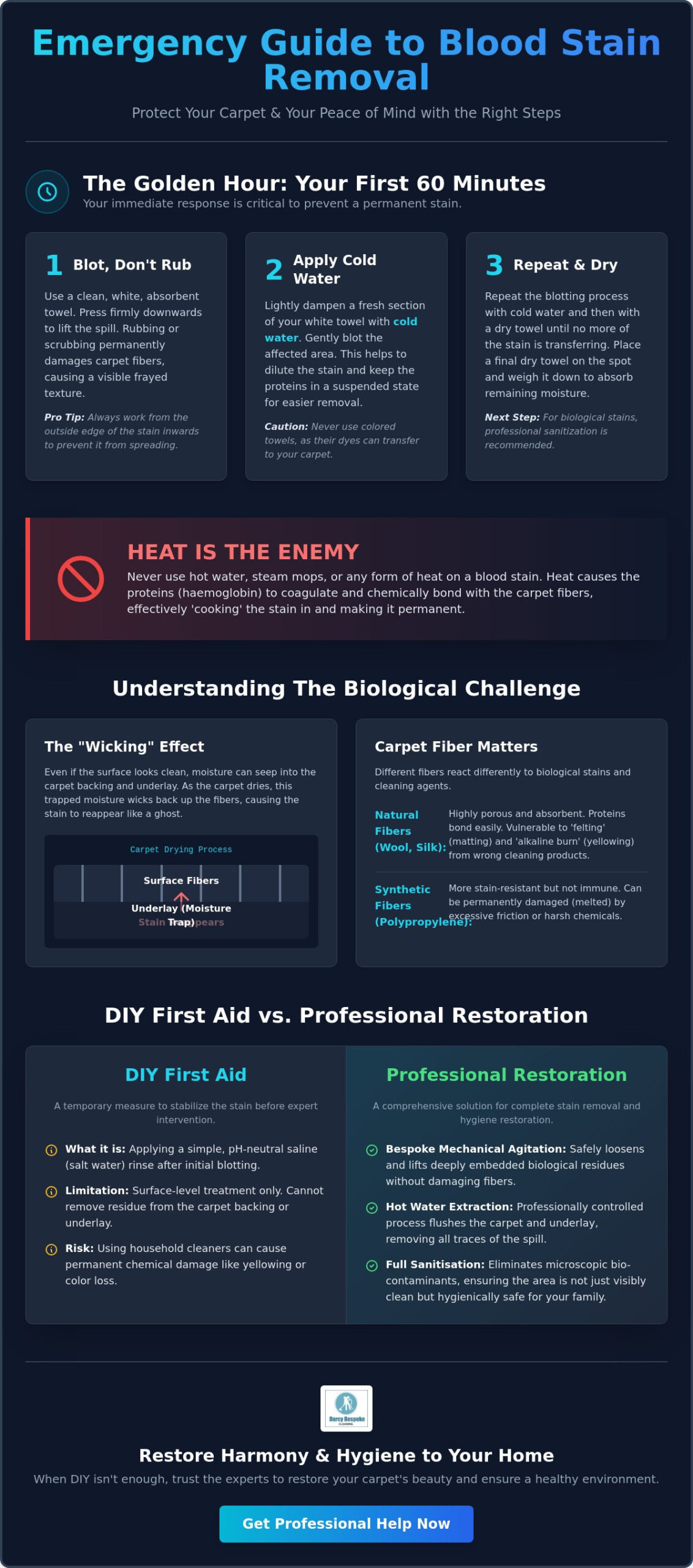
The first sixty minutes after an accident represent the ‘Golden Hour’ for successful restoration. During this brief window, the substance remains in a liquid state, making it far more responsive to gentle extraction before it begins to oxidise and bond with the carpet fibres. When you’re managing blood stain removal from carpet fife, your initial response dictates whether the stain remains a temporary nuisance or becomes a permanent scar on your home’s interior. It’s a moment that requires a steady hand and an understanding of the delicate materials underfoot.
Precision is vital during these early moments. You must select your tools with care. Always reach for a clean, white, un-dyed absorbent towel. Coloured towels, especially when dampened, carry the risk of dye transfer. This can complicate the recovery process by introducing synthetic pigments into the natural wool or synthetic blend of your carpet, creating a secondary problem that is often harder to resolve than the original spill.
The Cold Water Blotting Technique
Success begins with a refined touch. Instead of sweeping motions, apply firm, downwards pressure to lift the moisture directly into the towel. Always work from the outer edges of the spill toward the centre. This contained approach prevents the liquid from migrating deeper into the surrounding pile or seeping into the underlay. Don’t succumb to the temptation to scrub the area; mechanical friction can fray the delicate tips of the carpet fibres. This leads to a permanent change in texture that even professional cleaning cannot reverse. Once the tips are distorted, the way light reflects off the carpet changes, leaving a visible shadow even if the colour is fully removed.
Why Heat is the Enemy of Protein Stains
The chemistry of biological spills is unique. Blood contains haemoglobin, a protein that coagulates when exposed to warmth. While general stain removal techniques might suggest warm water for certain oils or sugars, doing so here will effectively ‘cook’ the protein into the carpet backing. This creates a chemical bond that is incredibly difficult to break. You should never use a steam mop or hot water on a fresh spill. Heat accelerates the setting process, turning a manageable task into a complex restoration project. By sticking strictly to cold water, you keep the protein in a suspended state, allowing for a much higher success rate during the final sanitisation phase.
Understanding the Biological Challenge: Why Blood Sets Quickly
Blood is more than a simple liquid; it is a complex biological tissue that presents unique challenges for restoration. In many Fife residences, the preference for natural materials like wool and silk adds a layer of complexity. Haemoglobin, the protein responsible for oxygen transport, possesses a remarkable chemical affinity for these protein-based fibres. This molecular bond explains why blood stain removal from carpet fife is often a race against time and chemistry. Success is found in the details; it is a balance of science, patience, and professional stewardship.
Beyond the visible surface, liquid often migrates deep into the carpet’s primary backing and the underlay below. This phenomenon, known as wicking, occurs when the moisture trapped in the lower layers travels back up the fibres as the carpet dries. It can result in a ghost-like reappearance of the stain days after you thought it was gone. Visual removal is merely the first stage of true restoration. Because blood is a potential biohazard, complete sanitisation is required to eliminate microscopic residues that could otherwise compromise the hygiene of your private environment.
Synthetic vs. Natural Fibres in Fife Homes
Fife homes often feature a mix of materials, each requiring a tailored approach. While synthetic polypropylene is inherently more resistant to absorption, it still requires a precise touch to avoid melting the fibres with excessive friction. Natural wool, however, is highly porous and acts like a sponge for biological proteins. If you apply the wrong treatment, you risk ‘felting’ the area, where the fibres tangle and mat together, permanently altering the carpet’s luxurious feel. Managing the specific needs of bespoke or high-pile luxury rugs requires an expert understanding of these material limits.
The pH Factor in Stain Removal
The chemistry of the cleaning agent is just as important as the technique used. Many common household products are highly alkaline. While these might work on synthetic surfaces, they can cause permanent ‘alkaline burn’ or yellowing on wool. Maintaining a neutral pH balance is the fundamental principle of safe carpet restoration, as it prevents chemical damage to delicate fibres while ensuring no sticky residues remain to attract future soil. While Good Housekeeping’s guide to removing blood stains provides excellent foundational advice for immediate DIY care, certain situations demand a more rigorous, scientific intervention. When considering blood stain removal from carpet fife, understanding these biological nuances is the difference between a successful recovery and a permanent mistake. For those managing older or more stubborn spills, a specialised stain removal treatment ensures that both the visual evidence and the underlying biological residues are expertly addressed.
Safe DIY Blood Removal Methods for Local Homeowners
Your home is a sanctuary, and maintaining its pristine condition requires a blend of prompt action and gentle chemistry. While professional intervention is the surest path to restoration, certain gentle home remedies can serve as an effective bridge during the early stages of a spill. For residents managing blood stain removal from carpet fife, the goal of any DIY attempt should be stabilisation rather than aggressive scrubbing. You’re acting as a temporary custodian of your carpet’s integrity. By using mild, non-toxic solutions, you can mitigate the stain’s impact without risking the chemical burns often caused by harsh retail products.
The Saline Method for Fresh Spills
For a fresh spill, a simple saline paste is often the most sophisticated first response. By mixing common table salt with a small amount of cold water, you create a medium that utilises osmosis to draw biological matter out of the fibres and into the salt crystals. Apply the paste gently and allow it to sit for several minutes before lifting it away with a clean, white cloth. This method is particularly effective for wool, as it avoids the sharp pH shifts that lead to permanent discolouration. To prevent the formation of a salt ring as the area dries, ensure you rinse the spot with a final, very light application of cold water and blot it thoroughly dry using the techniques discussed in our emergency protocol.
If the saline method requires further support, a neutral detergent rinse is the next logical step. Mix a few drops of a clear, fragrance-free dish soap with a cup of cold water. It’s vital to avoid over-saturation; too much liquid can cause the stain to spread or seep into the underlay. Follow this with a vinegar flush, using one part white vinegar to two parts cold water. This slight acidity helps break down stubborn protein residues while simultaneously neutralising any alkaline traces from the detergent, ensuring the fibres remain soft and resilient.
Risky Chemicals to Avoid
The market is flooded with ‘miracle’ sprays that promise instant results, yet these often carry a hidden cost. Many of these products rely on high concentrations of surfactants that are difficult to rinse out without professional extraction equipment. These residues remain in the pile, acting as a magnet for dust and oils, which eventually leads to a dark, sticky patch that looks worse than the original stain. Even more concerning is the use of bleach or hydrogen peroxide. While they may remove the blood, they frequently strip the pigment from the carpet fibres themselves. A five pound bottle of supermarket spray can easily lead to a repair bill in the hundreds if it causes permanent colour loss or fibre degradation.
Knowing when to stop is a mark of a discerning homeowner. If the stain remains visible after two gentle attempts with the methods mentioned above, you’ve reached the point of no return. Continued friction or the introduction of more liquid will only push the residue deeper or cause the carpet pile to fray. At this stage, the most responsible choice is to allow the area to dry and seek a specialised stain removal treatment. Professional care ensures that the recovery is complete, protecting both the beauty and the longevity of your investment.
Professional Extraction: The Darcy Bespoke Approach in Fife
When the limits of home remedies are reached, the transition to professional stewardship ensures the long-term health of your home’s interior. Our approach to blood stain removal from carpet fife is defined by a commitment to precision and the use of industry-leading technology. We don’t simply treat the surface; we perform a deep-seated restoration that respects the delicate nature of your carpet’s construction. By utilising the Alltec Advance 600, we provide high-powered steam extraction that reaches deep into the pile, lifting biological matter that domestic machines simply cannot touch. This isn’t a mere manual task. It’s a sophisticated process designed to return your environment to a state of absolute purity and calm.
Mechanical agitation is the often-overlooked secret to successful protein removal. We employ the Rotovac 360i, a specialised tool that uses rotary vacuum heads to gently but thoroughly agitate the carpet fibres from multiple angles. This movement is essential for breaking the stubborn bonds formed by dried haemoglobin without causing the fibre distortion associated with manual scrubbing. Each treatment is bespoke, carefully calibrated to the specific age, material, and weave of your carpet to ensure a result that is as safe as it is effective.
Deep Extraction and Sanitisation
True restoration goes beyond the visible red pigment. Because blood is a biological substance, our process includes a rigorous multi-stage sanitisation phase. We apply professional-grade anti-microbial treatments that neutralise microscopic residues within the carpet backing and underlay. This eliminates the risk of bacterial growth and addresses the source of biological odours. Our deodorising treatments don’t mask scents with heavy perfumes; they chemically dismantle the odour molecules, leaving your room feeling fresh and truly clean. This level of detail provides the peace of mind that only a specialist partner can deliver.
Fast Drying Times for Fife Families
We understand that your home is a busy environment that needs to remain functional. Our high-powered machinery is designed for maximum moisture recovery, which significantly reduces the time your carpets remain damp. Achieving Fast Drying Times is vital for more than just convenience. Rapid drying prevents the wicking effect mentioned earlier, where moisture from the backing travels up the fibres and brings residues back to the surface. It also serves as a critical safeguard against mould and mildew. Most carpets we treat are ready for use within a few hours, allowing you to return to your routine without delay. If you’re facing a challenging spill and require expert intervention, our Domestic Carpet Cleaning service is ready to restore the harmony of your home.
Restoring Harmony: Why Fife Trusts Darcy Bespoke Cleaning
A home is more than a collection of rooms; it is a sanctuary where memories are made and peace is preserved. When an accident occurs, it can feel like a disruption to that essential harmony. Our family-run business is founded on the principle of stewardship, treating every environment with the deep respect it deserves. We understand that blood stain removal from carpet fife is about more than just aesthetics. It is about restoring the safety and comfort of your private space. By choosing a partner that values quality over volume, you ensure that your home remains in the hands of experts who view their work as a refined craft rather than a mere manual task.
Trust is the foundation of our relationship with the community. We stand firmly behind the excellence of our results with a 100% satisfaction guarantee. If you aren’t completely happy with the outcome of our service, we’ll return to re-clean the area for free. This commitment to professional integrity is what we call the Darcy Difference. From the historic, cobbled streets of St Andrews to the vibrant coastal homes of Kirkcaldy, we serve the entirety of Fife with a quietly confident approach that delivers significant results without the need for aggressive sales tactics.
Our Commitment to Fife Residents
Accidents are inherently stressful, but the recovery process doesn’t have to be. We provide a reassuring, calm presence from the moment you contact us. Our team operates with total discretion, understanding the sensitive nature of biological spills for both our domestic and commercial clients. Whether you require a single stain removal treatment or a full property restoration, the booking process is seamless and efficient. We handle every detail with grace, allowing you to focus on returning your home to its natural state of order.
A Final Note on Carpet Stewardship
Your carpets are a significant investment in your home’s comfort and style. While we’ve discussed the immediate needs of blood stain removal from carpet fife, long-term care is equally vital. Regular professional maintenance doesn’t just clean; it preserves the life of the fibres and prevents the gradual degradation caused by hidden particulates. To safeguard your home against future accidents, we highly recommend our professional fabric protection. This treatment creates an invisible barrier that repels liquids, giving you those precious extra minutes to act before a spill becomes a stain. We invite you to Request a bespoke quote for stain removal today and experience the peace of mind that comes with expert guardianship of your environment.
Preserving the Elegance of Your Home
Managing a biological spill requires a balance of immediate action and scientific precision. By prioritising cold water extraction and avoiding harsh household chemicals, you’ve already taken the first steps toward protecting your investment. However, true restoration involves more than just removing a visible mark. It requires the deep sanitisation and fibre care that only specialised equipment can provide. When you’re faced with the complexities of blood stain removal from carpet fife, remember that you don’t have to navigate the recovery process alone.
As family-run Fife specialists, we bring a dedicated sense of stewardship to every home we enter. Our use of advanced Rotovac 360i technology ensures that even the most stubborn residues are lifted with grace and efficiency. We stand by our work with a 100% satisfaction guarantee, ensuring your peace of mind is as restored as your flooring. Your home deserves the highest standard of care and a partner who understands the nuances of premium materials.
Restore your carpets with our bespoke stain removal service and return your living space to its original state of harmony. We’re here to help you move past the stress of an accident with quiet, expert execution.
Frequently Asked Questions
Is blood a permanent stain on carpet?
Blood is not inherently permanent, but it can become a lasting fixture if it is treated with heat or left to oxidise within the fibres. The protein structure of haemoglobin creates a strong bond with natural materials like wool, making early intervention essential. Professional restoration techniques are designed to break these biological bonds, returning the carpet to its original, pristine state before the damage becomes irreversible.
Can you get dried blood out of a carpet?
You can certainly remove dried blood from a carpet, though the process requires a more sophisticated approach than treating a fresh spill. It involves a careful rehydration of the protein followed by the application of specialised enzymes that dismantle the dried matter. This meticulous level of care is a hallmark of expert blood stain removal from carpet fife, ensuring that even older accidents are resolved with precision and grace.
Will professional cleaning remove the smell of blood?
Professional cleaning effectively eliminates biological odours by neutralising the residue at its microscopic source. Rather than simply masking the scent with perfumes, a dedicated sanitising treatment and deep extraction process remove the organic matter entirely. This thorough approach ensures that your home environment remains fresh and hygienic, reflecting the high standards of a well-maintained private residence.
Is it safe to use salt on a blood stain?
Salt is a safe and effective first response for fresh spills, as it utilizes osmosis to lift moisture out of the pile. When applied as a gentle paste with cold water, it helps stabilise the area and prevents the stain from spreading deeper into the backing. For those managing blood stain removal from carpet fife at home, this non-toxic method provides a reliable bridge until professional deep cleaning can be performed.
How much does professional stain removal cost in Fife?
The investment for professional restoration in Fife is determined by the unique characteristics of the spill and the delicate nature of the carpet material. Because every home environment requires a tailored approach, we provide a bespoke quote based on the specific requirements of your project. This ensures an accurate assessment that reflects the rigorous standards and high-quality equipment used during the restoration process.
Can I use a steam cleaner on a blood stain?
You should avoid using a domestic steam cleaner on any biological spill, as the high temperature will permanently set the protein into the fibres. Heat causes the blood to coagulate, creating a chemical bond that is incredibly difficult to break once it has ‘cooked’ into the carpet. Professional extraction systems use carefully controlled temperatures and high-powered suction to lift residues out safely without risking permanent setting.
What is the best way to clean blood out of a wool rug?
The most effective method for wool is a combination of cold water blotting and pH-neutral solutions to protect the natural integrity of the fibres. Wool is sensitive to alkaline cleaners, which can cause permanent yellowing or matting if not managed correctly. A refined, material-specific approach ensures that the rug’s luxurious texture and vibrant colours are preserved while the biological matter is expertly removed.
Does Darcy Bespoke Cleaning offer emergency call-outs in Fife?
We recommend contacting us directly to discuss your specific needs and confirm our current availability for restoration across the Fife area. Our team acts as a dedicated partner in the stewardship of your home, prioritising quality and discretion in every task we undertake. We guide our clients through the process with a sense of quiet authority, ensuring every detail is handled with efficiency and care.