
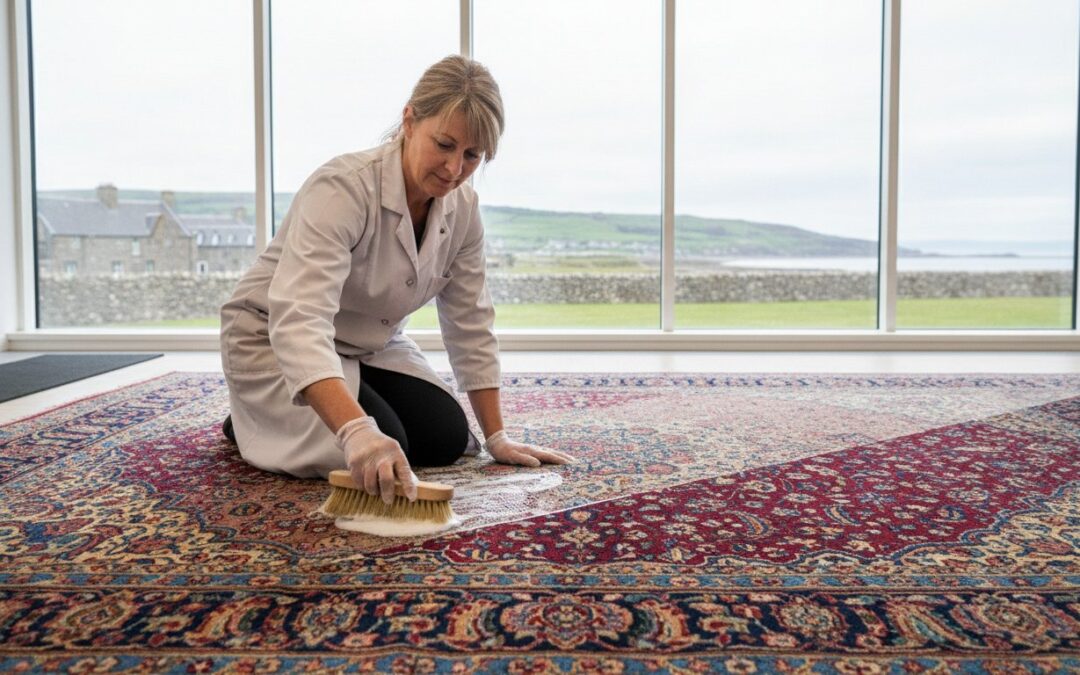
What if the very act of cleaning your most prized heirloom was actually the greatest threat to its survival? For many collectors, the search for antique rug cleaning fife is often clouded by the memory of a generalist cleaner who treated a hand-knotted masterpiece like a common synthetic carpet. You know that these textiles are more than mere furnishings; they’re intricate records of heritage that require a guardian’s touch. It’s natural to feel a sense of trepidation when considering a deep clean, especially when the fear of migrating dyes or structural strain from aggressive machinery is so prevalent.
We believe that professional care should be a restorative experience that brings peace of mind rather than anxiety. This article will show you how a tailored, meticulous approach can safely lift decades of deep-seated soil from the foundation of your rugs without compromising their delicate integrity. You’ll discover the specific methods used to ensure vibrant colours remain exactly where they belong, alongside expert advice on preserving your investment for the next generation. From understanding pH-neutral chemistry to the art of the hand-wash, we’re here to guide you through the process of true textile transformation.
Key Takeaways
- Discover why the historic homes of Fife require a preservation-first methodology to safeguard delicate textile heritage.
- Learn how the unique science of hand-spun fibres and natural vegetable dyes dictates the specific care your rug receives.
- Understand the critical differences between generalist carpet cleaning and specialist antique rug cleaning fife to protect your investment.
- Identify how to mitigate local environmental challenges like coastal dampness and the persistent threat of moth damage in Scottish properties.
- Explore the meticulous steps of a bespoke restoration process, including the vital role of mechanical dusting in removing hidden grit.
The Art of Antique Rug Care: Why Fife’s Finest Textiles Require a Specialist Touch
Antique rug cleaning isn’t a mere household chore; it’s a sophisticated act of preservation. When we discuss antique rug cleaning fife, we’re looking at a methodology that prioritizes the long-term survival of the textile over a quick aesthetic fix. Fife is home to an extraordinary density of historic properties. From the coastal townhouses of St Andrews to the rural estates near Cupar, these homes often serve as private galleries for hand-knotted heritage. These rugs have survived centuries of history, yet they can be destroyed in minutes by improper handling.
Many owners mistake a bright surface for a clean rug. In reality, the most dangerous soil hides deep within the foundation. Sharp particles of grit act like tiny saws, cutting through the warp and weft as people walk across the pile. At Darcy Bespoke Cleaning, we approach every project through the lens of textile stewardship. This means we don’t just clean a rug; we manage its environment and physical state using established textile conservation principles. Our goal is to ensure the rug remains a viable investment and a beautiful family heirloom for another hundred years.
The Distinction Between Modern and Antique Rugs
Modern rugs are typically constructed for utility, often featuring machine-made foundations held together by latex or synthetic glues. Antiques are entirely different. They rely on the structural integrity of hand-spun wool, silk, or even goat hair. As these fibres age, they lose their natural moisture and flexibility. An antique wool rug requires a delicate pH balance to remain supple. If the environment becomes too acidic or too alkaline, the fibres become brittle and snap. We pay particular attention to the warps in older pieces. These internal bones of the rug are often made of aged cotton or silk, which can become incredibly fragile over time.
The Risk of Generalist Cleaning Methods
The most significant threat to a textile’s value is the use of aggressive, generalist machinery. High-pressure steam cleaning, which is standard for synthetic carpets, is catastrophic for an antique. The intense heat can shrink the foundation and permanently distort the rug’s shape. Standard alkaline detergents are designed to break down heavy grease on synthetic fibres, but they’re far too harsh for natural vegetable dyes. Fugitive dyes are unstable pigments that migrate across the rug’s surface when exposed to improper moisture or chemicals, leading to permanent staining that devalues the piece instantly.
Understanding the Anatomy of an Antique: Fibres, Natural Dyes, and Integrity
To truly appreciate the necessity of specialist care, one must look closely at the biological composition of these textiles. Antique rugs are not merely floor coverings; they are complex structures of organic matter. Whether it’s the resilient, lanolin-rich hand-spun wool of a Persian Tabriz or the delicate silk of a Hereke, these fibres possess a unique cellular memory. Some tribal pieces even incorporate goat hair for its legendary durability. Over decades, these materials become more than just art. They become sensitive to their environment and require a custodian who understands their physical limits.
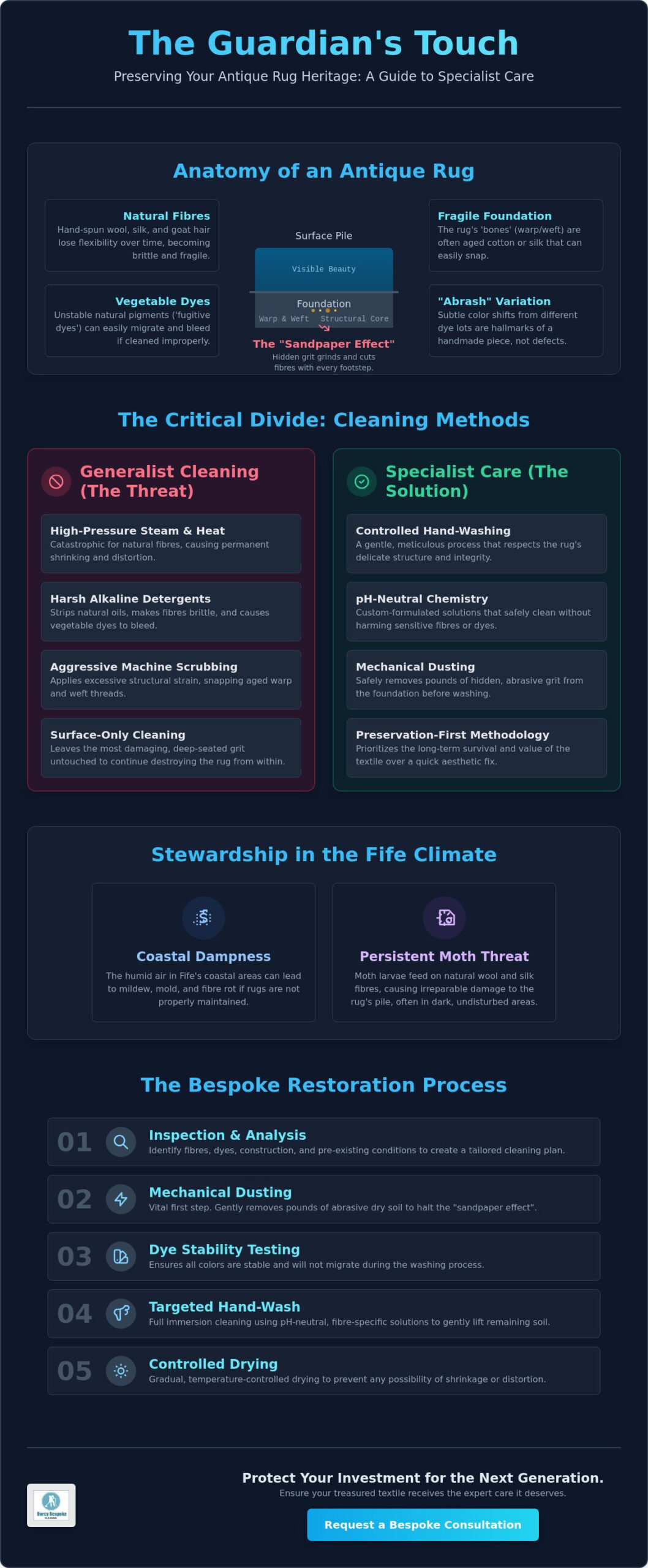
One of the most insidious threats to these fibres is the “sandpaper effect.” Microscopic grit and soil particles settle deep into the foundation of the rug. Every time you walk across the pile, these sharp crystals grind against the warp and weft. This process slowly saws through the fibres from the inside out. This is why surface-level vacuuming is often insufficient for antique rug cleaning fife. Deep, foundation-level soil removal is the only way to halt this mechanical wear and preserve the structural integrity of the piece.
Authentic antiques also display “abrash,” which are subtle, horizontal colour variations caused by different dye lots or varying wool absorption. These aren’t defects. They’re essential markers of a hand-crafted piece and help experts identify the rug’s origin. Understanding these nuances is part of being a responsible steward. By adhering to expert textile conservation tips, you can ensure these unique characteristics are celebrated rather than scrubbed away by aggressive, uninformed cleaning methods.
The Role of Natural Vegetable Dyes
Ancient weavers used pigments derived from the earth. Indigo provided deep blues, madder root created rich reds, and larkspur offered vibrant yellows. These natural dyes are chemically sensitive. They don’t have the heavy synthetic fixatives found in modern textiles. If exposed to standard high-alkaline cleaners, they will “bleed,” causing colours to migrate into one another and ruin the pattern. Our rug cleaning process utilizes specialist pH-neutral rinses that effectively “lock” these ancient pigments in place during the wash, ensuring the design remains crisp and vibrant.
Foundation and Structural Integrity
The “weft and warp” are the invisible bones of your rug. As rugs age, these foundation threads can succumb to dry rot, becoming brittle and prone to snapping under tension. We pay close attention to the fringe detailing. It’s often the first area to show signs of distress or structural failure. To protect these fragile structures, we replace industrial vacuuming with controlled mechanical dusting. This gentle agitation safely vibrates “hidden” pounds of grit out of the foundation without the risk of pulling or tearing the aged fibres.
Specialist vs. Generalist Cleaning: Protecting Your Investment
Choosing a provider for antique rug cleaning fife is a decision that impacts both the beauty of your home and the long-term value of your collection. While a generalist carpet cleaner might offer a convenient in-home service, this approach often lacks the controlled environment necessary for antique care. True restoration requires the ability to monitor drying speeds and humidity levels, which is rarely possible in a domestic setting. If you’re unsure about the current state of your collection, our experts provide a detailed rug cleaning assessment to identify potential risks before they escalate.
Untrained hands pose significant risks to high-value textiles. Without a deep understanding of textile chemistry, a “cheap” service can lead to irreversible browning or permanent shrinkage. A low-cost quote often masks the absence of specialist insurance or the use of harsh, recycled chemicals that strip natural oils from the wool. These aren’t just aesthetic flaws; they’re structural failures that slash the item’s market value. Investing in a specialist who holds recognized certifications ensures that your rug is treated with the rigour it deserves.
The Darcy Bespoke Certification Advantage
Our team has undergone intensive training with leading UK rug experts to master the nuances of antique rug cleaning fife and beyond. We don’t use “one size fits all” equipment. Instead, we utilize advanced systems like the Alltec Advance 600, which is meticulously calibrated to provide the precise pressure and temperature required for aged wool and silk. This level of technical control allows us to offer a 100% satisfaction guarantee, reflecting our quiet confidence in the results we deliver. We believe that professional integrity is built on this foundation of specialized knowledge and superior technology.
Investment Protection and Appraisal
Professional care is the most effective way to maintain the resale or heirloom value of your collection. A clean rug isn’t just about appearance; it’s about longevity. By adhering to professional textile conservation standards, we address issues like fraying and pest vulnerability before they become critical. Removing deeply embedded grit prevents the internal friction that eventually leads to “bald spots” where the pile has been worn away to the foundation.
When you consider that museum-quality Persian rugs can appreciate significantly over time, the cost of expert maintenance is a minor fraction of the value being protected. Neglecting this care doesn’t just dull the colours; it invites the slow decay of the very fibres that give the piece its worth. This proactive stewardship transforms a simple maintenance task into a sophisticated lifestyle enhancement that preserves your textile heritage for the next generation.
Stewardship in the Fife Climate: Maintaining Your Rug at Home
Living in Fife presents a unique set of environmental challenges for the discerning collector. The bracing coastal air and the thermal mass of traditional stone architecture create a microclimate that requires active management. While these historic settings provide a beautiful backdrop for textile heritage, they also introduce risks like elevated humidity and fluctuating temperatures. Stewardship at home is about more than just aesthetics; it’s about understanding how your environment interacts with the organic nature of your rugs. We believe that every homeowner should act as a temporary custodian, ensuring that these masterpieces remain in peak condition between professional visits.
The “Moth Threat” is particularly acute in Scottish homes, where antique wool is a prime target for larvae. These pests thrive in undisturbed, dark areas under heavy furniture where vacuuming might be less frequent. We recommend a monthly inspection of the rug’s underside to catch any early signs of activity before structural damage occurs. Should an accidental spill happen, your immediate response is critical to the rug’s survival. Always adhere to the “Blot, Don’t Rub” rule. Using a clean, white cotton cloth to absorb moisture prevents the liquid from penetrating the foundation. Rubbing, by contrast, can irreversibly damage the delicate scales of aged fibres and cause permanent distortion of the pile.
Managing Humidity and Airflow
Placing a rug directly on the cold stone floors common in St Andrews or Cupar can lead to condensation traps. This moisture is a precursor to mildew and the dreaded dry rot, which can render a rug valueless. To mitigate this, we advise the use of high-quality, breathable underlays. These provide a necessary air gap and prevent the rug from becoming a moisture magnet. You should look for early signs of trouble, such as a musty odour or an unusual stiffening of the foundation, which indicate that the environment has become too damp for the textile’s health.
The Fife Homeowner’s Maintenance Checklist
A consistent maintenance routine is the best way to extend the time between professional deep cleans. If you suspect your collection has been compromised by local environmental factors, our professional rug cleaning service can restore the balance and protect the fibres. Follow this simple checklist for ongoing care:
- Weekly Suction: Vacuum your rug using suction only. Never allow a beater bar to touch the delicate fringes, as this can cause them to unravel.
- The Quarterly Turn: Rotate your rug by 180 degrees every three months. This ensures that sun-fading and foot traffic wear are distributed evenly, especially in conservatory settings.
- Deep Dusting: When the colours begin to look muted despite regular vacuuming, it’s time to consider a professional antique rug cleaning fife service to remove the deep-seated grit that a household vacuum cannot reach.
The Darcy Bespoke Process: Expert Rug Restoration in Fife
The Darcy Bespoke process represents the physical manifestation of our commitment to textile stewardship. Each project begins with a rigorous pre-inspection where we identify the specific fibre composition and document any existing structural weaknesses. This initial assessment allows us to create a customized plan for antique rug cleaning fife, ensuring that the methodology is perfectly aligned with the rug’s age and fragility. We never proceed without a complete understanding of the piece’s history and current state.
Following inspection, we move to mechanical dusting. This critical stage removes the hidden pounds of grit that have migrated into the foundation over years of use. By utilizing gentle vibrations, we dislodge these abrasive particles before they can cause further internal damage. Once the foundation is clear, we choose between a full submersion wash or a specialized low-moisture method. This choice is dictated entirely by the rug’s integrity and the stability of its construction. Controlled drying follows, a phase where we manage airflow and humidity to prevent wicking and ensure no damp-related odours remain.
Dye Testing and Pre-Treatment
Before any moisture is introduced, we perform a meticulous dye stability test on every individual colour in the pattern. This ensures that the rich vegetable pigments we discussed in previous sections remain exactly where the weaver intended. We treat individual stains with chemistry specifically designed for natural fibres, avoiding the harsh solvents that can strip wool of its lanolin. For certain restorations, we utilize the Rotovac 360i for delicate agitation, providing a consistent and thorough clean that respects the rug’s structural limits.
Finishing and Grooming
The restoration isn’t complete until the rug has been meticulously finished. We hand-detail the fringes to restore their original lustre and groom the pile so it reflects light with its intended depth. This final grooming ensures the fibres lay correctly, highlighting the intricate patterns and natural colour variations. Every project concludes with a final inspection and the Darcy 100% satisfaction guarantee, a testament to our role as a dedicated custodian of your environment.
Booking Your Specialist Clean
Securing a bespoke quote for your collection in St Andrews, Cupar, or Dunfermline is a straightforward process. During our initial consultation, we’ll discuss the specific needs of your textile and provide a clear, professional recommendation for its care. It’s an opportunity to ask questions and gain peace of mind before the transformation begins. We’re here to ensure your investment remains a vibrant part of your home for years to come. Protect your heritage. Book a specialist rug assessment today.
Secure the Future of Your Textile Heirlooms
Choosing a dedicated partner for your collection is the final step in a journey of preservation. We’ve explored the hidden dangers of foundation grit and the chemical sensitivity of ancient dyes, but the ultimate goal remains the long-term enjoyment of your art. By choosing antique rug cleaning fife, you’re opting for a service that treats your property with the quiet authority it deserves. Your rugs aren’t just floor coverings; they’re tangible links to the past that require a modern, expert touch to survive the future.
Darcy Bespoke Cleaning brings a level of technical rigour that is unmatched in the region. Our specialists are trained by Paul Pearse, one of the UK’s foremost rug experts, and we utilize the specialized power of the Alltec Advance 600 and Rotovac 360i. Every project is backed by our 100% Satisfaction Guarantee. If you aren’t delighted with the results, we will re-clean the item for free. This commitment to quality ensures that your home remains a place of refined beauty and peace of mind.
Don’t leave the survival of your heritage to chance. Our team is ready to provide the specialized stewardship your collection requires. Request Your Bespoke Antique Rug Cleaning Quote and experience the difference of a truly professional restoration. We look forward to helping you protect your textile legacy.
Frequently Asked Questions
Is it safe to clean a 100-year-old Persian rug?
Yes, it’s entirely safe when performed by a specialist who understands textile conservation. In fact, leaving a century’s worth of grit in the foundation is far more dangerous than a controlled clean. We begin every project with a meticulous assessment of the rug’s structural integrity. This ensures that the cleaning process supports the longevity of the piece rather than stressing its aged fibres.
How much does professional antique rug cleaning cost in Fife?
Pricing for antique rug cleaning fife is determined by the specific needs of each individual piece. Factors such as the rug’s dimensions, the complexity of the weave, and the delicacy of the natural dyes all influence the final cost. Because antique textiles require a labor-intensive hand-washing process rather than a quick machine clean, we provide bespoke quotes that reflect the specialized care and time required for your investment.
Can you remove pet odours from an antique wool rug?
We can effectively neutralize pet odours using specialized sanitising and deodorising treatments designed for natural fibres. Unlike surface sprays that merely mask the scent, our process addresses the organic matter trapped deep within the rug’s foundation. By utilizing pH-neutral chemistry, we safely lift the odour-causing particles without compromising the delicate wool or silk. This restorative approach returns a sense of freshness and calm to your private environment.
Will the colours run during the cleaning process?
Colours will not run when the cleaning is managed by a trained specialist who performs rigorous dye stability testing. We test every pigment in your rug’s pattern before any moisture is introduced. If we identify unstable vegetable dyes, we utilize specific acidic rinses that lock the colours in place. This level of technical control prevents the migration of pigments and ensures the design remains crisp and vibrant.
How long does it take for a specialist rug clean and dry?
The timeline for a specialist clean typically ranges from seven to fourteen days. This duration allows for a thorough pre-inspection, mechanical dusting, and a meticulous wash. Most importantly, it ensures the rug undergoes a controlled drying phase. Rushing this process can lead to wicking, where soil travels to the surface, or the development of musty odours. We prioritize a smooth, deliberate pace to achieve the most refined results.
Do you offer a collection and delivery service in Fife?
We provide a professional collection and delivery service for clients throughout Fife. This allows us to transport your valuable textiles to a controlled environment where we can utilize specialized machinery and dedicated drying facilities. Whether you’re based in St Andrews, Dunfermline, or Cupar, we handle the logistics with the same level of discretion and care that we apply to the cleaning process itself.
What is the difference between a rug and a carpet clean?
Carpet cleaning is generally a maintenance task performed in-situ, whereas rug cleaning is a sophisticated restoration process. Rugs require mechanical dusting to remove grit from the foundation, a step that’s impossible with standard carpet machinery. Additionally, antique rugs often need full submersion washing and temperature-controlled drying, which can only be achieved in a specialist facility. This distinction is vital for protecting the long-term value of your textile heritage.
How often should an antique rug be professionally cleaned?
Professional cleaning is generally recommended every two to five years. The specific frequency depends on the rug’s location and the level of foot traffic it receives. Rugs in high-traffic hallways may require more frequent attention to prevent the sandpaper effect of grit grinding into the fibres. Regular professional care acts as a form of preventative stewardship, maintaining the rug’s beauty and preventing the slow decay of its organic structure.