
What if the liquid you reach for to save your furniture is actually the primary cause of those stubborn, permanent water marks? Most owners treat a spill with urgency, yet the best way to clean a microfiber sofa isn’t about speed; it’s about a refined understanding of textile chemistry. You likely feel the frustration of attempting a DIY fix only to be left with fabric that feels stiff or “crunchy” once it dries. It’s a common struggle, but your home should remain a sanctuary of comfort rather than a source of worry over lingering pet odours or damaged upholstery.
We believe in a philosophy of stewardship, where every piece of furniture is treated with the precision and respect it deserves. This guide provides the definitive professional methods to restore your sofa to its original, velvet-soft state while ensuring the fabric remains fully protected. You’ll discover how to navigate cleaning codes with confidence and select the right agents to achieve a pristine, odour-free result. We will preview the sophisticated techniques and health-focused chemistry that define modern upholstery care in 2026, giving you total peace of mind.
Key Takeaways
- Identify the specific cleaning code hidden beneath your cushions to ensure you select a safe treatment method for your unique upholstery.
- Learn why the best way to clean a microfiber sofa starts with high-powered dry soil removal to prevent the formation of unsightly water rings.
- Avoid the common “crunchy” texture caused by residual minerals and soaps by mastering the delicate balance of moisture and suction.
- Discover how professional-grade technology provides a level of restoration and odour removal that domestic machines simply cannot match.
- Implement a strategy of ongoing stewardship through regular maintenance and fabric protection to preserve the elegance of your living environment.
Deciphering the Code: The Science of Microfiber Upholstery
To truly understand what is microfiber, we must look at the material on a microscopic level. These fabrics are engineered from high-density synthetic blends, typically polyester and nylon, with fibres so fine they’re less than one denier in thickness. While this density creates the soft, suede-like texture that defines a premium living space, it also creates an immense surface area. This physical structure makes the fabric a literal magnet for dust, skin oils, and microscopic debris. Finding the best way to clean a microfiber sofa isn’t just a matter of aesthetics; it’s a technical requirement to maintain the integrity of these tightly woven filaments.
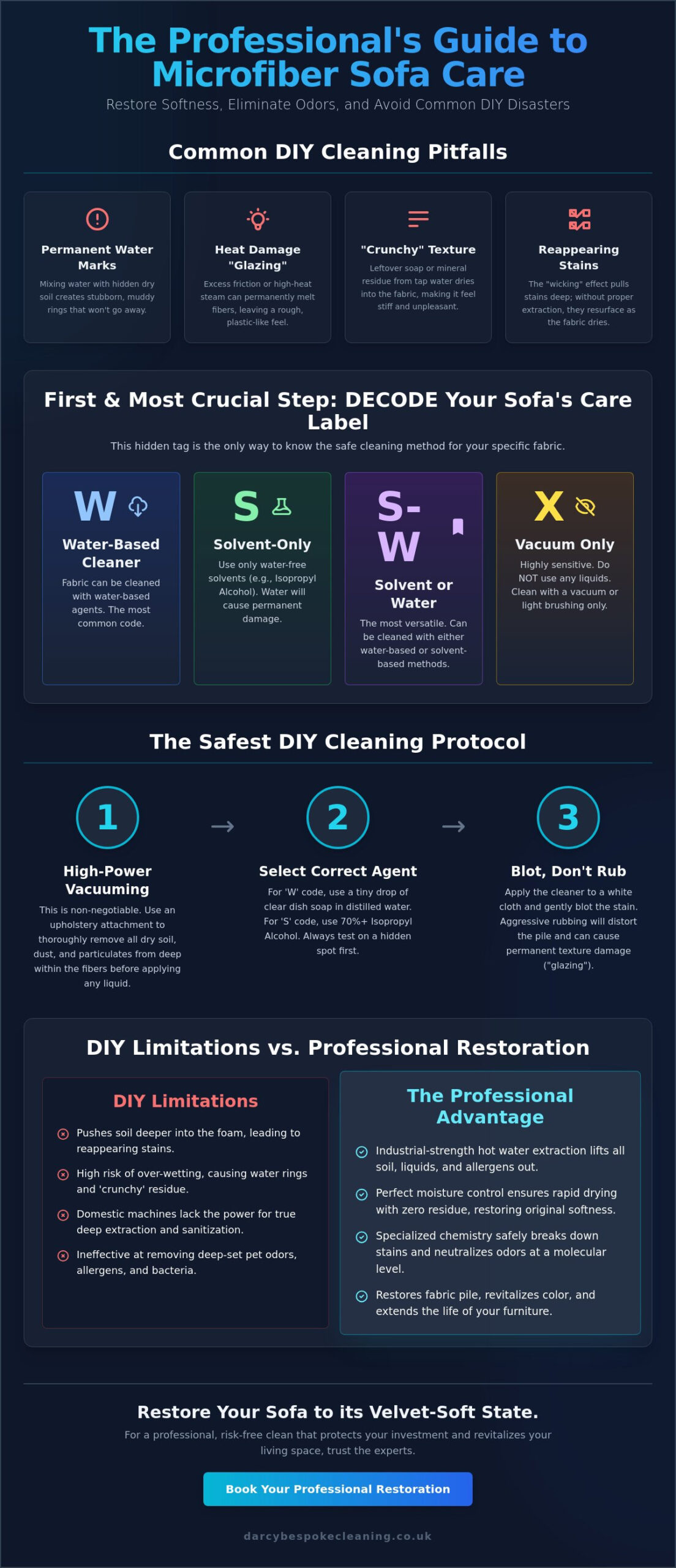
The first step in any professional-grade restoration is locating the manufacturer’s care label, usually tucked discreetly beneath the seat cushions or along the base frame. This label isn’t merely a suggestion; it’s a chemical roadmap. Understanding these codes is vital because microfiber reacts differently to moisture than natural textiles like cotton or wool. Using the wrong agent can lead to permanent discolouration or a complete breakdown of the fabric’s soft hand-feel.
The Four Essential Cleaning Codes
- Code W: This indicates the fabric is resilient enough for water-based cleaning agents. It’s the most common code for modern domestic sofas, allowing for mild detergents.
- Code S: A strict requirement for anhydrous (water-free) solvents. If you apply water to an “S” coded fabric, you risk creating permanent rings as the water reacts with the synthetic dyes and finishes. High-purity isopropyl alcohol is often the professional choice here.
- Code S-W: These pieces offer the most versatility, meaning the best way to clean a microfiber sofa with this tag involves either professional steam or solvent-based treatments.
- Code X: These rare fabrics are highly sensitive. They require professional vacuuming only. Any attempt at wet cleaning, even with solvents, can cause irreparable damage to the pile.
Why Microfiber Requires Special Stewardship
Microfiber possesses a unique capillary action that sets it apart from other upholstery. Instead of allowing a spill to sit on the surface, the dense weave pulls liquids deep into the pile and the underlying foam. This “wicking” effect is why stains often reappear days after a DIY cleaning attempt. Without industrial-strength extraction, the soil simply hides beneath the surface, waiting to rise again as the fabric dries.
It’s also important to remember that microfiber is essentially a form of plastic. It’s highly sensitive to heat. Excessive friction during scrubbing or the use of a high-heat domestic steam cleaner can permanently melt or “glaze” the synthetic fibres. Once these fibres melt, the sofa loses its signature softness and takes on a rough, plastic-like texture that cannot be reversed. This is why we approach every piece as a custodian of your home, emphasizing gentle, effective chemistry over aggressive physical force. Always test any solution on a hidden area first to ensure the dye remains stable and the texture remains supple.
The Safest DIY Cleaning Method for Microfiber Furniture
While professional intervention remains the gold standard for textile preservation, maintaining your furniture between deep cleans requires a disciplined, methodical approach. The best way to clean a microfiber sofa at home begins with a high-powered vacuum. This isn’t a mere surface sweep. You must use an upholstery attachment with significant lift to draw out dry particulates that have settled deep within the dense weave. If you skip this preliminary step, any liquid cleaner will simply turn that dust into a muddy residue. This is the primary cause of the “crunchy” texture that often plagues DIY attempts. We believe in a philosophy of gentle stewardship; your goal is to lift the soil, not drive it deeper into the foam.
Once the dry soil is removed, you must select the correct agent based on the codes we discussed previously. For “S” coded fabrics, 70% Isopropyl alcohol is the professional choice because it evaporates quickly without leaving water marks. For “W” coded pieces, a single drop of clear, fragrance-free dish soap is sufficient. Regardless of the agent, the application must be controlled. We advocate for a “Blot, Don’t Rub” philosophy. Aggressive scrubbing distorts the synthetic filaments, creating a permanent glaze that ruins the fabric’s soft hand-feel. If the staining feels overwhelming or you’re concerned about delicate fibres, seeking expert sofa cleaning ensures the restoration is handled with industrial precision.
Step-by-Step Solvent Cleaning (Code S)
Lightly mist the affected area with rubbing alcohol using a fine-mist spray bottle. Do not pour the liquid directly onto the fabric. Use a clean, white microfibre cloth to blot the stain, working from the outside edges toward the centre to prevent the soil from spreading. Once the spot is removed, allow the area to air dry completely. This usually takes between 15 and 30 minutes. Finally, use a soft-bristled brush to gently groom the fabric. This “massaging” of the fibres breaks up any slight stiffness and restores the original nap of the material.
Step-by-Step Water-Based Cleaning (Code W)
The best way to clean a microfiber sofa with a “W” code is to use the “dry foam” method. Mix your clear soap with distilled water in a bowl and whisk it until a thick foam forms. Apply only the suds to the fabric using a sponge. This limits the amount of moisture that penetrates the cushioning. Rinse the area by blotting with a microfibre cloth that is damp with plain distilled water. To prevent the formation of “tide marks” or rings, use a fan to ensure the fabric dries as rapidly as possible. This controlled drying process is essential for maintaining the uniform appearance of the upholstery.
Why DIY Microfiber Cleaning Often Goes Wrong
Many homeowners embark on a cleaning project with optimism, only to be met with a result that feels less than pristine. While the best way to clean a microfiber sofa involves precision, domestic attempts frequently result in unsightly water rings. This phenomenon, known as wicking, occurs because moisture acts as a transport for hidden soil. As the wet area dries, the liquid moves toward the outer edges of the spot, carrying dissolved pollutants from the backing and foam with it. When the water finally evaporates at the perimeter, it leaves a concentrated line of debris behind. This is the anatomy of the dreaded water ring, a mark that often looks worse than the original spill.
Another common frustration is the “crunchy” fabric syndrome. This stiff, unpleasant texture is usually caused by residual surfactants or minerals trapped within the dense weave. Because microfiber is engineered to hold onto particulates, it’s incredibly difficult to rinse away every trace of soap using standard household tools. These residues dry into a microscopic film that binds the fine filaments together, robbing the sofa of its signature velvet-like touch. Furthermore, surface cleaning often fails to address odour entrapment. By wetting the fabric without professional-grade extraction, you may inadvertently push bacteria and pet doddre deeper into the internal foam, where they become trapped and continue to off-gas.
We often see the consequences of well-intentioned “hacks” involving vinegar or bicarbonate of soda. While these are staples of domestic cleaning, they can be remarkably aggressive on delicate synthetics. Vinegar’s acidity can weaken certain dyes over time, while the abrasive nature of bicarbonate of soda can scratch the microscopic polyester loops. True stewardship of your furniture requires avoiding these unpredictable reactions in favour of pH-balanced, textile-specific chemistry.
The Problem with Hard Water in Fife
In regions like Fife, the mineral content in the local water supply poses a significant challenge to upholstery care. Calcium and magnesium ions in hard water can dry into a white, crusty residue that is particularly visible on darker microfiber fabrics. If you must attempt a minor spot clean, always use distilled water. This ensures you aren’t introducing new minerals into the fibres. However, professional-grade deionised solutions remain superior, as they are specifically formulated to suspend soil without leaving any mineral trace behind.
Fibre Distortion and Texture Loss
The best way to clean a microfiber sofa is to prioritize gentleness, yet many people resort to aggressive scrubbing when a stain proves stubborn. This physical force permanently flattens the tiny “loops” that give the fabric its soft hand-feel. Once these fibres are distorted, the light reflects off them differently, creating a permanent “bruised” appearance. Similarly, using a hair dryer on high heat to speed up the drying process can cause “glazing,” where the synthetic filaments actually melt together. If your sofa feels rough to the touch or looks shiny in certain spots, it may be a sign of permanent thermal or mechanical damage.
Professional Restoration: The Darcy Bespoke Cleaning Approach in Fife
While the domestic methods discussed previously offer a temporary reprieve, professional restoration is the best way to clean a microfiber sofa when you demand a truly pristine result. At Darcy Bespoke Cleaning, we view our role as one of stewardship. We don’t merely perform a manual task; we act as custodians of your private environment, ensuring every textile is treated with the precision it requires. Our approach in Fife is defined by the use of industrial-grade technology that far surpasses the capabilities of any rental machine or domestic vacuum. We utilize the Alltec Advance 600, a powerhouse of engineering that provides the intense suction necessary for total soil removal. This ensures that the moisture we introduce is immediately extracted, preventing the wicking and water rings that often ruin DIY projects.
Advanced Machinery vs. Domestic Tools
The difference between a surface clean and a deep restoration lies in the equipment. We often employ the Rotovac 360i, which uses multi-directional mechanical agitation to lift soil from every angle. This process is significantly gentler than hand scrubbing because it provides a uniform, controlled movement that avoids distorting the delicate synthetic loops of the microfiber. Our system provides several key benefits for your home:
- High-Temperature Steam: We sanitise the fabric and break down embedded oils without the need for the harsh chemicals that leave a “crunchy” residue.
- Industrial Suction: The Alltec Advance 600 removes moisture and soil from the deepest layers of the pile and the foam beneath.
- Rapid Dry Technology: Our powerful airflow ensures you are back on your sofa in hours, not days.
Bespoke Stain and Odour Treatments
Every home presents a unique set of challenges, from the complexity of pet urine to the stubborn nature of red wine or grease. We don’t believe in a one-size-fits-all solution. Instead, Darcy Bespoke Cleaning applies tailored chemistry to neutralise smells at the molecular level rather than simply masking them with temporary fragrances. Our Stain Removal Service Fife is designed to identify the specific bond between the soil and the fibre, allowing for a targeted extraction that preserves the fabric’s integrity. To ensure your absolute peace of mind, we provide a 100% satisfaction guarantee to all our Fife residents. If you are ready to experience a complete transformation of your living space, we invite you to book our professional sofa cleaning today.
Preservation and Stewardship: Keeping Your Sofa Pristine
True elegance in a home is maintained through foresight, not just reaction. While we’ve explored the technical nuances of textile chemistry, the best way to clean a microfiber sofa over the long term is to prevent soil from ever becoming deeply embedded. This requires a shift in perspective from viewing cleaning as an occasional chore to seeing it as a form of consistent stewardship. Regular, professional-grade vacuuming is your primary line of defence. By removing dry particulates before they have a chance to grind into the synthetic filaments, you prevent the premature wear and dullness that often necessitates a full restoration. We believe that a well-maintained environment is a sanctuary, and your furniture should reflect that sense of order and calm.
The Benefits of Professional Fabric Protection
Beyond regular maintenance, we recommend an invisible layer of security to safeguard your investment. Our Fabric Protection Service acts as a sophisticated insurance policy for your upholstery. This treatment coats each individual fibre in a breathable, microscopic shield that repels liquids and oils. Instead of a spill instantly wicking into the foam, it beads on the surface, granting you the precious seconds needed to blot it away. Protected sofas are also significantly easier for you to maintain. Dust and allergens sit on top of the barrier rather than becoming trapped within the dense weave, making your weekly vacuuming far more productive and effective.
A Custodian’s Maintenance Schedule
A custodian’s approach to furniture care is defined by a deliberate and smooth rhythm. By following a structured schedule, you ensure that your sofa remains a centerpiece of comfort for years to come. The best way to clean a microfiber sofa involves these specific actions to maintain its integrity:
- Weekly: Vacuum the entire piece with a clean upholstery attachment. This prevents “pilling,” which occurs when loose fibres and dust twist together into small, unsightly balls on the surface of the fabric.
- Monthly: Rotate your cushions and flip them where possible. This simple act ensures that wear and light exposure are distributed evenly, preserving the uniform appearance and density of the microfiber.
- Annually: Schedule a professional deep clean by Darcy Bespoke Cleaning. Even with meticulous home care, microscopic allergens and skin oils eventually settle deep within the structure. A yearly visit ensures these are removed before they cause permanent damage or lingering odours.
Your home is a reflection of your values and your commitment to quality. Maintaining the beauty of your textiles shouldn’t be a source of stress but a seamless part of a refined lifestyle. If your furniture is ready for its seasonal renewal, book your bespoke sofa restoration in Fife today. Darcy Bespoke Cleaning is here to serve as the guardian of your environment, providing the expertise and care your home deserves.
Elevating Your Home Through Expert Stewardship
Mastering the science of your furniture’s fabric is the first step toward preserving its enduring beauty. You now understand that the best way to clean a microfiber sofa involves a delicate balance of chemical knowledge and precise extraction. By moving beyond unpredictable domestic hacks and respecting the unique cleaning codes of your upholstery, you protect both the soft texture and the long-term value of your investment. True restoration is about more than just removing a spot; it’s about renewing the harmony of your entire living space.
As a family-run business based in Fife, we are dedicated to providing a level of care that prioritizes your private environment. We utilize the Alltec Advance 600 industrial machinery to ensure a deep, transformative clean that domestic tools simply cannot replicate. Every service we provide is backed by our 100% Satisfaction Guarantee, reflecting our commitment to professional integrity and reliability. Take the next step toward a refreshed, odour-free home and Request a Bespoke Upholstery Cleaning Quote. We look forward to serving as the expert partners in your home’s preservation.
Frequently Asked Questions
Can I use a steam cleaner on my microfiber sofa?
You should only use a steam cleaner if your sofa’s care label is marked with a ‘W’ or ‘S-W’ code. Even then, it’s vital to exercise caution, as excessive heat can permanently glaze or melt the synthetic fibres. Professional systems are often preferred because they balance high-temperature sanitisation with industrial suction to prevent the fabric from becoming over-saturated and losing its soft texture.
How do I get rid of water rings on my microfiber couch?
To remove water rings, you must gently re-dampen the entire fabric panel from seam to seam using distilled water to ensure it dries uniformly. These marks occur when soil wicks to the edge of a wet spot, so the best way to clean a microfiber sofa with deep-seated rings is often professional extraction. This process removes the hidden particulates that cause the staining in the first place.
Is microfiber really pet-friendly if it stains so easily?
Microfiber is exceptionally pet-friendly because its high-density weave prevents claws from snagging and hair from becoming deeply embedded in the fibres. While it’s susceptible to liquid spills, its synthetic nature makes it highly responsive to professional stain removal and deodorising treatments. Applying a fabric protector further enhances its resilience, making it a durable choice for a home shared with cherished animals.
How long does a professional sofa clean take to dry?
A professional restoration typically requires between two and four hours to dry completely, depending on the ambient temperature and airflow in your home. We utilize industrial-grade air movers and high-powered extraction to ensure moisture is removed from the deepest layers of the pile. This rapid drying process prevents the formation of lingering odours and allows you to enjoy your refreshed sanctuary with minimal disruption.
What is the best way to remove dog hair from microfiber?
The best way to clean a microfiber sofa of pet hair is to use a rubber squeegee or a damp rubber glove to gather the fur into clumps. This method creates static friction that easily lifts hair from the dense synthetic weave. Once you’ve gathered the fur, a high-powered vacuum with an upholstery attachment will remove any remaining debris, leaving your sofa refreshed and pristine.
Can I wash microfiber sofa covers in the washing machine?
We generally advise against washing microfiber covers in a domestic machine unless the manufacturer’s label explicitly permits it. The heat and agitation of a standard cycle can cause the fabric to shrink or damage the internal backing that maintains the sofa’s shape. Professional on-site cleaning is a far safer alternative that preserves the precise fit and structural integrity of your high-end furniture.
Why does my microfiber sofa feel stiff after cleaning?
Your sofa likely feels stiff because of residual soap or mineral deposits that have dried within the dense pile. When cleaning agents aren’t fully extracted, they dry into a microscopic film that binds the fine filaments together, robbing the fabric of its velvet-like touch. You can often restore the softness by gently massaging the dry fibres with a soft-bristled brush to break up the residue.
How much does professional upholstery cleaning cost in Fife?
Professional upholstery cleaning costs in Fife vary based on the dimensions of your furniture and the specific treatments required, such as sanitising or fabric protection. We provide bespoke quotes tailored to the unique requirements of your environment rather than using a one-size-fits-all approach. This ensures our specialists dedicate the necessary time and precision to achieve a significant, high-quality restoration for your home.