
The most damaging thing you can do to your fine upholstery isn’t a sudden spill, but the frantic, unguided attempt to scrub it away. While your chaise lounge represents a significant investment in your home’s comfort and aesthetic, many owners feel a genuine sense of dread when faced with a lingering pet odour or a mysterious mark. You deserve a living space that feels both lived-in and impeccably refined, yet the confusion surrounding delicate fabric codes often leads to costly mistakes. Understanding how to clean a chaise lounge is less about aggressive manual labour and more about the gentle stewardship of fibres to preserve their heritage.
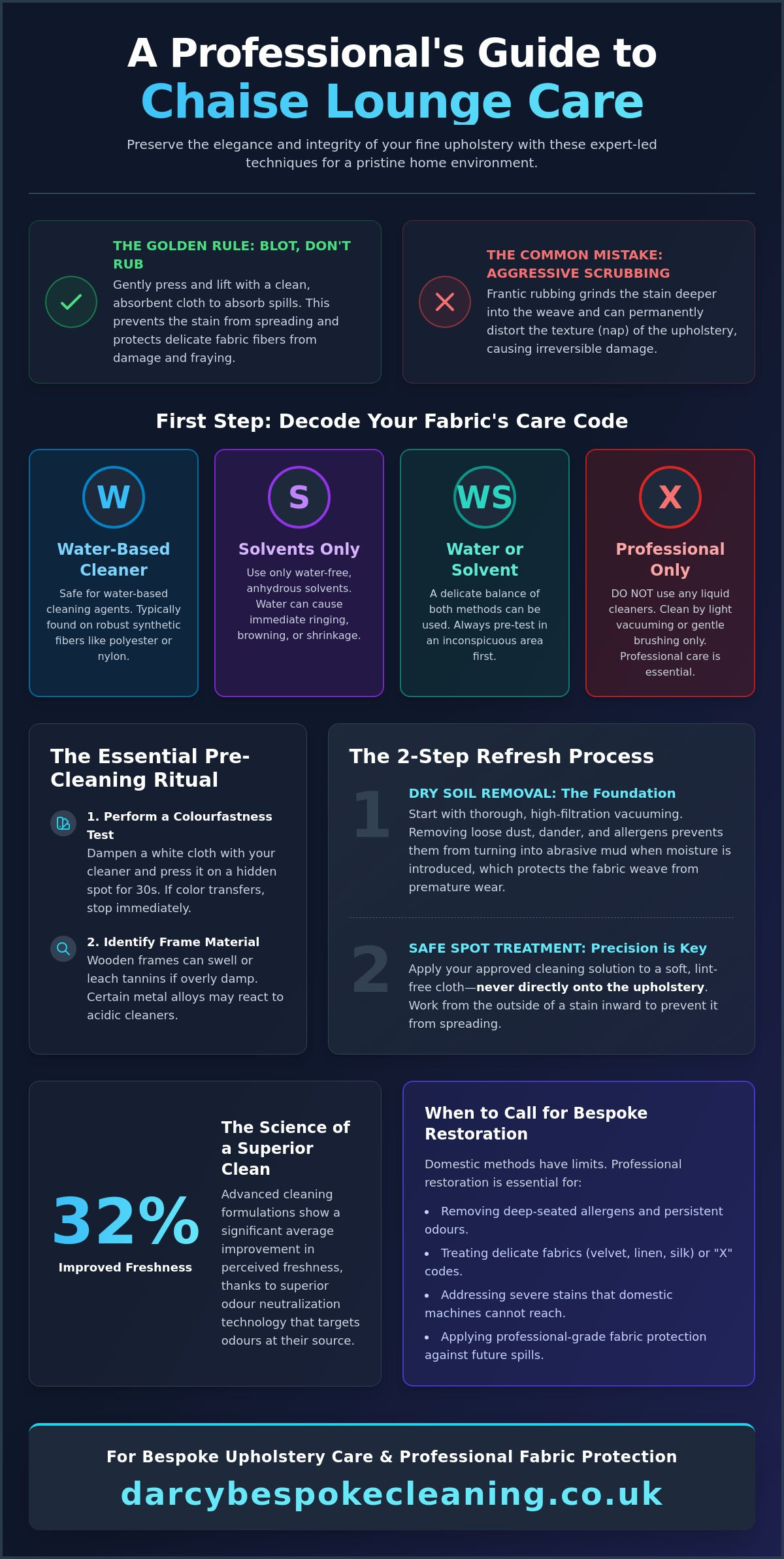
We’ll guide you through mastering these expert-led techniques to restore your furniture’s elegance while safeguarding its structural integrity. You’ll gain the confidence to identify your specific upholstery needs and utilise 2026’s advanced cleaning formulations, which have shown a 32% average improvement in perceived freshness through superior odour neutralisation. From identifying when to apply a targeted sanitising treatment to knowing exactly when to call for professional fabric protection, this guide ensures your piece remains a pristine sanctuary for years to come.
Key Takeaways
- Identify your fabric’s specific care code to ensure every cleaning agent you apply is perfectly compatible with the material’s delicate chemistry.
- Master the essential “blot, don’t rub” philosophy to learn how to clean a chaise lounge without compromising the texture or nap of the upholstery.
- Discover specialised techniques for velvet and linen that prevent common issues like permanent pile crushing and unsightly cellulosic browning.
- Learn the science of post-clean preservation, from optimising airflow for rapid drying to applying invisible fabric protection against future spills.
- Recognise when a piece requires bespoke professional restoration to remove deep-seated allergens and odours that domestic machines cannot reach.
Understanding Your Chaise Lounge: Fabric Codes and Preparation
Stewardship of a premium piece begins long before the first droplet of solution touches the fabric. To truly master how to clean a chaise lounge, one must first become a student of its composition. Every chaise is a complex assembly of textiles, paddings, and supports. Gaining a foundational Understanding Upholstery Materials is the first step in ensuring your cleaning efforts enhance rather than diminish the item’s beauty. Ignoring the manufacturer’s care label is the most common precursor to permanent damage, such as water spotting or fabric shrinkage. Every chaise is different. Your approach must be too.
Decoding the Upholstery Care Label
The industry standardises care through four primary codes that dictate the chemistry of your clean. Code W indicates that water-based cleaners are safe, typically found on robust synthetic fibres like polyester or nylon. Code S is far more restrictive, signifying that only anhydrous, water-free solvents should be used. Using water on an “S” coded fabric can lead to immediate ringing or “browning” of the fibres. While internet forums often suggest that simple household detergents are a universal solution, this lack of chemical precision often results in the destruction of delicate silk blends. Code WS allows for a delicate balance of both methods, while Code X is the most precarious. For an “X” piece, you should restrict your efforts to light vacuuming and seek professional intervention, as any liquid agent may cause irreversible staining or structural distortion.
The Essential Pre-Cleaning Checklist
Before proceeding with how to clean a chaise lounge, perform a “white cloth test” to ensure colourfastness. Dampen a clean, white cotton cloth with your chosen solution and press it firmly against an inconspicuous area for thirty seconds. If any pigment transfers to the cloth, stop immediately; the dye is unstable. It’s also vital to identify your frame material. Wooden frames can swell or leach tannins if they become overly damp, while certain metal alloys may react to acidic cleaners. Finally, always begin with a thorough, high-filtration vacuuming. Removing dry soil is the foundation of a successful clean. If left behind, loose dust turns into abrasive mud once moisture is introduced, embedding itself deeper into the weave and causing premature wear. This initial step ensures a refined outcome that respects the integrity of your home environment.
A Step-by-Step Guide to Refreshing Your Upholstery
Refreshing a chaise lounge is a deliberate process that requires patience and precision. While popular online videos often show aggressive scrubbing with stiff brushes, such methods are far too abrasive for premium textiles. They fray delicate fibres and permanently distort the nap. Instead, a refined approach focuses on lifting contaminants without compromising the material’s elegance. Mastering how to clean a chaise lounge means adopting a mindset of stewardship where the goal is preservation as much as purification. Every movement should be rhythmic and controlled, reflecting the care your private environment deserves.
Dry Soil Removal: The Most Important Step
The foundation of every professional-grade clean is the removal of dry particulate matter. Using high-filtration vacuuming with dedicated upholstery attachments allows you to reach deep into the crevices where dust and allergens congregate. We recommend a “low-and-slow” technique. Moving the nozzle deliberately across the fabric ensures the suction has enough time to extract hidden debris from within the foam and padding. Don’t forget the underside and the dust cover. These often-overlooked areas can harbour significant amounts of dust that eventually migrates back to the surface. A thorough dry extraction prevents these particles from turning into abrasive mud once moisture is introduced.
Safe Spot Treatment and Blotting
If you encounter specific marks, refer to a research-based Stain Removal Guide to ensure your chemistry is correct for the substance involved. The golden rule is to apply your solution to a soft, lint-free cloth rather than directly onto the upholstery. This prevents the liquid from penetrating too deeply into the internal frame. Work from the outside of the stain inward to prevent spreading. Above all, embrace the “blot, don’t rub” philosophy. Rubbing generates heat and friction that can break down fibres and leave permanent scars on the fabric. Using distilled water for your final damp blot is a sophisticated touch that prevents mineral deposits from leaving unsightly rings on light-coloured pieces.
For Code W fabrics, a gentle surfactant solution should be used sparingly. Excessive moisture is the primary cause of “tidemarks”, those dark, wavy lines that form as fabric dries unevenly. By managing your moisture levels and ensuring even application, you maintain the structural integrity of the piece. If the task feels daunting or the fabric is particularly rare, seeking professional sofa cleaning can provide the peace of mind that only industrial-grade extraction can offer. To finish, use a soft-bristled upholstery brush to align the fibres while they’re still slightly damp. This simple action restores the uniform aesthetic that defines a truly well-maintained home.
Navigating Delicate Fabrics: Velvet, Linen, and Silk Blends
While the general principles of how to clean a chaise lounge provide a solid foundation, delicate textiles require a more nuanced level of stewardship. High-end fabrics like velvet, linen, and silk blends are chosen for their exquisite tactile qualities, yet these very characteristics make them vulnerable to traditional cleaning methods. A single misstep with a generic steam cleaner can transform a luxurious piece into a matted or discoloured shadow of its former self. True restoration lies in understanding the specific chemistry and physical structure of these premium fibres. It’s about protecting the investment you’ve made in your private environment.
Restoring the Lustre of Velvet
Restoring the lustre of velvet requires a delicate touch and a deep respect for the pile. Heat is the primary adversary of both synthetic and natural velvet. Contrary to popular social media trends that promote heavy steaming for a visual effect, excessive heat can permanently “crush” the pile or cause the fibres to lose their characteristic sheen. Instead, focus on grooming the fabric. A professional secret involves using a soft-bristled velvet brush to reset the fabric’s direction while it’s still slightly damp. This technique addresses “shading” and “pooling” in high-traffic areas, ensuring the light reflects uniformly across the surface once more. It’s a subtle action that yields significant aesthetic results.
The Perils of Linen and Natural Fibres
Linen and natural fibres present their own unique set of challenges when researching how to clean a chaise lounge properly. One of the most significant risks is cellulosic browning, a phenomenon where the fabric develops unsightly brown or yellow stains as it dries. This occurs when moisture lingers too long in the natural fibres, often due to improper extraction. To prevent this, professional-grade, pH-balanced cleaning agents are essential to maintain the fabric’s neutral state. Rapid drying is equally critical. While it’s tempting to put removable linen covers in a domestic washing machine, the risk of shrinkage is substantial. Tension-drying or seeking bespoke professional care ensures the covers retain their original fit and crisp texture without the fear of distortion.
Silk and viscose blends are perhaps the most demanding materials found in modern luxury furniture. Viscose is particularly notorious for “water spotting” and permanent texture loss. Even a small amount of moisture can cause the fibres to stiffen and lose their silk-like softness. When dealing with these materials, the margin for error is non-existent. A refined approach prioritises dry-cleaning solvents or extremely low-moisture techniques that protect the delicate weave from distortion. This level of care preserves the heritage of the piece, ensuring it remains a focal point of quiet confidence and elegance in your home.
Preserving Elegance: Post-Clean Care and Stain Prevention
The journey of learning how to clean a chaise lounge concludes with the most overlooked phase: controlled drying and preservation. While the removal of soil is immensely satisfying, the way a piece returns to its dry state determines the final aesthetic outcome. Moisture is a temporary necessity during the cleaning process, but it must be managed with precision once the task is complete. Allowing a piece to remain damp for too long invites a host of complications that can undermine the structural integrity of the frame and the freshness of the padding. True stewardship requires a focus on the environment in which the furniture resides.
Drying Techniques for the Scottish Climate
In regions like Fife, the ambient humidity often fluctuates, making the common advice to “just let it air dry” somewhat precarious. If moisture lingers within the internal padding of your chaise, it can lead to musty odours that are difficult to eradicate. A dehumidifier is a cleaner’s best friend in the Scottish climate; it actively pulls moisture from the air and the fabric simultaneously. You must also be wary of the “wicking” effect. This occurs when deep-seated stains that weren’t fully extracted travel up the fibres as the moisture evaporates, causing the mark to reappear on the surface. Using professional air movers or ensuring robust natural ventilation ensures the fabric dries quickly and evenly, locking in that pristine finish.
Long-Term Stewardship and Protection
Once the fibres are dry and aligned, applying a professional-grade fabric protection treatment is the most effective way to safeguard your investment. This creates an invisible, hydrophobic barrier that prevents liquid spills from immediately penetrating the weave. Instead of soaking in, droplets bead on the surface, giving you precious seconds to blot them away. This is far superior to the common “first aid” myths involving salt or bicarbonate of soda. Salt is abrasive and can set certain dyes permanently, while soda often leaves a gritty residue that attracts more dirt. A refined approach relies on chemistry, not kitchen staples.
Positioning also plays a vital role in the longevity of your chaise lounge. Direct sunlight causes UV degradation, which can make natural fibres like silk and linen brittle over time. Similarly, proximity to radiators can dry out the natural oils in certain textiles, leading to premature wear. We suggest a maintenance schedule that includes high-filtration vacuuming every fortnight and a professional deep clean every twelve to eighteen months. By rotating the chaise periodically, you ensure even light exposure and wear, maintaining the harmony and order of your living space. This disciplined approach to how to clean a chaise lounge ensures your furniture remains a testament to your high standards and refined taste.
Professional Restoration: When Bespoke Care is Essential
While domestic cleaning technologies have advanced significantly, there remains a distinct threshold where home efforts reach their limit. Household machines often lack the necessary “lift” provided by industrial extractors, leading to a common phenomenon where the fabric retains a persistent, “grey” dullness. This isn’t necessarily dirt on the surface; it’s often a combination of microscopic debris and detergent residue that has bonded with the fibres over time. Understanding how to clean a chaise lounge at a professional level requires more than just a surface wipe. It demands a deep-seated restoration that addresses the contaminants residing within the foam and padding, not just the visible textile.
The Power of Industrial Extraction
The Darcy Bespoke approach utilises the Alltec Advance 600, a sophisticated piece of equipment designed to deliver a thorough yet gentle clean. These industrial tools provide superior heat and suction, allowing for the removal of deep-seated odours and allergens that domestic portables simply cannot reach. This precision also prevents the over-wetting that so often leads to fabric damage or internal frame dampness. By removing the chemical film left behind by previous DIY attempts, we restore the original vibrancy and softness of your piece. We stand behind every commission with a 100% satisfaction guarantee. This commitment reflects our family-run integrity and our role as dedicated custodians of your private environment.
A Tailored Service for Fife Residents
We’re proud to serve as a refined, expert partner for residents across Cupar, St Andrews, and the wider Fife area. Supporting local, independent businesses ensures a level of accountability and discretion that larger franchises often lack. Our service is structured around the specific needs of a discerning clientele, offering simple and transparent per-item pricing. This removes any ambiguity from the process, allowing you to enjoy the transformation of your home with total peace of mind. We understand that your furniture is more than a utility; it’s a significant investment in your lifestyle and heritage.
When the nuances of premium materials or the complexity of a stain exceed the capabilities of home maintenance, professional intervention becomes the most responsible choice. Attempting how to clean a chaise lounge without the correct extraction power can inadvertently set stains or cause permanent fibre distortion. Instead, choose a partner that values quality over volume and treats every environment with the rigorous care it deserves. To ensure your furniture receives the stewardship it requires, entrust your cherished chaise lounge to the specialists at Darcy Bespoke Cleaning. We bring a sense of order and harmony back to your living space, one fibre at a time.
Restoring the Heart of Your Living Space
Mastering the nuances of fabric codes and the rhythmic precision of dry-soil extraction ensures your chaise remains a focal point of refined comfort. You now possess the foundational knowledge to identify when a gentle, water-based solution is appropriate and when the delicate nature of silk or velvet demands a strictly anhydrous approach. Understanding how to clean a chaise lounge is an act of personal stewardship, protecting the materials that define your private environment. These techniques ensure your home remains a sanctuary of order and harmony.
While these domestic methods provide a bridge between professional visits, certain challenges require the significant lift of industrial technology. As a family-run, independent Fife business, we combine the power of advanced Alltec and Rotovac machinery with a deep respect for your property. We provide a 100% satisfaction guarantee to ensure your peace of mind is never compromised. Every commission is handled with the discretion and rigor your high-value investments deserve.
Request a Bespoke Upholstery Cleaning Quote Today to see how our specialized approach can transform your furniture. Your home is a sanctuary, and we’re here to help you maintain its quiet confidence and enduring elegance.
Frequently Asked Questions
Can I use a steam cleaner on my velvet chaise lounge?
You should avoid using domestic steam cleaners on velvet because the intense heat and moisture can permanently crush the delicate pile. This often leads to irreversible matting and a loss of the fabric’s signature lustre. Instead, use a soft-bristled brush to groom the fibres and consider professional low-moisture methods to maintain its elegant texture. Protecting the pile’s direction is essential for preserving the piece’s sophisticated aesthetic.
How do I remove a water mark from my chaise lounge fabric?
Water marks, often called “tidemarks,” occur when minerals in tap water dry unevenly on the surface. To treat this, dampen a clean, white cloth with a small amount of distilled water and gently blot the edges of the mark, working toward the centre. This technique helps equalise the moisture levels and prevents the ring from setting. It’s a delicate process that requires patience to avoid over-wetting the surrounding area.
Is it safe to clean a chaise lounge with a Code S label at home?
Cleaning a piece with a Code S label at home is highly precarious because it requires specialised, anhydrous solvents rather than water. Standard household detergents will cause immediate ringing, shrinkage, or dye bleed on these delicate textiles. When researching how to clean a chaise lounge with this specific rating, professional intervention is the only way to ensure the material’s integrity is preserved through correct chemical stewardship.
How long does it take for a chaise lounge to dry after a professional clean?
Most pieces will be touch-dry within four to eight hours, though this timeframe depends on the ambient humidity and airflow in your home. We utilise high-powered air movers during our service to accelerate the process significantly. Ensuring your room is well-ventilated or using a dehumidifier will help the internal padding reach a completely moisture-free state, preventing any musty odours from developing in the Scottish climate.
What is the best way to get pet hair off a chaise lounge?
The most effective method involves using a rubberised upholstery tool or a dedicated pet hair brush to create static tension, which lifts stubborn fibres from the weave. Follow this with a thorough, high-filtration vacuuming session using a clean nozzle attachment. This approach removes the hair and dander without the aggressive scrubbing that can fray the fabric or damage the structural integrity of the piece over time.
Can professional cleaning remove old, set-in stains from upholstery?
While we cannot guarantee the removal of every substance, our advanced stain removal treatments often achieve remarkable results on aged marks. Success depends largely on the chemical composition of the stain and whether previous DIY attempts have permanently “set” the pigment into the fibres. Our industrial-grade extractors provide the necessary lift to reach contaminants that have migrated deep into the foam and padding.
How often should I have my chaise lounge professionally cleaned in Fife?
For residents in Fife, we recommend a professional deep clean every twelve to eighteen months to combat the effects of local humidity and daily use. Regular maintenance prevents the build-up of abrasive dry soil that causes premature wear to the textile. This schedule serves as a form of dedicated stewardship, ensuring your high-value investment remains a pristine and hygienic sanctuary within your private environment.
Will fabric protection change the feel of my chaise lounge?
A professionally applied fabric protection treatment is entirely invisible and does not alter the tactile quality or breathability of the upholstery. It works by coating each individual fibre with a hydrophobic barrier that repels liquid spills without stiffening the weave. You’ll enjoy the same luxurious feel while knowing how to clean a chaise lounge becomes much simpler when spills bead on the surface for easy blotting.