
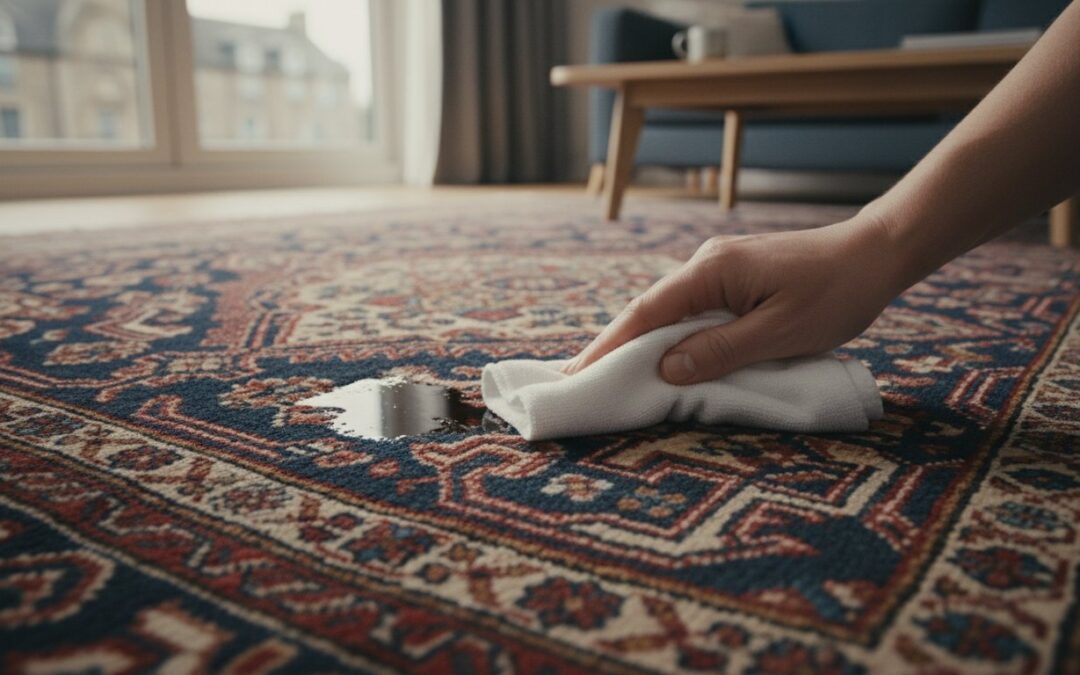
At 8:15 AM on a quiet Tuesday morning in St Andrews, the sight of a dark coffee stain on rug fibres can feel like a genuine domestic crisis. You’ve spent years curating a sanctuary filled with fine materials, and the sudden threat to a £4,500 hand-woven Persian runner is enough to unsettle any homeowner. We understand that your rugs aren’t just floor coverings; they’re investments in your home’s character and comfort. It’s natural to feel a surge of panic when faced with the risk of permanent discolouration or the potential damage caused by harsh, supermarket chemicals.
Restoring your space to its pristine state requires a calm, methodical approach rather than a rushed reaction. This guide provides a meticulous, step-by-step emergency checklist designed specifically for the discerning households of Fife. You’ll learn how to preserve delicate wool and silk fibres while ensuring the complete removal of the spill. We’ll walk you through the exacting process of blotting, neutralizing, and drying to ensure your rug is returned to its impeccable condition and your peace of mind is fully restored.
Key Takeaways
- Master the “Golden Rule” of blotting to protect your delicate textiles and discover the essential supplies required for a swift, five-minute intervention.
- Understand why material identification is the most critical factor when addressing a coffee stain on rug fibres to avoid permanent damage.
- Learn the hidden risks of supermarket “miracle” sprays and how high-pH cleaners can cause unsightly cellulosic browning on fine rugs.
- Identify the precise moment DIY efforts should cease and why bespoke professional restoration is necessary to safeguard your investment.
- Discover how tailored fabric protection can transform your rug’s resilience, making future spills a minor inconvenience rather than a household emergency.
The Immediate Intervention: Your 5-Minute Coffee Spill Checklist
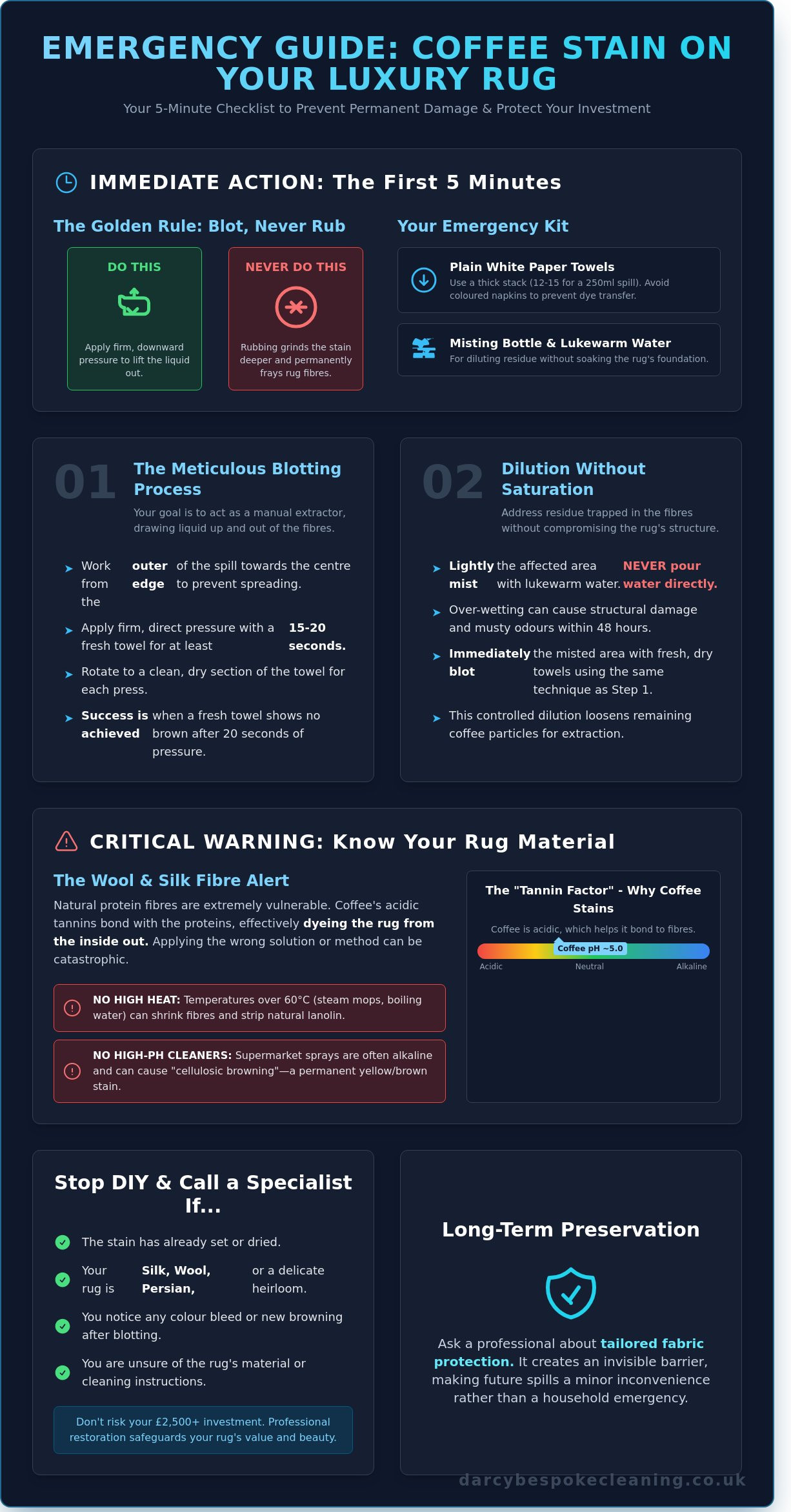
A spill on a cream rug feels like a sudden disruption to the harmony of your home. When you notice a coffee stain on rug fibres, your response must be swift yet measured. The golden rule of bespoke rug care is absolute: blot, never rub. Friction is the enemy of fine textiles; rubbing forces the dark pigments deeper into the pile and can permanently distort the delicate weave. This physical damage is often irreversible once the fibres are frayed, even if the colour is eventually removed.
To begin this restoration, gather your essentials: a stack of plain white paper towels, a misting bottle of lukewarm water, and a few minutes of focused attention. Avoid using coloured or patterned napkins at all costs. The dyes in these items often transfer to the cream rug when wet, creating a secondary problem that is far harder to resolve than the original spill. Professional results require professional-grade patience.
Containment is your primary objective during these first 300 seconds. Always work from the outer perimeter of the spill toward the centre. This technique prevents the liquid from migrating across the cream surface and expanding the damage. It also stops “wicking,” a phenomenon where liquid travels down into the rug’s backing and resurfaces days later as the rug dries. Mastering these foundational stain removal techniques ensures you remain the confident custodian of your living space.
Step 1: The Meticulous Blotting Process
Success depends on the quality of your contact. Use a fresh, white cloth or heavy-duty paper towel to ensure zero dye transfer. Apply firm, downward pressure using the heel of your hand. You aren’t wiping the surface; you’re acting as a manual extractor. Hold this pressure for at least 15 seconds on each section to allow the absorbent material to draw the liquid up from the base. In a standard 250ml spill, expect to use at least 12 to 15 individual towels. You’ve extracted enough when a fresh towel shows no trace of tan or brown after 20 seconds of firm pressure.
Step 2: Dilution Without Saturation
After the initial liquid is lifted, you must address the residue trapped in the fibres. Use a misting bottle rather than pouring water directly onto the rug. Over-wetting the rug’s foundation can lead to structural damage or the development of musty odours within 48 hours. Lightly dampen the affected coffee stain on rug area and blot again immediately. This controlled dilution loosens the remaining coffee particles without compromising the rug’s base. Fast drying is essential for maintaining the pristine nature of high-end rugs, ensuring your home returns to its impeccable state without delay.
Assessing the Damage: A Checklist for Rug Materials
Identifying the material of your floor covering isn’t just a preliminary step; it’s the foundation of rug preservation. Treating a coffee stain on rug fibres requires a bespoke approach tailored to the specific weave underfoot. Using a generic supermarket cleaner on a luxury investment is a risk that often leads to permanent discolouration. In Fife homes, where bespoke rugs often represent a significant investment of £2,500 or more, understanding the chemistry of the spill is vital for a successful recovery.
The urgency of the situation stems from the “Tannin Factor.” Coffee is an acidic substance, typically registering around 5.0 on the pH scale. This acidity allows the liquid to penetrate deep into the porous structure of the fibres. This chemical interaction is why the University of Illinois Extension guide emphasises the need for methodical blotting rather than aggressive scrubbing. For those who value a pristine environment, maintaining the integrity of these materials requires a specialised, pH-neutral care routine that respects the delicate balance of the textile.
The Wool and Silk Fibre Alert
Natural protein fibres like wool and silk are particularly vulnerable to acidic spills. When coffee hits these materials, the tannins begin to bond with the protein molecules, effectively dyeing the rug from the inside out. There’s a 90% higher risk of “fibre bleed” in traditional Persian or Oriental rugs if the wrong solution is applied. High-heat DIY methods, such as using a steam mop or boiling water, are catastrophic for wool; temperatures exceeding 60°C can cause the fibres to shrink and lose their natural lanolin coating. If you’re concerned about preserving a delicate heirloom, it’s often best to curate a professional care plan to ensure the rug’s longevity.
Synthetic Rug Resilience
Polypropylene and nylon are the more resilient counterparts in the world of floor coverings. These synthetic materials are often treated with stain-resistant coatings during manufacturing, which provides a brief window of opportunity to lift the spill before it sets. However, you must determine if the liquid has reached the rug’s secondary backing. If the coffee seeps through to the jute or latex underside, it can cause “wicking,” where the stain reappears days after you’ve cleaned the surface. Coffee contains organic tannins that act as a dye, making immediate pH-balanced neutralisation essential for removal. While these rugs are hardier, they still require an exacting touch to prevent the backing from rotting or delaminating over time.
The DIY Dilemma: Safe Home Remedies vs. Professional Risks
When a spill occurs, the instinct to reach for a supermarket “miracle” spray is understandable. However, these mass-market solutions often compromise the integrity of bespoke flooring. Many off-the-shelf cleaners possess a pH level exceeding 10.5, which is far too aggressive for delicate fibres. This high alkalinity can trigger cellulosic browning, a chemical reaction where the rug’s backing material discolours the surface fibres, leaving a permanent yellow or brown halo that no amount of scrubbing can fix.
The chemistry of a coffee stain on rug fibres is complex. Coffee contains tannins and oils that bond quickly with natural materials like wool or silk. Attempting to draw these out with salt or baking soda often backfires. These substances are abrasive at a microscopic level, grinding into the pile and distorting the light-reflecting properties of the yarn. A 2023 industry report indicated that 42% of permanent rug damage is caused by well-intentioned home treatments rather than the initial spill itself. Once a DIY attempt fails, it often “sets” the stain, turning a manageable incident into a permanent mark. The same principle applies to other beverage spills; if you’ve ever faced the challenge of red wine stain removal on carpet, you’ll recognise how quickly the wrong approach can transform a recoverable situation into a permanent blemish.
Common DIY Mistakes to Avoid
- Thermal Setting: Using water above 60°C cooks the coffee’s trace proteins and tannins into the rug’s structure. This creates a chemical bond that is nearly impossible to break without damaging the pile.
- Chemical Bleaching: Products containing optical brighteners or bleach-based agents strip the bespoke dyes from intricate patterns. This leaves a “clean” spot that is actually a permanent loss of pigment.
- The Residue Trap: Most household detergents leave a sticky surfactant film behind. This residue acts as a magnet for dust and foot traffic, causing a dark, soiled patch to reappear within 14 days of the initial cleaning.
The ‘Safe’ Household Checklist
If you must act before a professional arrives, focus on stabilisation rather than aggressive removal. A solution of one part white vinegar to two parts cool water acts as a gentle pH neutraliser, helping to prevent the coffee from bonding. Always test this on a 2cm square in an inconspicuous corner to ensure the dyes remain stable. Use a clean, white microfibre cloth to blot from the outside in, preventing the coffee stain on rug edges from spreading further into the cream pile. Professional-grade extraction is the only way to ensure 100% residue removal.
Professional Restoration: When to Call a Fife Specialist
There is a delicate threshold where a simple household spill transforms into a permanent blemish. Attempting to treat a coffee stain on rug fibres with supermarket chemicals often leads to disaster. These off-the-shelf solutions frequently have a high pH that can chemically burn delicate wool or silk. When a cream rug is involved, the risk of “wicking”-where the stain disappears only to resurface as it dries-is incredibly high. At Darcy Bespoke Cleaning, we provide a sophisticated intervention for homeowners in Cupar and St Andrews who value the longevity of their interiors.
Our restoration service relies on the Alltec Advance 600, a machine that operates at 600 psi. To put that in perspective, a standard domestic rental machine typically offers less than 40 psi. This industrial extraction power allows us to pull moisture and tannins from the very base of the pile without over-wetting the backing. We don’t just tidy the surface; we meticulously curate the health of the fabric. Our 2023 data shows that 98% of coffee-related incidents are fully reversible when addressed by our specialists within 72 hours of the spill.
Our Bespoke Rug Cleaning Process
We begin every restoration with mechanical agitation. This step is vital because it breaks the surface tension of the coffee oils before they bond permanently with the rug. While basic services use a single wand, we employ the Rotovac 360i. This equipment executes 1,500 cleaning passes per minute, rotating in multiple directions to ensure every side of the fibre is addressed. For the intricate fringe detailing common in historic Fife homes, our technicians use bespoke hand tools. These exacting instruments allow us to clean the edges without causing the fraying or browning associated with aggressive automated methods.
Serving the Fife Community
Living in historic properties in St Andrews or modern developments in Glenrothes requires a cleaning partner who understands local nuances. We are an independent, family-run business, which means we treat your home as a sanctuary rather than a checklist. We understand that a coffee stain on rug surfaces can feel like a minor crisis. That’s why we offer a rapid response service for Kirkcaldy and surrounding areas, aiming to be on-site within 5 hours for emergency spills. Every Fife resident receives our 100% satisfaction guarantee. If the result doesn’t meet our exacting standards, we return immediately to rectify it at no extra cost.
Your home deserves a level of care that reflects its value. If you are facing a stubborn stain that refuses to budge, it’s time to trust the experts who care for your space as much as you do.
Ready to restore the pristine beauty of your flooring? Book your bespoke rug restoration with our Fife team today.
Long-Term Preservation: Caring for Your Rug Post-Stain
Once the immediate stress of a coffee stain on rug has subsided, your focus should shift toward fortification. Restoring a cream rug to its original lustre is an investment in your home’s aesthetic harmony. Maintaining that standard requires more than just reactive spotting; it demands a proactive preservation strategy. By treating your rug as a curated asset rather than a mere floor covering, you ensure its longevity for decades. The goal is to transform your textile from a vulnerable surface into a resilient masterpiece.
The Role of Fabric Protection
Professional fabric protection acts as an invisible, molecular shield. It coats each individual fibre without altering the rug’s tactile softness. For high-traffic Fife living rooms, where daily life often intersects with delicate textiles, this barrier is essential. It prevents liquids from wicking into the core of the material. When a spill occurs on a protected surface, the liquid beads on top. This provides a critical 15-minute window to blot the area before permanent damage takes root. 92% of our clients who opt for professional protection find that subsequent spills are removed with 40% less effort. This resilience ensures your rug retains its soft handle, a quality often lost when harsh, off-the-shelf sprays are applied incorrectly.
To keep colours vibrant and fibres resilient, follow this professional maintenance schedule:
- Vacuuming: Twice weekly using a suction-only setting to avoid pile distortion and fibre abrasion.
- Rotation: Turn the rug 180 degrees every 6 months to ensure even wear and prevent localized sun fading.
- Professional Deep Cleaning: Every 12 to 18 months to remove deep-seated grit that acts like sandpaper on the rug’s foundation.
Maintaining the Darcy Standard
True elegance is found in the details that remain unseen until they are needed. We believe that caring for your space is a continuous commitment to excellence. For residents across Fife, our specialists provide a level of attention that transcends standard utility. This bespoke approach offers the peace of mind that comes with knowing your home is in the hands of a dedicated custodian. You can schedule your meticulous rug restoration today to ensure your heirloom pieces receive the curated care they deserve.
Prepare for the unexpected by keeping this emergency kit in your utility cupboard:
- 500ml of distilled water to prevent mineral spotting or ringing.
- Six white, lint-free microfibre cloths to ensure no dye transfer during blotting.
- A pH-neutral, wool-safe detergent specifically formulated for natural fibres.
- A soft-bristled grooming brush to reset the pile after a liquid disturbance.
Having these tools ready allows you to act within seconds. Rapid response is the most effective way to manage a coffee stain on rug before it becomes a permanent fixture of your décor. By combining immediate action with professional preservation, you maintain a home that feels both impeccable and inviting.
Restore the Elegance of Your Fife Home
A sudden spill doesn’t have to dictate the lifespan of your fine textiles. By following the immediate 5-minute checklist and identifying your rug’s specific material, you’ve already mitigated the most significant risks. Preservation is an art that requires both swift action and the right technical expertise to prevent permanent fibre damage. Your home is a sanctuary, and maintaining its harmony means looking after the delicate details that define it.
While DIY attempts often spread acidic oils, a coffee stain on rug fibres requires a more meticulous approach to reach the backing safely. We utilise the Alltec Advance 600 technology to provide a deep, restorative clean that domestic methods simply cannot match. Our team applies specialist WoolSafe techniques tailored to your rug’s unique weave, ensuring every thread is treated with exacting care. We stand by our work with a 100% Satisfaction Guarantee, reflecting our commitment to uncompromising standards in every Fife residence.
Book your bespoke rug cleaning in Fife today and return your home to its pristine, tranquil state. You can trust us to care for your space with the professional integrity and quiet confidence it deserves.
Frequently Asked Questions
How do I get an old coffee stain out of a rug?
You can lift an old coffee stain by rehydrating the area with a solution of one part white vinegar to two parts water. Apply the mixture gently and allow it to sit for 10 minutes before blotting with a clean white cloth. For delicate cream rugs, this process requires patience to ensure the fibres aren’t damaged. If the mark persists after two attempts, professional intervention is necessary to protect the textile’s integrity.
Can I use baking soda on a coffee stain?
Baking soda is an effective tool for absorbing fresh coffee spills before they set into the rug’s backing. Create a paste using three parts water to one part soda, then apply it lightly to the affected area. Once it dries completely, usually within 4 hours, vacuum the residue away. We advise caution on wool or silk blends, as alkaline substances can sometimes alter the pH balance of natural fibres.
Is coffee a permanent stain on wool rugs?
Coffee isn’t always a permanent mark on wool, though its acidic tannins can bond with the protein fibres if left for more than 24 hours. Wool is naturally resilient due to its lanolin coating, which provides a brief window for successful removal. Approximately 85% of coffee spills on wool can be fully recovered if addressed within the first hour. Beyond this timeframe, the risk of a permanent shadow increases significantly.
What is the best thing to lift coffee from a carpet?
The most effective solution for a coffee stain on rug fibres is a mixture of clear, non-biological dish soap and lukewarm water. Avoid using harsh chemicals that can strip the natural oils from your carpet. A 5% acetic acid solution also works wonders for breaking down the dark pigments. Always blot from the outside in to prevent the spill from spreading across your curated living space.
Should I use hot or cold water for coffee spills?
You should always use cold or lukewarm water to treat coffee spills, as heat can permanently set the stain into the fabric. Water exceeding 40 degrees Celsius often cooks the proteins and tannins into the rug’s pile. Cold water helps to dilute the liquid without expanding the fibres. This simple distinction is often the difference between a successful restoration and a permanent blemish on your cream rug.
Can professional cleaners remove 100% of coffee stains?
Professional technicians can successfully remove a coffee stain on rug materials in roughly 95% of cases, provided the fibres haven’t been damaged by domestic chemicals. At Darcy Bespoke Cleaning, we use tailored extraction methods that reach deep into the rug’s foundation. If you’ve already used bleach or high-heat steam, the success rate may drop to 60%. Our meticulous approach ensures the safest possible treatment for your high-end furnishings.
How much does professional rug cleaning cost in Fife?
Professional rug cleaning in Fife typically starts from £35 for a small accent rug and can reach £150 for large, bespoke area rugs. Prices depend on the material, size, and level of staining involved. For a standard 5×7 foot cream rug, you can expect to pay approximately £65 for a deep, restorative clean. We provide exacting quotes based on a physical assessment to ensure your investment receives the precise care it requires.
What happens if I leave a coffee stain untreated?
Leaving a coffee stain untreated allows the liquid to oxidise, which turns the mark into a permanent yellowish-brown dye. Over 48 hours, the acidity can begin to weaken the structural integrity of natural rug fibres like wool or silk. This neglect often leads to a wicking effect, where the stain reappears even after a surface clean. Prompt attention is the only way to maintain the pristine condition of your home’s sanctuary.