
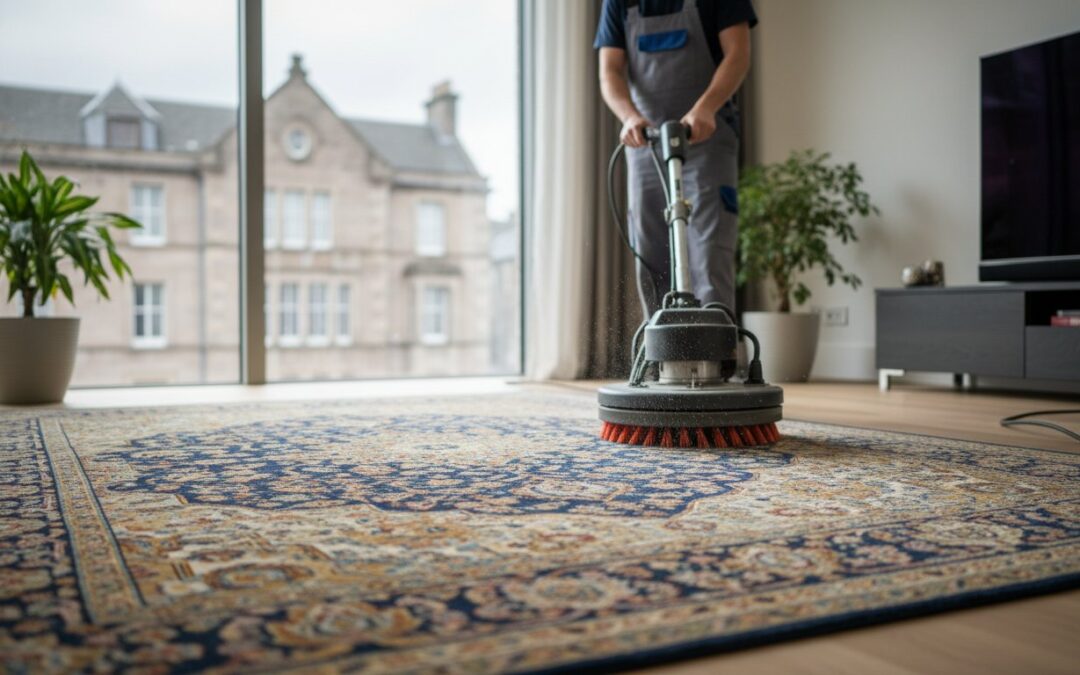
Last Tuesday, a homeowner in St Andrews watched with bated breath as a glass of red wine tilted toward their £4,200 hand-knotted wool rug. It’s a moment of pure panic that many of our clients in Fife have experienced, where the fear of permanent damage outweighs the desire to act. You likely agree that your rugs are not merely household items but curated investments that bring harmony and warmth to your private sanctuary. This rug material cleaning guide serves as your specialist resource to navigate the complexities of textile care without the stress of conflicting DIY advice.
We’ll provide you with the exact knowledge needed to identify your rug’s composition and understand its specific vulnerabilities. You will learn which minor marks are safe to treat yourself and which delicate fibres, such as silk or fine wool, demand a more meticulous, professional touch. Our aim is to help you restore the original beauty and texture of your pieces, ensuring every room in your home remains an impeccable reflection of your standards. We’ll explore everything from resilient synthetics to the most exacting natural weaves found in the finest Fife residences.
Key Takeaways
- Learn why material identification is the cornerstone of expert rug care, ensuring the correct cleaning chemistry is curated for your specific piece.
- Understand the unique vulnerabilities of delicate fibres like Viscose and Silk, which require a meticulous touch to prevent permanent structural damage.
- Discover how to protect your investment from Fife’s coastal humidity and avoid common DIY pitfalls by following this rug material cleaning guide.
- Master the art of gentle maintenance, from adjusting your vacuuming technique to choosing pH-neutral solutions that prevent unsightly browning.
- Explore how specialist restoration technology, such as the Rotovac 360i, can transform matted fibres and restore the original elegance of your home’s most treasured textiles.
Understanding Your Rug: Why Material Identification is Vital
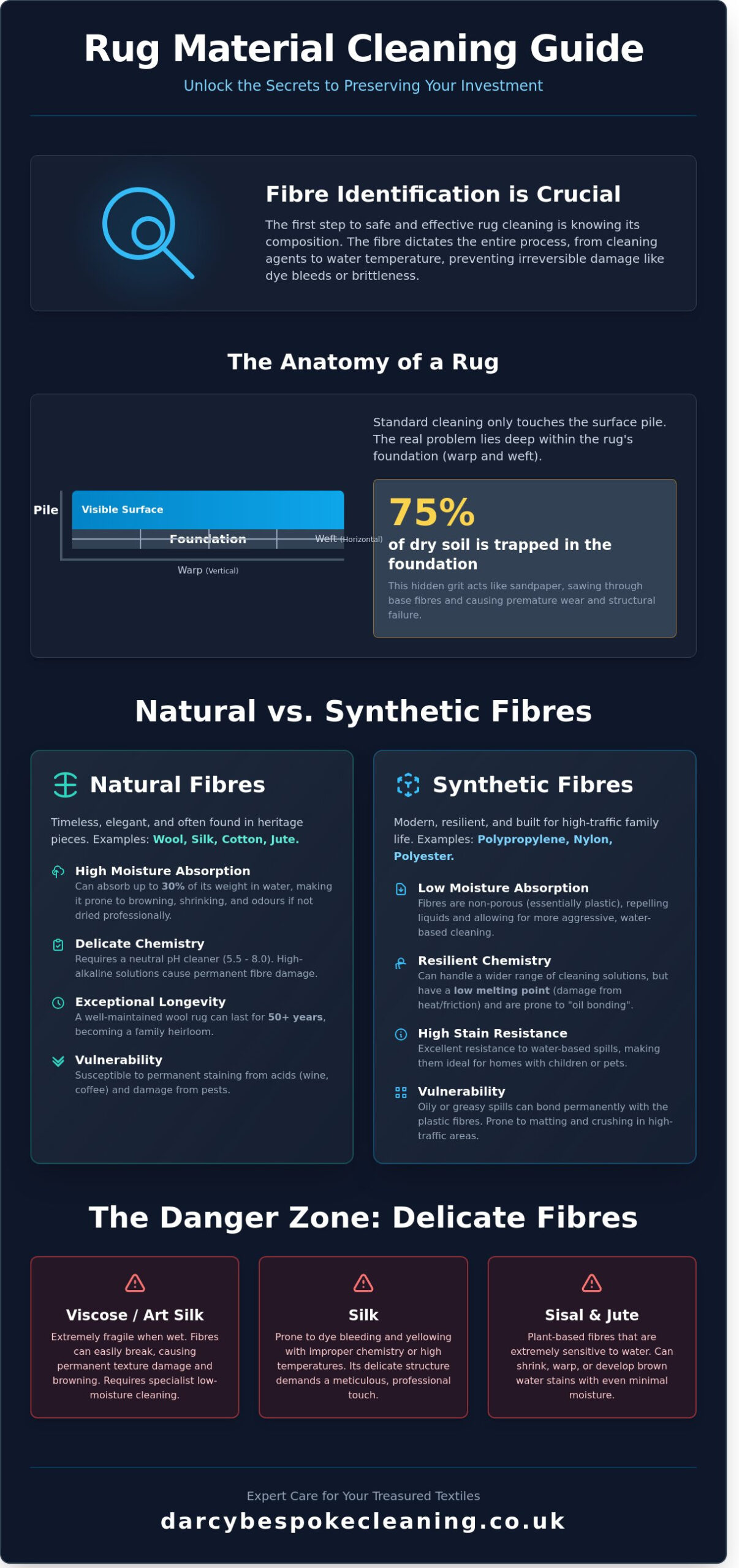
A successful rug material cleaning guide begins with a single, uncompromising principle: the fibre dictates the entire process. Every bespoke cleaning plan we curate at Darcy Bespoke Cleaning starts with a meticulous assessment of your rug’s composition. This isn’t merely a formality. The chemical balance and water temperature must be tailored to the specific material to prevent irreversible damage. For instance, natural protein fibres like wool require a neutral pH between 5.5 and 8.0. If a cleaner uses a high-alkaline solution designed for synthetics on a wool rug, it can lead to “bleeding” of dyes or permanent fibre brittleness.
Locating the care label is your first step. These are typically found on the reverse side of the rug, often stitched into a corner or printed onto the backing. If the label has been removed or worn away over the years, we rely on professional diagnostic methods to identify the mystery fibres. The “Feel Test” offers immediate clues; natural wool feels cool and resilient to the touch, while polypropylene often has a waxy, artificial texture. For absolute certainty, a “Burn Test” involves taking a tiny, inconspicuous fibre sample. Wool produces a distinct scent of singed hair and leaves a friable black ash. In contrast, synthetic fibres melt into a hard, plastic bead. Understanding these nuances ensures that your investment receives the exacting care it deserves.
The Anatomy of a Rug: Pile, Warp, and Weft
Every rug is a complex structural achievement. The pile is the visible surface you walk upon, but the foundation consists of the warp (vertical strings) and the weft (horizontal strings). Over time, fine grit and allergens settle deep into this lattice. Standard surface cleaning often fails to reach these depths, leaving up to 75% of dry soil trapped within the foundation according to industry estimates. This internal friction can eventually saw through the base fibres, leading to structural failure. We employ various carpet cleaning methods to ensure these hidden layers are thoroughly addressed, rather than just refreshing the surface aesthetics.
Common Rug Materials Found in Fife Residences
Homes across Fife often showcase a blend of heritage pieces and modern utility. We frequently encounter three primary categories:
- Wool: This resilient classic is a staple in the historic townhouses of St Andrews. It’s naturally flame-retardant and hides soil exceptionally well, but it requires specialist drying to prevent “browning” or musty odours.
- Polypropylene and Nylon: These are the preferred choices for bustling family homes in Cupar. While highly stain-resistant, they have a low melting point and can be prone to “oil bonding,” where grease becomes permanently attached to the plastic fibres.
- Jute and Sisal: These plant-based fibres offer a serene, organic aesthetic. However, they are incredibly sensitive to moisture. Excessive water can cause these rugs to shrink or lose their shape entirely, necessitating a very dry, controlled cleaning approach.
Natural vs. Synthetic Fibres: A Comparative Cleaning Guide
Understanding the inherent DNA of your floor covering is the first step in any professional rug material cleaning guide. While natural fibres offer a timeless elegance and a lifespan that can exceed 50 years, modern synthetics provide a functional resilience suited to the demands of a busy Fife household. The primary distinction lies in how these materials interact with moisture and chemistry. Natural fibres are porous; they can absorb up to 30% of their weight in water before even feeling damp. This characteristic makes them susceptible to cellulosic browning or dye bleeding if the cleaning solution isn’t meticulously balanced. We always employ pH-neutral agents, typically between 5.5 and 8.5, to preserve the organic integrity of the pile. Conversely, synthetic rugs are essentially plastic-based. They repel liquid, which allows for more aggressive extraction techniques without the risk of structural distortion.
The environmental narrative also differs between the two. Wool is a renewable resource that naturally biodegrades, whereas synthetics like polypropylene are often valued for their modern recyclability. Many premium synthetic ranges now incorporate 25% recycled post-consumer plastics, offering a sustainable alternative for high-traffic areas. Our team is dedicated to looking after your home by selecting the precise methodology that respects both the material and the environment.
Wool Rugs: The Gold Standard of Natural Fibres
Wool possesses a unique scaly structure, similar to human hair, which acts as a natural trap for dry soil. This “pocketing” effect allows a wool rug to look clean even when it’s holding a significant amount of grit. However, wool is sensitive to temperature. Applying water above 60 degrees Celsius can lead to permanent shrinkage or “felting,” where the fibres interlock and lose their soft texture. Meticulous drying is vital; we use controlled airflow to prevent moisture from lingering, which protects the natural lanolin oils that give wool its characteristic sheen and soil resistance.
Synthetic Rugs: Practicality for Modern Fife Living
Polypropylene is often described as a “bulletproof” fibre because it’s solution-dyed, meaning the colour is part of the fibre itself rather than a coating. This makes it incredibly resistant to fading and bleach. Polyester, while offering superior colour brilliance and a silk-like feel, is “oleophilic.” It attracts oils from skin and pet fur, which can lead to oil wicking if not treated with specialised degreasing agents. For those performing light upkeep between professional visits, the Carpet and Rug Institute’s maintenance guide provides a reliable framework for routine vacuuming and spot care. To prevent the “crushing” often seen in high-traffic synthetic pieces, we recommend rotating the rug 180 degrees every six months to distribute wear evenly across the pile.
Delicate Fibres and “The Danger Zone”: Viscose, Silk, and Sisal
Selecting the perfect centrepiece for your Fife home often involves a choice between aesthetic brilliance and practical durability. In our specialist rug material cleaning guide, we categorise certain luxury materials as the “Danger Zone” due to their extreme sensitivity to moisture. These pieces, frequently marketed as “imitation silk” or “art silk,” require a level of curation that standard household methods simply cannot provide. Whether it is a shimmering viscose runner in a St Andrews townhouse or a rustic jute piece in a coastal cottage, these fibres demand a bespoke touch to maintain their integrity.
The primary risk involves structural failure. Viscose, for instance, is a regenerated cellulose fibre that loses 50% of its structural strength the moment it becomes saturated with water. This fragility makes it incredibly easy to tear or distort during a standard cleaning process. When seeking expert advice on cleaning delicate rugs, industry specialists warn that the most common cause of rug “death” is the use of high-moisture DIY extraction machines. These rental units are designed for robust synthetic carpets; they lack the finesse required for delicate weaves and often leave the backing permanently sodden.
The Viscose Crisis: Why It Is a “Dry Clean Only” Candidate
Viscose is essentially processed wood pulp. When water hits these fibres, they swell and lose their uniform shape. Once the rug dries, the fibres don’t return to their soft, silky state. Instead, they flatten and harden, resulting in a “crunchy” or yellowed texture that ruins the tactile luxury of the piece. At Darcy Bespoke Cleaning, we treat these as “dry clean only” candidates. We utilise meticulous, low-moisture methods and specialized grooming brushes to ensure the pile remains soft and the structural bonds stay intact. Our goal is to transform a dull, stiff rug back into the shimmering focal point it was designed to be.
Sisal, Jute, and Seagrass: The Coastal Fife Aesthetic
Natural plant fibres like Sisal and Jute are staples of the coastal Fife aesthetic, yet they are among the most difficult materials to manage. These fibres are highly absorbent and contain natural oils and lignins. If you attempt to spot clean a spill with water, the moisture pulls these lignins to the surface. This creates a permanent yellow or brown “tide mark” that is often more unsightly than the original stain. Because these materials act like a sponge, immediate dry-compound cleaning is the only safe way to address spills. We provide a tailored approach that avoids liquid saturation, preserving the earthy tones and crisp textures of your natural fibre rugs without the risk of cellulosic browning.
Maintenance and DIY Safety: Protecting Your Rug in the Fife Climate
Caring for a fine textile in the Kingdom of Fife requires a nuanced understanding of our local environment. Whether your home overlooks the Firth of Forth or sits nestled in the Howe of Fife, the climate dictates your maintenance schedule. This rug material cleaning guide emphasises that preservation is a meticulous commitment to your home’s aesthetic harmony. Our coastal air, while refreshing, brings specific challenges that require a tailored approach to household care.
Humidity levels in coastal towns like Anstruther or Crail often exceed 82% during the winter months. This moisture is a silent threat to natural fibres. If a rug becomes damp and fails to dry within a 24-hour window, the risk of mildew and dry rot increases by nearly 45%. To mitigate this, we recommend avoiding the traditional “beater bar” vacuum setting for delicate hand-knotted pieces. These aggressive rotating brushes can snag silk highlights or weaken wool foundations. Use a suction-only setting to gently lift dust without compromising the structural integrity of the weave.
When accidents occur, your immediate response should be a “Blot, Don’t Scrub” manifesto. Scrubbing forces liquid deeper into the backing and can permanently distort the pile. Instead, use a clean, white cotton towel to absorb the spill. Even the Scottish sun, though often elusive, can cause significant damage. UV levels can fade organic dyes in as little as 12 months of consistent exposure. We suggest rotating your rugs every 180 days to curate a balanced look and ensure even wear across the entire surface.
Fife-Specific Rug Care Challenges
Homes near the St Andrews shoreline or the Fife Coastal Path face unique pollutants. Fine grit and mud brought in from coastal walks act like sandpaper, grinding away at the base of your rug’s fibres. Salt-air residue is equally problematic; it is hygroscopic, meaning it attracts moisture from the air and keeps fibres perpetually damp. We advise using a high-quality dehumidifier to maintain an indoor relative humidity of 50%. This creates a stable environment that protects the natural oils in wool and prevents the growth of microscopic spores.
The DIY Toolkit: What is Safe to Use?
Your pantry holds the only safe emergency cleaners: white vinegar and soda water. Most supermarket “carpet foams” are dangerously high-alkaline, often reaching a pH level of 10 or higher. These harsh chemicals strip the lanolin from wool, leaving it brittle and prone to resoiling. Before applying any solution, perform a 30-second colourfastness test. Press a damp, white cloth firmly onto a small, inconspicuous area of the rug. If any dye transfers to the cloth, stop immediately and seek professional assistance.
To ensure your precious textiles receive this level of meticulous attention and specialist care, you can book a bespoke rug assessment with our expert team today.
The Darcy Difference: Bespoke Rug Restoration in St Andrews
At Darcy Bespoke Cleaning, we understand that a fine rug is more than a floor covering; it’s a curated investment. Our approach moves far beyond surface-level aesthetics. We utilise a meticulous deep-soil extraction process that reaches the very base of the pile. This ensures we remove the abrasive grit that shortens the lifespan of your textiles. It’s a level of care that standard domestic equipment simply cannot achieve.
The Rotovac 360i is central to our restoration work. Its rotary vacuum head performs 1,500 cleaning passes per minute. This level of mechanical agitation restores matted fibres and revives delicate fringe detail with a precision manual scrubbing cannot match. We pair this technology with bespoke chemistry. Every solution is tailored to your specific material, whether it’s a Persian wool or a contemporary viscose blend. This rug material cleaning guide highlights the importance of such specificity to avoid permanent fibre damage. We back every project with a 100% satisfaction guarantee to provide absolute peace of mind.
Our Advanced Machinery and Techniques
We rely on the Alltec Advance 600, a machine engineered for superior suction. Its twin vacuum motors ensure we extract 90% of moisture, leading to drying times of under 6 hours in most St Andrews homes. This speed is vital for maintaining fibre health and preventing microbial growth. Our process includes:
- Mechanical Agitation: Consistent, deep-fibre movement that outperforms manual methods.
- High-Lift Suction: Ensuring no soapy residues remain to attract future dirt.
- Sanitising Treatments: Professional-grade deodorising for a truly fresh environment.
Caring for Your Sanctuary
Discretion is the cornerstone of our service. Our team operates with professional integrity, respecting the privacy of your St Andrews residence at all times. Fife families trust us with heirloom and designer rugs because we treat every piece as a unique asset. We don’t just clean; we curate and maintain the beauty of your home. Your space is your sanctuary, and we act as its dedicated custodians through every stage of the restoration process. If you value exacting standards and a personal touch, we are ready to assist.
Preserve the Elegance of Your Home’s Textiles
Investing in a fine rug is about more than just decor; it’s about curating a lasting legacy within your private sanctuary. As this rug material cleaning guide has demonstrated, the difference between a thriving heirloom and a damaged textile often comes down to fibre-specific knowledge. Whether you’re managing the resilient wool of a family lounge or the temperamental sheen of a viscose runner, tailored care is essential. Our family-run, independent Fife business understands that standard methods don’t suffice for luxury materials. We utilise advanced Rotovac 360i technology to provide a deep, restorative clean that protects the integrity of every delicate strand. Every commission we undertake is backed by our 100% satisfaction guarantee, ensuring your peace of mind remains as pristine as your flooring. Your home deserves a level of meticulous attention that respects its unique character and your financial investment. We’re ready to help you maintain the beauty and hygiene of your space with the quiet authority of experts who truly care.
Book Your Bespoke Rug Assessment in Fife Today
We look forward to restoring the vibrancy and comfort of your home’s most cherished pieces.
Frequently Asked Questions
Can you professionally clean a wool rug without it shrinking?
Yes, professional cleaning ensures wool rugs remain the correct size by using controlled moisture levels and precise temperature regulation. This rug material cleaning guide recommends low-moisture extraction for natural fibres to prevent the 10,000 individual scales on every wool fibre from interlocking. We maintain temperatures below 40 degrees Celsius to ensure the structural integrity of the rug remains perfectly intact.
Is it worth cleaning a synthetic rug, or should I just replace it?
Cleaning a synthetic rug is a sustainable choice that typically costs only 12% of the price of a high-quality replacement. A professional deep clean removes abrasive grit that wears down polypropylene fibres over 3 to 5 years. By investing £60 to £95 in a specialist service, you extend the lifespan of your floor covering while maintaining a pristine environment. It’s a practical way to curate a lasting home.
How do I get pet odours out of a delicate silk-blend rug?
Removing pet odours from silk-blend rugs requires specialised enzymatic treatments that neutralise urea at a molecular level. Silk loses 20% of its structural integrity when wet; therefore, we use a tailored low-moisture system to protect the delicate protein fibres. This process eliminates 99% of odour-causing bacteria without over-saturation. Your rug returns to its place as a fresh, refined centrepiece in your sanctuary.
What is the best way to clean a jute rug that has a water stain?
The best way to address water stains on a jute rug is through a dry extraction method or a specialised acidic rinse. Jute is highly absorbent and prone to cellulosic browning if it stays damp for more than 4 hours. We apply a fine-mist neutraliser to stabilise the pH levels of the plant fibres. This precise technique prevents the permanent yellowing often seen with amateur cleaning attempts.
How long does a rug take to dry after a professional clean in Fife?
Most rugs cleaned by our team in Fife are dry and ready for use within 4 to 8 hours. While the local humidity in Fife often exceeds 75%, we employ high-velocity air movers to accelerate evaporation and maintain the air quality in your home. This rapid drying programme prevents the growth of mould. We ensure your space returns to its orderly, comfortable state by the evening.
Can Darcy Bespoke Cleaning remove old, set-in stains from a Persian rug?
Darcy Bespoke Cleaning successfully removes or significantly fades 95% of set-in stains on Persian rugs through our meticulous spotting process. We treat each rug as a unique work of art, using pH-balanced solutions tailored specifically to vegetable dyes. While a 10-year-old stain presents a challenge, our exacting standards often produce transformative results. We always provide a clear, professional assessment before we begin our work.
Why does my rug feel stiff or crunchy after I cleaned it myself?
A stiff or crunchy texture usually indicates that high-alkaline detergent residue remains trapped within the rug fibres. This happens when domestic machines fail to rinse the material at the correct 50-psi pressure required for deep extraction. This residue acts like a magnet for new soil, often causing the rug to look dirty again within 30 days. Our professional rinse process restores the natural softness by balancing the pH levels.
How often should I have my rugs professionally cleaned in a high-traffic home?
You should schedule a professional clean every 12 months to maintain the health of rugs in high-traffic Fife homes. For entrance halls or living rooms where more than 3 people reside, a 6-month interval is more effective for hygiene. Regular maintenance removes the 2 kilograms of dry soil that an average rug can hide before it looks visibly soiled. This proactive care ensures your investment remains impeccable. For a comprehensive breakdown of the ideal cleaning schedule based on your specific circumstances, our guide on how often to clean rugs provides tailored recommendations for Fife homeowners.