

A stain’s appearance alone can’t predict how completely it will lift. With professional upholstery cleaning in Methil, treatment is tailored to the fabric, including faux suede. The stain’s type and age, along with any previous attempts to remove it, all affect the result. Some marks respond well; others may remain visible after cleaning.
It’s natural to hope a favourite sofa or chair can look refreshed without risking its texture or colour. Understanding how the material and stain affect treatment helps set realistic expectations and distinguish careful cleaning from an over-promised result.
This article explains how upholstery fabric and faux suede are treated, what affects stain removal, and what before-and-after results can show. You’ll also learn what to consider when arranging a professional clean in Methil, so you can make an informed decision for your home.
Key Takeaways
- Identify the upholstery fabric before cleaning, as faux suede and other materials need care suited to their surface and fibres.
- Set realistic expectations for stain removal by considering the mark, how long it has been there and any previous treatment.
- Learn why a tailored cleaning method can refresh upholstery while respecting the material’s texture and appearance.
- Use before-and-after comparisons to assess visible changes, while looking beyond a single stain to the overall condition of the furniture.
Cleaning fabric sofas, chairs and faux suede
Professional upholstery cleaning in Methil should start with the fabric, not a one-method-fits-all approach. A sofa, dining chair and faux suede armchair may each need different handling.
Fabric Suitability Assessment
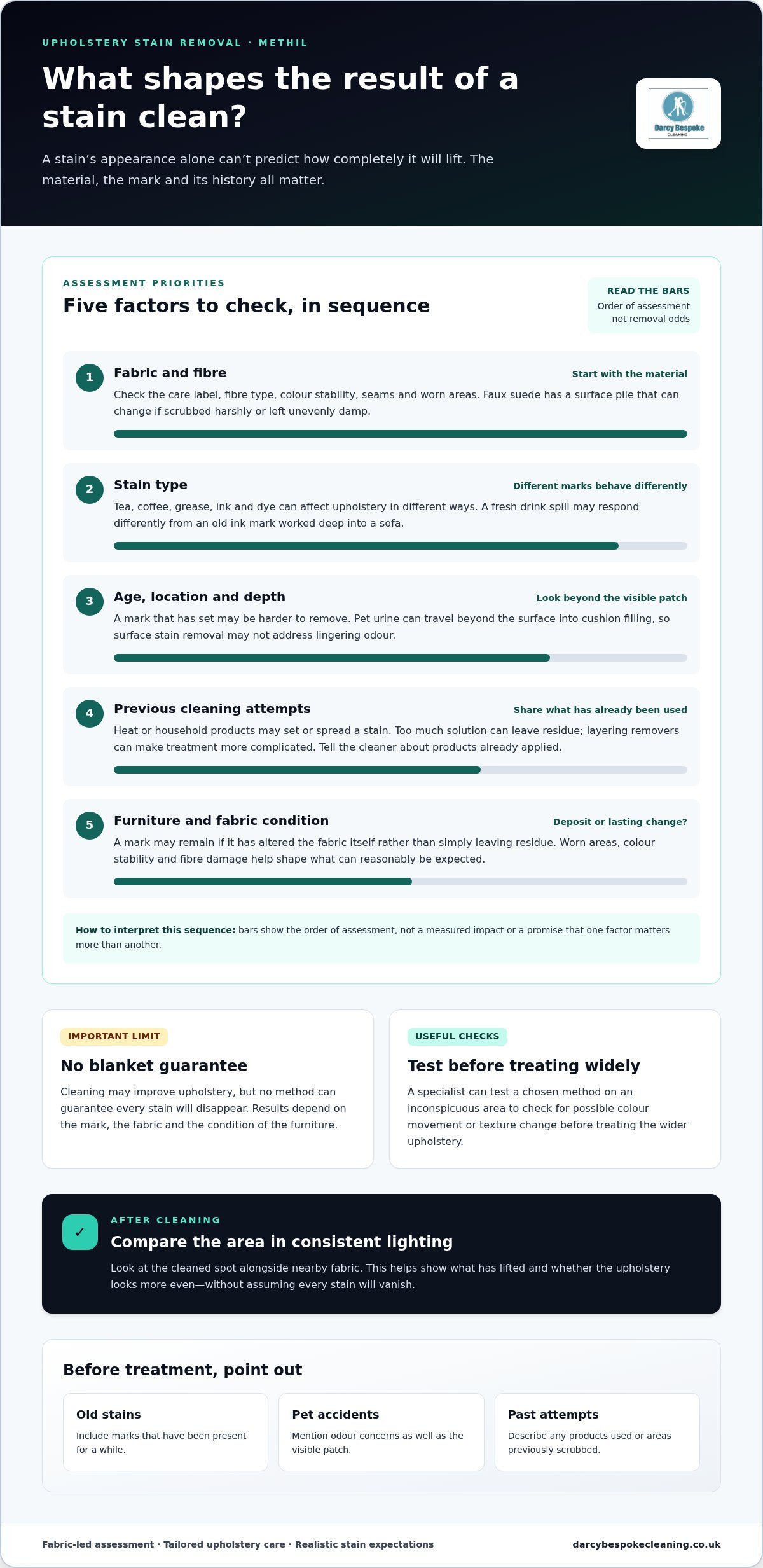
Assessment starts with the care label, fibre type, colour stability, seams and worn areas. Faux suede, for example, has a surface pile that can change appearance if scrubbed harshly or left unevenly damp. The cleaner should also note existing marks and previous treatments before choosing a method. Fabric suite cleaning prices depend on suite size, fabric, soiling, access and treatment, with the price given after a quote request. Methil cleaners’ insurance and independent reviews vary by business; those details aren’t uniform across the area.
Professional Cleaning Compared with DIY
A household upholstery product may suit a small, fresh mark, but too much solution can leave residue or spread the stain. Professional cleaning uses equipment and methods suited to the fabric, helping manage moisture and extract loosened soil. No cleaning method can guarantee every stain will disappear, especially if it has set or reacted with an earlier product. Improper cleaning can cause colour transfer, texture changes, water marks or shrinkage, so avoid vigorous scrubbing and test any home product discreetly.
Upholstery Drying Time
Drying time depends on the fabric, the amount of moisture used, room temperature and airflow. Open windows when conditions allow, keep air moving and avoid using the furniture until the fabric feels dry throughout. A thick cushion can retain moisture longer than a lightly upholstered dining chair. Evening and weekend appointments aren’t governed by one local schedule; each cleaner sets their own booking times.
Delicate Fabrics, Leather and Stain Removal
Delicate fabrics and stains call for material assessment and targeted treatment, rather than treating every mark alike. Leather needs a separate, material-specific cleaning approach; fabric upholstery methods shouldn’t be assumed suitable for it. For a velvet seat or faux suede cushion, tell Darcy Bespoke Cleaning about the material and any products already applied. This helps shape the treatment and reduce avoidable changes to colour or texture.
Can you guarantee that stains will be removed?
Stain removal can improve upholstery, but the visible result depends on the mark and fabric. A fresh drink spill on a removable cushion may respond differently from an old ink mark worked deep into a sofa. A professional assessment helps identify the stain, account for previous treatments and select a suitable approach. This sets realistic expectations before cleaning begins, rather than treating every mark as if it were identical.
Stain type matters. Tea, coffee, grease, ink and dye can each affect fabric differently, while heat or household products may set or spread a mark. Age, location and the material’s colour stability also shape the treatment. A mark that has altered the fabric itself, rather than simply leaving residue, may remain visible after cleaning. Results depend on the condition of the upholstery and the stain, not a blanket promise.
For a pet accident, blot fresh moisture with a clean, absorbent cloth and avoid rubbing it into the weave. Tell the cleaner whether you’ve used detergent or another household product. Pet urine can travel beyond the visible patch into cushion filling, so surface stain removal may not address lingering odour. Deodorising treatment can help when odour is part of the problem.
A specialist assesses the mark and tests the chosen method on an inconspicuous area before treating the wider upholstery. This helps reveal possible colour movement or texture change. Professional carpet cleaning follows the same principle: material and soiling guide the method, rather than one treatment for every surface. Avoid layering stain removers, as mixed residues can complicate treatment and leave a noticeable patch.
Before cleaning, point out every concern, including old stains, pet accidents and areas previously scrubbed. Clear information helps distinguish a removable deposit from permanent colour change or fibre damage. After treatment, compare the cleaned area with nearby fabric in consistent lighting. This practical check shows what has lifted and whether the upholstery looks more even, without suggesting every stain will vanish completely.
Cleaning methods tailored to upholstery fibres
A suitable cleaning method starts with the upholstery’s fibre, weave and construction. Cotton, polyester and blended fabrics can react differently to moisture and agitation. A close inspection should identify loose seams, worn patches, colour changes and compacted soil. The care label can offer useful guidance, while an inconspicuous test helps assess colour stability. These checks help tailor the cleaning to the furniture, rather than applying one process to every household item.
Fibre structure matters as much as the fabric name. A tightly woven seat may tolerate a different level of agitation from a delicate pile or textured covering. Faux suede, for example, needs careful attention to its surface nap, since brushing against the pile can leave an uneven finish. Before selecting products, a specialist should consider the soil, previous treatments and the furniture’s condition. This preparation supports deep cleaning while limiting unnecessary moisture and friction.
Equipment also influences how soil is lifted and removed. The Alltec Advance 600 and Rotovac 360i are used in professional cleaning to support thorough removal of dirt, allergens and stubborn stains. The appropriate setup depends on the upholstery and the area being treated. A cleaner can first remove loose surface debris, then apply a suitable cleaning solution and work it into soiled sections. Extraction can then remove loosened soil and cleaning residue.
Good practice is measured, not forceful. A cleaner should avoid saturating cushion seams or repeatedly scrubbing one mark, since excess moisture and friction can affect texture. Once treatment is complete, inspect the surface in even light and compare it with an untreated area. A dining chair, sofa arm and cushion may show different levels of soiling, so each needs attention suited to its shape and use. A method chosen for the fibre helps preserve the upholstery’s character while refreshing its appearance.
Before-and-after cleaning results
A useful before-and-after comparison starts with a clear record of the furniture’s condition. Photograph each sofa cushion, chair seat and armrest before cleaning, then use the same angle and room lighting afterwards. Include close-ups of stains and wider views of the full item. This makes changes easier to judge and helps distinguish overall brightening from marks that remain visible.
Look beyond one stubborn spot. Compare the upholstery’s general appearance, high-use areas and fabric texture. For example, a sofa seat may look more even after soil is removed, while an older stain remains. Check seams, piping and cushion edges too, since these details can show whether cleaning was consistent. Avoid judging damp fabric immediately; compare the results once the material has dried.
Lighting can change how a stain or fabric colour appears. Review both sets of photographs in similar daylight, rather than comparing a shaded “before” with a brightly lit “after”. If cushions can be turned, photograph the same side each time. Note any pre-existing wear, faded patches or marks before treatment. These simple steps create a fair record without suggesting that every visible mark will disappear.
Carpet cleaning and furniture cleaning involve different materials, so results should be assessed separately. After professional carpet cleaning, compare the same areas of the floor, while upholstery photographs should focus on matching cushions or chairs. Keep the images together with notes about the stain and treatment date. For a considered assessment of sofas and chairs, arrange professional upholstery cleaning and discuss the areas you want treated.
Darcy Bespoke Cleaning: Domestic Carpet Cleaning
Darcy Bespoke Cleaning offers a practical next step when household upholstery needs attention beyond routine vacuuming. Its sofa and armchair cleaning can address embedded soil and visible marks, with treatment suited to the furniture’s material and condition. Where both upholstery and carpet need care, domestic carpet cleaning can complement the work and refresh the wider living space.
Consider a professional clean when a well-used sofa looks dull, an armchair has accumulated everyday grime, or home treatments have left residue. Sharing details about the fabric, stains and previous cleaning helps set clear expectations. Darcy Bespoke Cleaning assesses each item on its own merits, rather than treating it as part of a standard package.
For careful upholstery or carpet cleaning in Methil and across Fife, contact Darcy Bespoke Cleaning.
Choose a thoughtful next step for your furniture
Your furniture is part of how your home feels each day. If a sofa or chair has become less inviting, decide what you’d like to improve before arranging a clean. Note the areas of concern, fabric type and any past stain treatments. These details help focus the conversation on your priorities and the care your furnishings need.
For professional upholstery cleaning in Methil, Darcy Bespoke Cleaning offers sofa cleaning alongside domestic and commercial carpet cleaning. No method can promise every stain will disappear, since the mark and material influence the result. A clear discussion of your furniture’s condition helps establish a considered approach.
If you’re ready to explore the next step, contact Darcy Bespoke Cleaning to discuss your cleaning needs. A refreshed room can begin with a simple, considered conversation.
Frequently Asked Questions
Is there anything I should prepare before the technician arrives?
Clear small items, throws and loose cushions from the furniture, and make a path to the upholstery. Keep pets away from the work area and note any stains or products used previously. If the furniture has a care label, leave it visible. These steps help the technician assess the piece efficiently and focus on the areas you want cleaned.
What’s your process for cleaning upholstery?
The process begins with assessing the fabric, furniture condition and soiling, then selecting a suitable treatment. Stains can receive targeted pre-treatment before cleaning and extraction. Darcy Bespoke Cleaning uses equipment including the Alltec Advance 600 and Rotovac 360i to support the removal of dirt and stubborn stains. Tell the technician about delicate details, such as piping or loose seams, before work starts.
Which professional upholstery cleaning companies serve Methil, Fife?
Darcy Bespoke Cleaning serves domestic and commercial customers across Fife and surrounding areas, including Methil. This independent cleaning business provides upholstery care alongside carpet and rug cleaning. When enquiring about a household sofa or chair, describe the item and its condition. That gives the conversation a practical focus from the outset.
What upholstery cleaning services are available in Methil?
Upholstery services include sofa, armchair and dining chair cleaning, as well as stain removal, deodorising, sanitising and fabric protection treatments. The right combination depends on the furniture and the concern, such as everyday soiling on a sofa or odour around a chair cushion. Carpet and rug cleaning are also available for homes needing care beyond upholstered furniture.
How much does professional upholstery cleaning cost in Methil?
The price depends on the furniture and work involved, and Darcy Bespoke Cleaning provides a quote based on your request. Relevant factors include the item’s size, fabric, condition, level of soiling and any requested treatments. A single armchair and a multi-seat sofa have different cleaning requirements. Describe each piece clearly so the quote reflects the furniture you want treated.
Which upholstery cleaning methods do local providers use?
Methods vary with the upholstery material, construction and soil. A professional may use a suitable cleaning solution, targeted stain treatment and extraction, adjusting the process for a sofa’s fabric or a dining chair’s finish. Darcy Bespoke Cleaning uses equipment such as the Alltec Advance 600 and Rotovac 360i. The fabric and its condition guide the method, rather than one fixed approach for every item.