
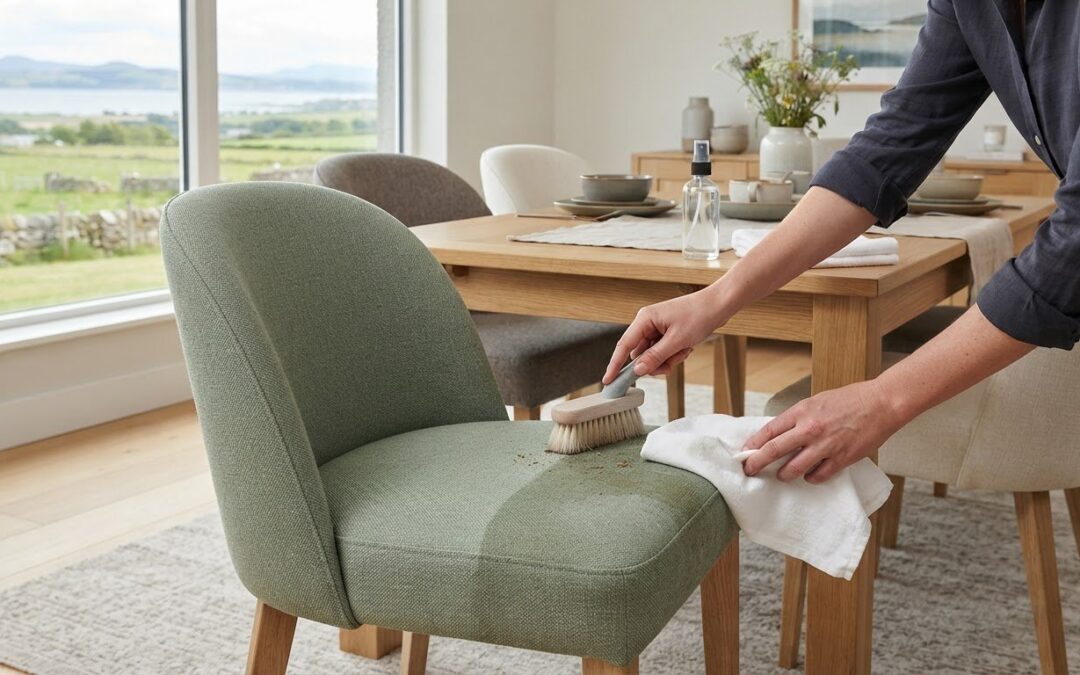
The wrong cleaning method can leave a dining chair looking worse than the stain. If you’re searching for the “best way to clean dining room chairs fife,” start by identifying the fabric, not by reaching for the strongest cleaner. Upholstery can react differently to water and cleaning products, so a quick scrub may leave marks, residue or lasting damage.
It’s understandable to feel cautious when the care label is missing or unclear, especially when a stain has settled into the fabric. This guide explains how to identify your chair material, decide whether a cautious home approach is suitable and freshen the upholstery without soaking it or using unnecessarily harsh products.
We’ll cover the checks to make before cleaning, why a discreet test and controlled moisture matter, and when a delicate fabric, stubborn stain or unsuccessful DIY attempt is better left to a professional. For Fife households, Darcy Bespoke Cleaning offers tailored dining-chair cleaning and uses specialist hand tools for delicate fabrics to help avoid over-wetting. A little care at the outset can protect the fabric and help you choose a sensible next step.
Key Takeaways
- The best way to clean dining room chairs fife readers can follow depends on the upholstery, its care instructions and the chair’s condition.
- Dyes, coatings, pile and mixed materials can respond differently, so don’t assume one cleaning method suits every chair.
- For light, recent surface soil, gentle home maintenance may be suitable. Persistent stains or uncertain fabric call for extra care.
- A considered routine starts with the manufacturer’s label and loose debris, then uses moisture sparingly and includes a check that the chair has dried fully.
- When seeking professional advice, share how many chairs need attention, what you know about the fabric and where the concerns are.
Best Way to Clean Dining Room Chairs in Fife: Start by Identifying the Upholstery
The safest cleaning choice starts with the chair itself. Before applying any cleaner, identify the upholstery and check its care instructions. A dining chair may be covered in woven fabric, leather or a combination of materials, and the seat, back and frame may each need different care. The best way to clean dining room chairs fife homeowners can use is not one universal method. It’s a measured approach that suits the materials in front of them.
Safe cleaning means controlling the method and moisture, rather than trying to make a chair spotless with more water or stronger products. A broader Conservation and restoration perspective also focuses on preserving materials, not simply removing visible marks.
How to identify the chair fabric before cleaning
Look for a care label, then check the manufacturer’s guidance and any purchase information you still have. Inspect the seat, back and seams closely. Upholstery can change across a chair, and a trim, panel or finish may react differently from the main fabric. If you can’t confidently identify the material or its recommended care, don’t begin wet cleaning. Seek informed advice first.
Why a cautious patch test matters
If the care instructions permit a product, follow its directions and test it on a discreet area. Once the test area has dried, check for colour transfer, a change in texture, a ring or another visible effect. A patch test can reveal a problem, but it doesn’t override manufacturer guidance or replace a professional assessment for delicate or uncertain upholstery.
Stop if the result is unclear. An inconclusive test is a reason not to apply more product or expand the test across the chair. Adding cleaner can increase the risk of residue or visible marks without resolving the uncertainty.
A quick material check can also help you decide what to do next:
- Fabric upholstery: Check the care guidance before using moisture or an upholstery product.
- Leather: Don’t assume advice for fabric applies. Follow the manufacturer’s instructions for that specific chair.
- Mixed materials: Identify each area separately, especially where fabric meets leather or another finish.
If the label is missing, the material remains uncertain or a previous attempt has left a mark, consider professional dining-chair cleaning rather than experimenting. In Fife, Darcy Bespoke Cleaning tailors chair cleaning to the upholstery and uses specialist hand tools for delicate fabrics to help avoid over-wetting. An assessment can help you consider the next step while taking the chair’s material into account.
How Different Dining Chair Fabrics Respond to Cleaning
Two chairs that look similar may react differently to the same cleaner. Fibre, dye, surface coatings, pile and the way the upholstery is constructed can all influence how moisture or friction affects it. That’s why the best way to clean dining room chairs fife homeowners choose should be guided by the care label, not appearance alone.
The examples below are starting points, not fixed cleaning instructions. Check the manufacturer’s guidance before using a product or introducing moisture. If it conflicts with general advice, follow the chair-specific instructions.
| Material cue | Cautious approach | When to stop |
|---|---|---|
| Woven or synthetic upholstery | Use only a method permitted by the care label. If it allows a suitable product, apply it gently and locally rather than rubbing across the weave. | Stop if colour transfers, the texture changes or soil appears to spread. |
| Velvet or another pile fabric | Check for specific guidance on the fabric and its pile. Don’t assume brushing or moisture is suitable. | Stop if the pile looks flattened, marked or uneven after a cautious test. |
| Coated or mixed-material upholstery | Identify each surface and follow instructions for the particular finish. Treat seams and transitions with care. | Stop if the finish becomes tacky, discoloured or visibly altered, or if the material is uncertain. |
Cleaning common woven and synthetic upholstery
Woven surfaces can hold soil between their threads, but vigorous rubbing may distort the texture or push a mark across a wider area. Synthetic upholstery can also have dyes or finishes that respond differently to cleaning, so don’t assume it’s water-safe based on the fibre name alone. Let the care label guide your product choice and whether moisture is appropriate. If treatment is permitted, keep it gentle and local, and stop at the first sign of a colour or texture change.
When delicate, coated or uncertain fabrics need extra care
Velvet, delicate weaves and coated finishes need material-specific guidance. A chair that feels sturdy may still be affected by soaking, aggressive brushing or an unsuitable solution. If the label is missing or you can’t identify the upholstery, avoid experimenting. A tailored assessment is a more considered next step than trying another product.
For broader upholstery support, see professional upholstery cleaning in Cupar. If a dining chair’s material or condition makes home treatment uncertain, you can also discuss dining-chair cleaning with Darcy Bespoke Cleaning. Its approach is tailored to the upholstery, with specialist hand tools used for delicate fabrics to help avoid over-wetting.
DIY or Professional Dining Chair Cleaning in Fife: Which Makes Sense?
The right choice depends on three things: how certain you are about the upholstery, how much soil needs attention and what’s already been tried. Light, recent surface soil on a chair with clear care instructions may be manageable at home. A delicate or unidentified fabric, a recurring mark or an old stain calls for more caution. The best way to clean dining room chairs fife households can rely on respects those differences rather than using the most product.
When careful home cleaning may be enough
For routine upkeep, begin with a vacuum and a suitable upholstery attachment, if the care guidance permits it. This removes loose crumbs and dust without introducing moisture. If a fresh spill occurs, gently blot it with a clean, absorbent cloth. Don’t scrub, since friction can spread the mark or affect the surface. Before using any product, check the chair instructions and test discreetly as described earlier.
Keep treatment limited to the affected area, and stop if the fabric changes or the result is unclear. Never mix cleaning products or apply an untested solution across the whole chair. More product doesn’t necessarily mean better cleaning, and it can leave residue that complicates later treatment.
When to ask an upholstery cleaner for help
Consider specialist advice before wet treatment if the chair is valuable, delicate or difficult to identify. It’s also sensible when a stain keeps returning, has been on the fabric for a long time, or has already been treated with products you can’t identify. Previous cleaning can leave residues, while a mark’s history and the upholstery’s condition may make the outcome less predictable. Avoid repeatedly treating it at home.
For significant or persistent marks, stain removal guidance for Fife homes can help you consider a more suitable next step. Darcy Bespoke Cleaning offers per-item dining-chair cleaning, with care tailored to the upholstery. Specialist hand tools are used for delicate fabrics to help avoid over-wetting. No method can promise every stain will disappear, so sharing what caused the mark and what has already been applied can help inform an assessment.
In short, home care suits light maintenance when the care instructions are clear and the surface responds as expected. Choose professional assessment when uncertainty, fabric delicacy or stain history raises the risk of making matters worse. If you’re weighing up care for dining chairs in Fife, you can explore dining-chair cleaning with Darcy Bespoke Cleaning and discuss the fabric and areas of concern before deciding how to proceed.
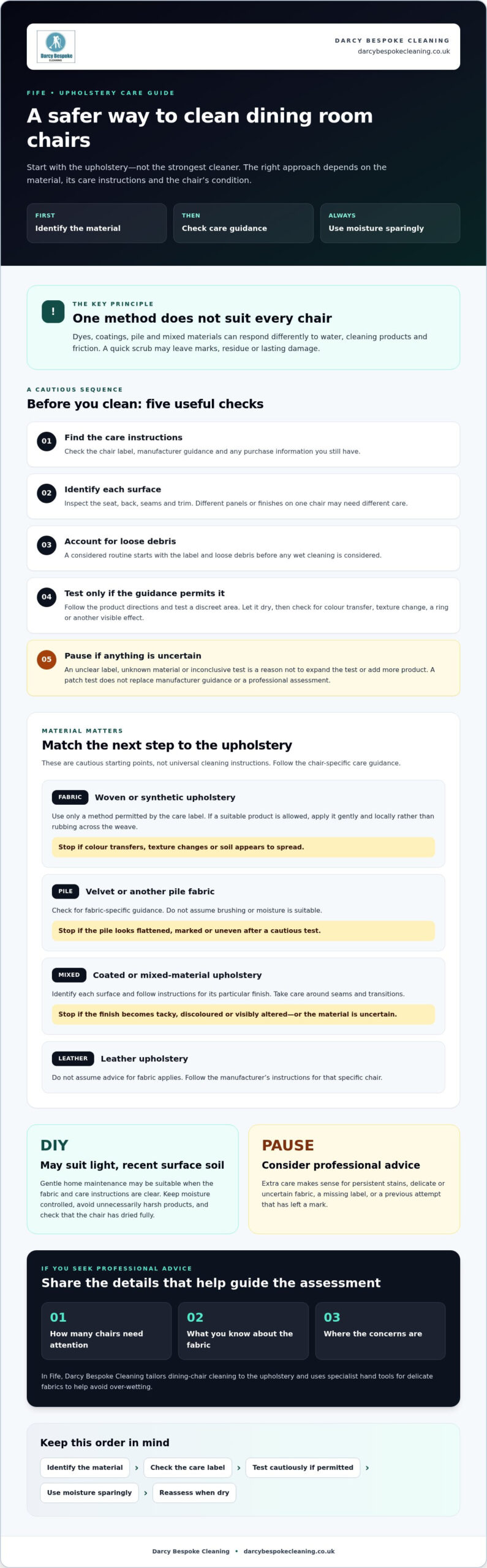
A Fabric-Safe Step-by-Step Method for Cleaning Dining Room Chairs
A careful routine keeps the process controlled, from the first check to the final drying inspection. The best way to clean dining room chairs fife households can use at home is to work within the chair’s care guidance, use minimal moisture and stop if the upholstery reacts unexpectedly. If the label advises against your intended method, don’t proceed with it.
- Read the care label first. Check the manufacturer’s instructions and confirm that any proposed product or moisture is suitable for the upholstery. If the material or guidance is unclear, leave wet cleaning until you can get informed advice.
- Prepare the area. Move the chair somewhere ventilated and protect nearby flooring from drips. Make sure you can reach the seams and underside of the upholstered area without dragging the chair across the floor.
- Remove loose debris. Use a vacuum with an appropriate upholstery attachment, moving gently over the seat, back and seams. Avoid pressing hard or catching delicate edges. This dry step helps lift crumbs and dust before you consider a cleaning product.
- Blot fresh spills. If the fabric guidance allows, use a clean, absorbent cloth to gently blot a spill. Don’t rub, scrub or add water before checking the care instructions. Friction or unapproved moisture may spread the mark or affect the material.
- Test any suitable product discreetly. Follow the product label and test a hidden area. Let the test area dry enough to assess its appearance and texture. If you see colour transfer, a ring or another change, stop rather than continuing across the chair.
- Clean a small area gently. If the test shows no adverse effect and the label permits treatment, use only the directed amount. Work locally and lightly. Don’t saturate the upholstery or padding, and don’t mix products.
- Remove residue as directed and allow the chair to dry. Follow the product instructions for any removal step, then provide suitable ventilation. Drying conditions vary by fabric and method, so follow the label rather than relying on a fixed time. Don’t use the chair while it’s damp. Check that the surface and seams are fully dry before putting it back into use.
For delicate upholstery, unclear instructions or a mark that resists cautious treatment, avoid repeating the process. Darcy Bespoke Cleaning provides per-item dining-chair cleaning, using specialist hand tools for delicate fabrics to help avoid over-wetting. Enquire about dining-chair cleaning in Fife if you’d prefer tailored care for your chairs.
Professional Dining Chair Cleaning in Fife: What to Expect Next
If the fabric is delicate, the care label is missing or a home treatment hasn’t worked, professional advice can help you decide what to do without further experimentation. The best way to clean dining room chairs fife homeowners choose depends on the upholstery and its condition, so the approach should be tailored rather than assumed in advance.
How a tailored chair-cleaning assessment helps
A considered assessment takes account of the visible fabric, chair construction, level of soiling and any previous treatment. These details can help identify potential risks and inform a suitable cleaning method, but they can’t guarantee that every mark will disappear. Older stains, colour changes or residue from products already used may affect the result.
Darcy Bespoke Cleaning offers per-item dining-chair upholstery cleaning and uses specialist hand tools for delicate fabrics to help avoid over-wetting. The method can be tailored to the upholstery instead of applying the same treatment to every chair. If you’re unsure how the fabric will respond, share that concern before cleaning is considered.
Prepare for a dining-chair cleaning appointment
A little information makes it easier to understand what your chairs may need. When you ask about cleaning, share:
- How many chairs need attention, and whether you’re concerned about all of them or particular seats.
- What you know about the upholstery, including visible fabric details and any care-label or manufacturer information available.
- Where the concerns are, such as food or drink marks, lingering odours, general soiling or changes in texture.
- What you’ve already tried, including any products or methods used and how the fabric responded.
Being open about previous attempts is helpful, even if a treatment didn’t work as hoped. It gives the cleaner useful context and can help avoid repeating an unsuitable method. You can also ask how the proposed care will suit your particular upholstery before proceeding.
Darcy Bespoke Cleaning provides a 100% satisfaction guarantee: if you’re not completely happy, the business will re-clean an area for free. This offers reassurance about the service, while stain outcomes still depend on the fabric, condition and mark history.
If you’d like advice for your chairs in Fife, ask Darcy Bespoke Cleaning about dining-chair cleaning. Sharing the chair count, fabric details and areas of concern is a straightforward first step towards care suited to your upholstery.
Choose Care That Suits Your Chairs
The safest cleaning choice begins with the upholstery and its care instructions. Keep moisture and product use controlled, and pause if a test or treatment changes the fabric. Light surface soil may respond to careful home maintenance, while delicate materials, unclear labels or persistent marks are good reasons to seek tailored advice.
For Fife households, Darcy Bespoke Cleaning offers dining-chair upholstery cleaning and uses specialist hand tools for delicate fabrics to help avoid over-wetting. The business also offers a 100% satisfaction guarantee: if you’re not completely happy, an area will be re-cleaned free. Stain results can vary with the material and condition, so sharing your concerns in advance helps set appropriate expectations.
If you’d prefer a considered approach for your chairs, ask Darcy Bespoke Cleaning about tailored dining-chair care. Share what you know about the fabric and the areas of concern to discuss a suitable next step.
Frequently Asked Questions
What is the best way to clean fabric dining room chairs?
Start by checking the chair’s care label and manufacturer guidance, then remove loose debris gently with a suitable upholstery attachment. For a fresh spill, blot with a clean, absorbent cloth rather than rubbing. Only use a product or moisture if the instructions allow it, and test discreetly first. Keep any treatment local and minimal, then follow product directions and let the chair dry fully before using it.
Can I use washing-up liquid to clean dining chair upholstery?
Only use washing-up liquid if the chair’s care instructions permit it. A household detergent isn’t necessarily suitable for upholstery, and it may leave residue or affect colour and texture. Don’t mix it with other cleaners or apply it over the whole chair without testing. If the care label is missing, unclear or advises against water-based cleaning, avoid experimenting and seek advice suited to the material.
How do I clean dining chairs without leaving watermarks?
Follow the care label, avoid soaking the upholstery and use as little moisture as the approved method allows. Treat only the affected area, working gently rather than scrubbing a wider patch. Uneven wetting or leftover product can contribute to visible marks, so follow directions for removing residue and allow the chair to dry with suitable ventilation. If a test leaves a ring or another change, stop.
Can I use a steam cleaner on upholstered dining chairs?
Don’t assume steam is safe for upholstered chairs. Heat and moisture may not suit the fabric, dye, coating, padding or construction, and the manufacturer’s instructions should guide your choice. Use a steam cleaner only if the chair’s care guidance specifically allows that method and the machine instructions are followed. If the label is unclear or the upholstery is delicate, ask a professional before proceeding.
What should I do if I do not know what fabric my dining chairs are made from?
Check for a care label, purchase information or manufacturer guidance, and inspect the seat, back and seams for different materials or finishes. Don’t start wet cleaning while the upholstery remains unidentified, since different fabrics can respond differently to products and moisture. A patch test can reveal some adverse effects, but it can’t replace material guidance. If you’re still unsure, seek a professional assessment first.
How often should dining room chairs be professionally cleaned?
There isn’t one schedule that suits every household or chair. Consider professional cleaning when visible soil builds up, marks recur or routine care no longer freshens the upholstery. Frequency can depend on how often the chairs are used, spills and the fabric’s care instructions. Between professional cleans, gentle upkeep permitted by the manufacturer can help manage loose debris. Avoid unnecessary wet cleaning just to follow a fixed timetable.
When should I call a professional dining-chair cleaner in Fife?
Ask a professional before wet treatment if your chair has delicate or unidentified upholstery, a missing care label, a persistent stain or a history of unsuccessful cleaning. For anyone searching “best way to clean dining room chairs fife,” the safest next step may be an assessment rather than another DIY product. Darcy Bespoke Cleaning offers per-item dining-chair cleaning in Fife, tailoring care to the upholstery and using specialist hand tools for delicate fabrics to help avoid over-wetting.