
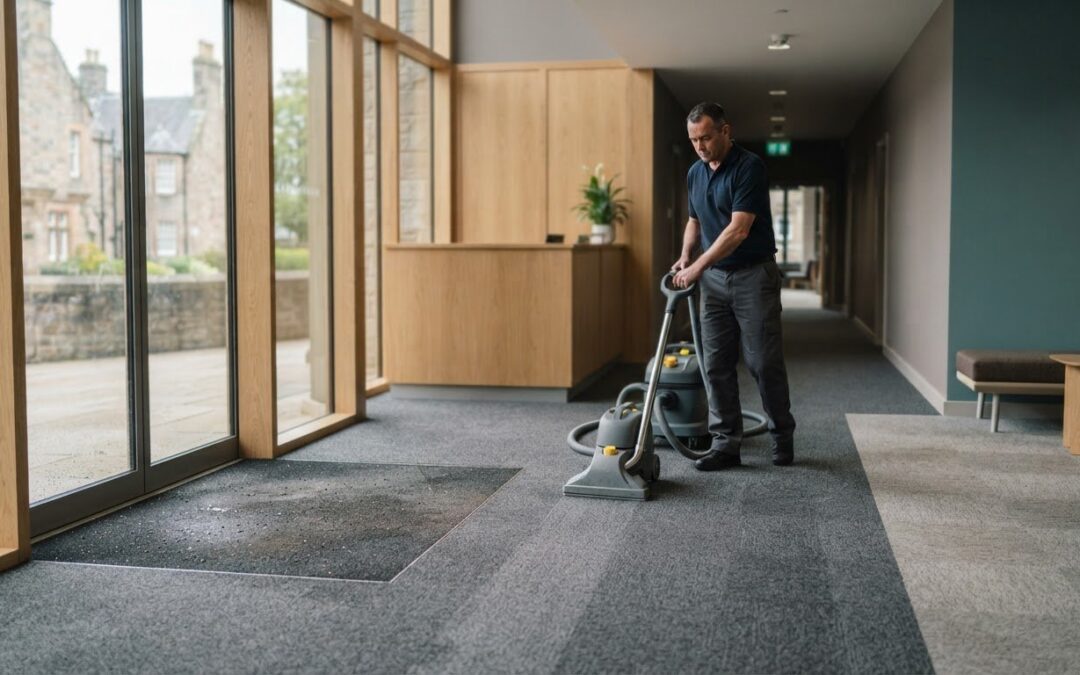
Traffic, not the calendar alone, should shape your office carpet cleaning schedule. If you’re asking how often you should clean office carpets, a professional clean every 3 to 6 months is a useful starting point for most offices. Busy entrances, receptions and corridors may need attention more often, while lightly used rooms can often go longer between deep cleans.
It makes sense to want a schedule that keeps office carpets presentable without treating every room as if it gets the same level of use. How often you should clean office carpets depends on foot traffic, the type of space and how well the carpet is maintained between professional cleans.
This guide explains how to match cleaning frequency to light, moderate and heavy traffic, and how entrance mats and regular vacuuming help limit the dirt tracked through the workplace. You’ll also see why separate schedules for different areas make carpet care more considered and effective.
Key Takeaways
- Set separate cleaning intervals for receptions, corridors and quieter rooms rather than applying one schedule across the whole office.
- Use entrance mats to capture dirt and moisture, and increase vacuuming where footfall is heaviest.
- Blot spills promptly and keep up interim care to help carpets stay presentable between deep cleans.
- Consider how carpet condition, use and maintenance affect workplace air, especially in areas where dust and allergens can build up.
How Often Should You Clean Office Carpets?
Most offices benefit from professional carpet cleaning every 3 to 6 months, adjusted for footfall and room use. Effective care combines hot-water extraction for deep cleaning with regular vacuuming and prompt stain treatment between appointments.
The essentials are regular vacuuming, entrance mats and periodic professional deep cleaning. Together, they remove everyday debris and embedded soil while helping manage moisture and maintain workplace hygiene.
Professional Schedules by Office Type
A cleaning schedule sets how often each office area receives professional attention. It matters because a reception exposed to constant footfall accumulates soil faster than a quiet boardroom.
Open-plan offices generally need a deep clean every 3 to 6 months. Reception carpets benefit from cleaning every 3 months, while low-traffic private offices and boardrooms can often follow a 6 to 12-month interval. Retail and hospitality carpets typically need cleaning every 3 to 6 months; healthcare and education spaces benefit from quarterly deep cleaning and monthly maintenance.
BICSc guidance recommends professional deep cleaning for most commercial office areas every 3 to 6 months. Treat these intervals as a starting schedule, then adjust for carpet type, visible soiling and daily use.
Maintenance Between Professional Cleans
Interim care removes surface dirt before it becomes embedded in carpet fibres. This supports hygiene, helps protect the carpet’s lifespan and keeps high-use areas presentable between deep cleans.
Vacuum high-traffic areas daily and other areas twice weekly. Place entrance mats where people enter to catch dirt and moisture, and rotate mats each quarter. Blot spills immediately; arrange professional spot treatment within 48 hours to address stains before they settle.
For deeper soil, professional hot-water extraction cleans carpet fibres beyond the surface. It can lift embedded dirt and stains, while regular vacuuming cannot replace restorative cleaning. Allow for drying: hot-water extraction can take between four and twelve hours.
Carpet warranties may set particular maintenance conditions. Read the installed product’s care instructions and warranty rather than assuming annual professional cleaning is required. A schedule suited to the carpet and its use helps keep care consistent without imposing the same interval on every room.
Using entrance mats and regular vacuuming between cleans
Entrance mats and regular vacuuming reduce the soil that settles into office carpet fibres. Place mats at external doors and busy thresholds, where shoes bring in grit and moisture. A mat works best when it covers the route people actually use, rather than sitting beside it. Rotate entrance mats each quarter so wear and accumulated dirt are distributed more evenly. Keep the mat itself clean: a saturated or heavily soiled mat can transfer debris back onto nearby carpet.
Vacuuming frequency should reflect how each space is used. High-traffic carpeted areas need daily vacuuming, while other areas should be vacuumed twice weekly. A reception with constant visitors therefore needs more attention than a small meeting room used occasionally. Slow, overlapping passes help collect loose debris before it becomes embedded. Regular vacuuming can extend the time between deep cleans, but it doesn’t remove embedded soil or replace professional cleaning.
Respond to spills promptly. Blot liquid with a clean, absorbent cloth rather than rubbing it deeper into the pile. For muddy footprints, lift dried material carefully before vacuuming; spreading damp soil can leave a wider mark. Arrange professional spot treatment within 48 hours for spills, pet accidents or muddy footprints. Fast attention helps limit staining and keeps a local mark from becoming a wider cleaning problem.
Interim care supports a longer-term maintenance plan, not a fixed 12-month rule for every office. Traffic, carpet type and visible soiling all affect the appropriate frequency. Keep a simple record of vacuuming and spill treatment by area; repeated marks near one doorway may signal that its mat placement needs adjusting. For embedded soil that routine care can’t lift, professional carpet cleaning can complement the office’s regular maintenance routine.
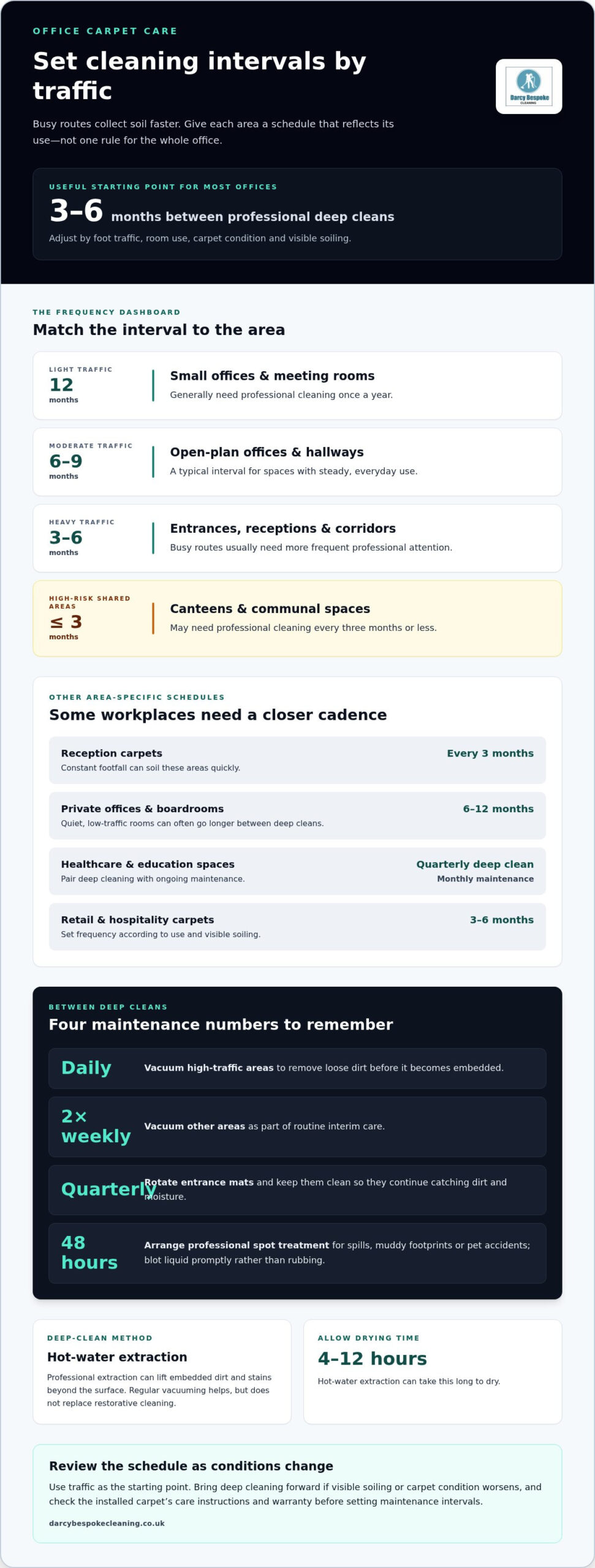
Recommended cleaning frequency by office traffic level
How often you should clean office carpets depends on foot traffic, room use, carpet condition and maintenance. A busy entrance gathers more grit than a lightly used office, while allergy-sensitive workplaces may need more frequent deep cleaning.
Use traffic as your starting point, then tailor the interval to each space:
- Light traffic: Small offices and meeting rooms generally need professional cleaning every 12 months.
- Moderate traffic: Open-plan offices and hallways typically benefit from cleaning every 6 to 9 months.
- Heavy traffic: Entrances, receptions and corridors usually need cleaning every 3 to 6 months.
- High-risk shared areas: Canteens and communal spaces may need professional cleaning every 3 months or less.
These intervals distinguish busy routes from rooms with limited use. A reception and a private office in the same building need not follow the same schedule. Review visible soiling and changes in foot traffic when setting the next appointment. Bring deep cleaning forward if carpet condition declines between planned cleans.
Workplaces where occupants have allergies or respiratory conditions are recommended for professional cleaning every 3 to 6 months. More frequent care may help address allergens held in carpet fibres. Pair professional attention with regular vacuuming, especially along walkways where particles collect through daily use.
Shared spaces deserve particular attention because several activities can add soil: food debris in a canteen, for example, or steady movement through a communal corridor. A quarterly cleaning rhythm, or more often where conditions warrant it, gives these areas a distinct plan from quieter rooms.
Treat the schedule as a working plan, not a permanent rule. Compare each area’s current condition with its foot traffic and cleaning routine. If a previously quiet room becomes a regular meeting space, adjust its professional cleaning frequency to reflect that change.
Carpet cleaning and workplace air quality
Carpet fibres can hold dust and other pollutants, which normal indoor activity may disturb and release into the air. A peer-reviewed review in the International Journal of Environmental Research and Public Health describes carpets as pollutant reservoirs, with adverse health outcomes reported particularly for people with asthma and allergies. Regular care can support a cleaner workplace, but it doesn’t guarantee a particular health outcome.
Cleaning frequency should reflect both carpet condition and workplace activity. A reception with daily visitors collects different debris from a quiet office; corridors carry constant foot traffic, while a canteen may collect food residue. These patterns affect appearance and how quickly dirt settles into fibres. Light-coloured carpet can also show soiling sooner, making changes in colour a useful visual prompt to review care.
Allergy-sensitive workplaces should plan professional cleaning every 3 to 6 months. Combine that schedule with regular vacuuming and attention to busy routes. Vacuuming can disturb allergens, so consider how and when it happens, particularly in spaces used by people with allergies. Promptly removing visible debris and addressing spills also helps prevent local soiling from spreading.
Drying time matters when planning access. Hot-water extraction requires between four and twelve hours for office carpets to dry. Encapsulation cleaning leaves carpets dry and back in use within 30 minutes. The method and timing affect which rooms can remain open, especially corridors or shared spaces that visitors and staff need throughout the day.
Choose the cleaning approach around the workplace’s activity, carpet condition and access needs. For example, a busy reception may require careful scheduling to limit disruption, while a lightly used meeting room offers more flexibility. Professional cleaning supports routine care; neither carpet appearance nor odour alone reveals every pollutant within its fibres. Plan a suitable carpet cleaning schedule around your workplace’s use and access requirements.
Darcy Bespoke Cleaning: Domestic Carpet Cleaning
Darcy Bespoke Cleaning provides Commercial Carpet Cleaning in Fife for offices where tracked-in soil, visible staining or routine wear call for a professional deep clean. It’s a natural next step when regular vacuuming and entrance mats no longer keep carpet presentable, or when different rooms need a considered cleaning schedule.
Professional carpet care can address embedded dirt and stubborn stains while supporting ongoing maintenance. Darcy Bespoke Cleaning also offers Sofa Cleaning and Armchair Cleaning for workplaces with upholstered seating that needs attention alongside carpeted areas. The right service depends on the surfaces and their condition.
For a tailored approach to your workplace carpets in Fife, contact Darcy Bespoke Cleaning or visit darcybespokecleaning.co.uk.
Make Carpet Care Part of Your Workplace Routine
How often you should clean office carpets is worth reviewing as your workplace changes. A new team layout, busier visitor schedule or shift in how rooms are used can alter where wear appears. Treat your maintenance plan as a working part of looking after the space, not a calendar entry that never changes.
Darcy Bespoke Cleaning offers Commercial Carpet Cleaning for workplace carpets, alongside Domestic Carpet Cleaning and Sofa Cleaning. Including carpet and soft furnishings in one considered care plan can help keep the whole environment looking cohesive, rather than leaving seating overlooked while floors receive attention.
If you’re ready to discuss a considered approach for your carpets or office furnishings, contact Darcy Bespoke Cleaning. A thoughtful next step can help your workplace feel cared for, welcoming and ready for the people who use it.
Frequently Asked Questions
Can dirty carpets affect employee health?
Carpets can contribute to poor indoor conditions by holding pollutants that may become airborne during normal activity. A peer-reviewed review in the International Journal of Environmental Research and Public Health describes carpets as pollutant repositories, with adverse health outcomes reported particularly for people with asthma and allergies. This doesn’t mean every dirty carpet causes illness, but accumulated dust and debris deserve attention in shared workplaces.
What Schedule Works?
A zoned schedule works best: group rooms by how they’re used, then set separate maintenance dates for each group. For example, plan more frequent attention for visitor-facing areas than for rooms used occasionally. Record visible soiling, spills and changes in room use as you go. Reviewing those notes helps the facilities team adjust the plan when an office layout or working pattern changes.
How often should office carpets be professionally cleaned in the UK?
For most UK offices, professional carpet cleaning every 3 to 6 months is a practical baseline. The right point within that range depends on footfall, carpet material and how effectively the site manages everyday soil. A lightly used office with diligent upkeep may need a different interval from a workplace with constant visitors. Divide the premises into zones rather than applying one date everywhere.
How often should office carpets be vacuumed?
Vacuum high-traffic carpeted areas daily and other office areas twice weekly. For instance, prioritise walkways connecting the entrance, reception and staff desks, where grit is repeatedly tracked through. Vacuuming removes loose debris before it settles deeper, but it doesn’t replace professional deep cleaning. If a room’s use changes, revise its vacuuming routine to match the new pattern of movement.
How often should carpets be cleaned in busy office areas and reception spaces?
Plan professional cleaning for heavily used areas, including entrances, receptions and corridors, every 3 to 6 months. A reception exposed to frequent visitors may need attention towards the shorter end of that interval. Look for traffic lanes, dull patches and recurring marks as signs that soil is accumulating. Keep the reception schedule distinct from quieter rooms, even if they share one carpet type.
How often should office carpets be cleaned in low-traffic areas?
Low-traffic office carpets generally need professional cleaning annually. Small private offices or boardrooms used only occasionally may be suited to a longer interval of 6 to 12 months, depending on their condition and maintenance. Check the carpet manufacturer’s care instructions and warranty terms when setting the plan. A room used more often than expected should move to a schedule that reflects its actual use.