
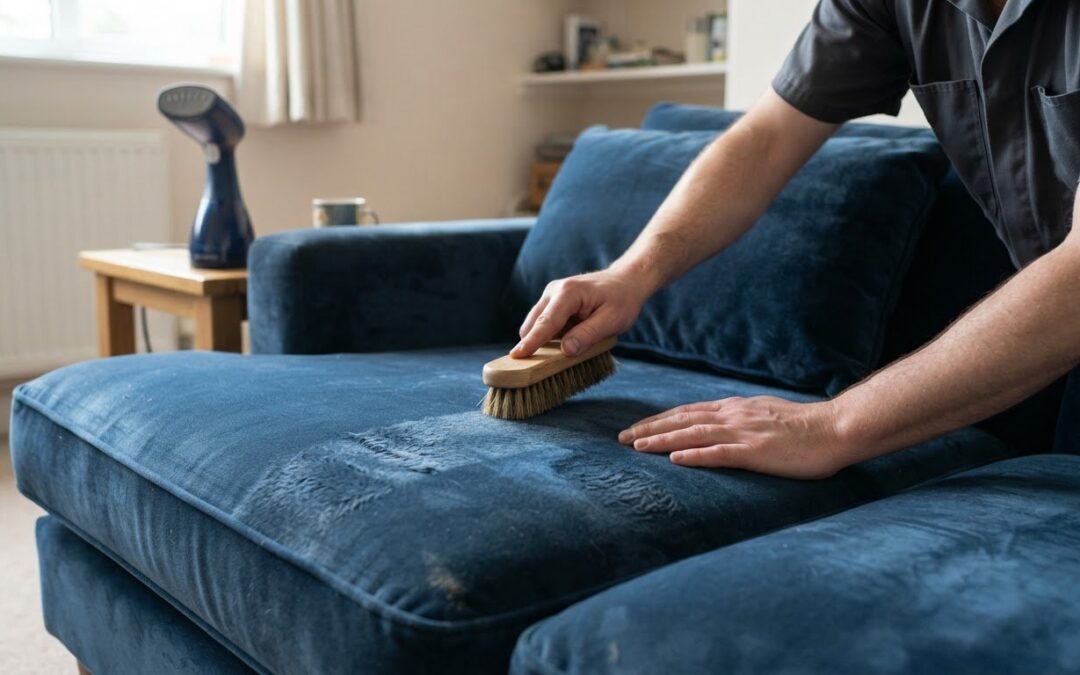
A steamer isn’t always the answer to creases or pressure marks on velvet. To care for a velvet sofa, start by checking its care instructions: use steam only if they recommend it, then gently brush the pile to lift flattened areas. For spills, blot instead of rubbing and let the fabric dry without soaking it.
It’s understandable to want to restore velvet’s smooth, rich appearance without risking its texture. This guide explains how to handle spills, ease pressure marks with brushing and suitable steam, reposition loose cushions and reduce sun fading. You’ll also learn when a mark may simply be the pile changing direction, not damage, so you can choose a measured approach and care for the fabric with confidence.
Key Takeaways
- Blot spills with a clean, dry cloth instead of rubbing, and avoid soaking the upholstery.
- Check the care instructions before using steam; gentle brushing can help lift flattened pile.
- Turn and fluff loose cushions where the design allows to encourage more even wear.
- Limit direct sunlight with thoughtful furniture placement or curtains to help preserve the velvet’s colour.
Blotting spills and drying the fabric
For any velvet upholstery, act promptly and clean gently. Excess water, friction and unsuitable products can affect the pile or colour.
Blot Spills Without Scrubbing
Step 1: Lift away any solid residue carefully, then press a clean, dry, absorbent cloth onto the liquid spill. Work from the outside towards the centre, using fresh areas of cloth as they absorb moisture. This helps prevent the spill spreading across the velvet upholstery.
Don’t scrub or rub, even if a mark looks stubborn. Friction can flatten or disturb the pile, leaving a patch that reflects light differently. Blot with gentle pressure until the cloth picks up less liquid, then check the care label before applying anything else.
Spot-Clean Spills and Stains
Step 2: Test any cleaning solution on a small, hidden area first, and check for colour change before treating a visible stain. For a suitable fabric, lightly dampen a clean cloth rather than wetting the sofa itself. A mild option is warm water with a drop of washing-up liquid.
Dab the mark gently, working from its edge towards the centre, and avoid saturating cotton velvet. For a stubborn stain, use a specialist velvet sofa cleaner only if the care instructions allow it. Check the manufacturer’s recommendations before using household products or harsh detergents.
Dry the Fabric
Step 3: Let treated velvet air dry naturally, particularly crushed velvet, which shouldn’t be soaked. Keep the area ventilated and leave the fabric untouched while it dries; pressing or rubbing damp pile may alter its finish.
If moisture remains after blotting, a hairdryer held well away from the fabric may help, but don’t direct heat closely onto it. Use heat or steam only if the manufacturer recommends it. Once the velvet is fully dry, gently brush the pile to help restore its texture.
Removing pressure marks with steam and brushing
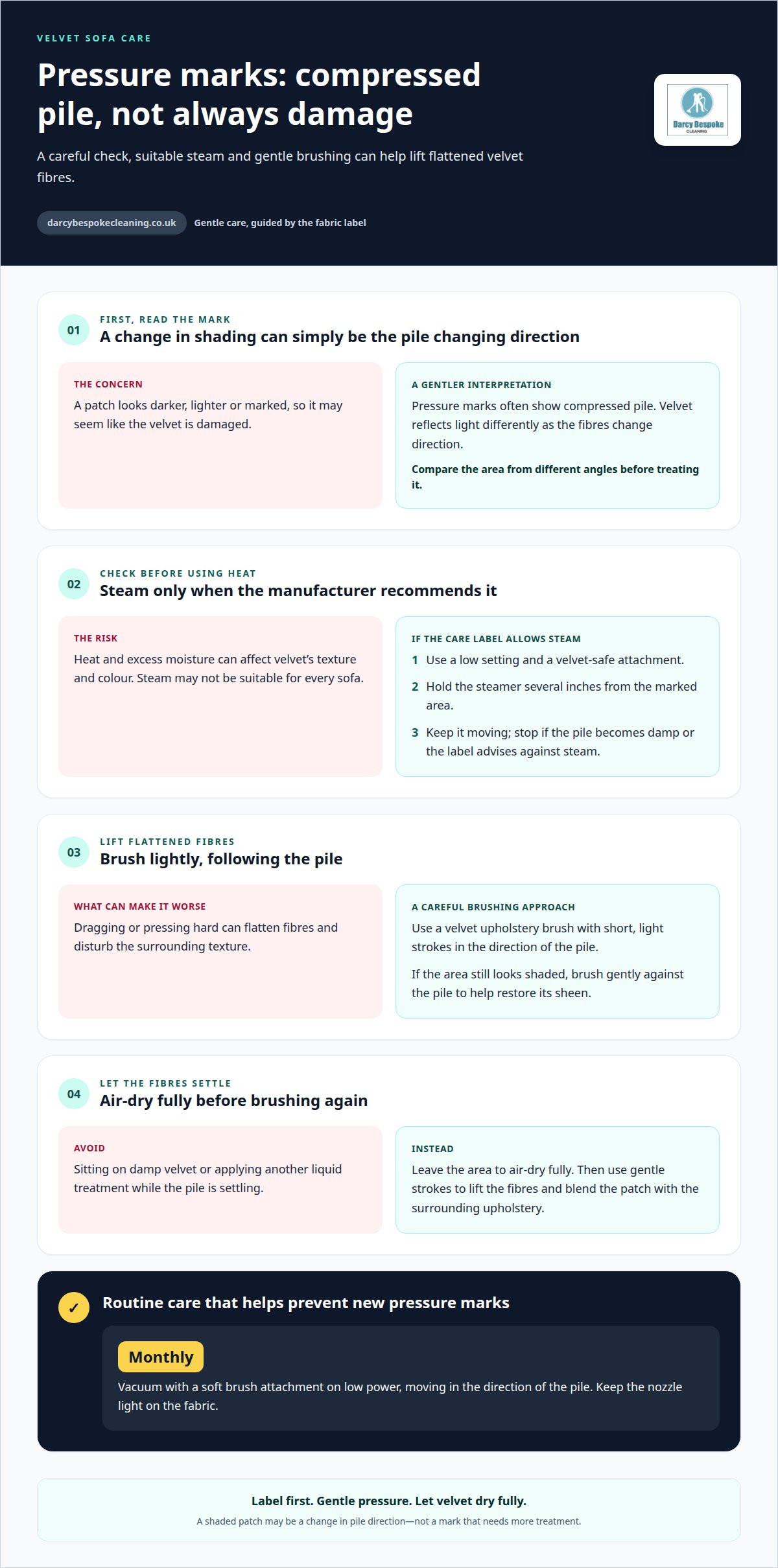
Pressure marks often show compressed pile rather than damaged velvet. Work gently, as heat and excess moisture can affect the fabric’s texture and colour.
-
Steam Out Pressure Marks
Check the care label before steaming, and use steam only if the manufacturer recommends it. For suitable velvet, hold a handheld garment steamer several inches from the marked area and use a low setting with a velvet-safe attachment.
Keep the steamer moving instead of directing a concentrated burst at one spot. The aim is to relax compressed fibres, not wet the upholstery. Stop if the pile becomes damp or the label advises against steam.
-
Brush the Flattened Pile
Gently brush the pressure mark with a velvet upholstery brush, following the pile’s direction to lift flattened fibres. Short, light strokes help smooth the patch without dragging or crushing the surrounding texture. If the area still looks shaded, brush gently against the pile to help restore its sheen.
For routine care, vacuum the sofa monthly using a soft brush attachment on low power, moving in the direction of the pile. Keep the nozzle light on the fabric, as firm pressure can flatten the fibres you’re trying to revive.
-
Air-Dry and Brush the Pile
After steaming, let the velvet air-dry fully before brushing it again. Don’t sit on the damp area or apply another liquid treatment, as pressure can compress the pile while it settles.
Once dry, use gentle strokes to lift the fibres and blend the treated patch with the surrounding upholstery. Compare it from different angles: velvet reflects light differently as the pile changes direction, so a shift in shading may not mean a mark remains.
If the concern is a stubborn stain rather than compressed pile, professional upholstery stain removal can address the mark without mistaking it for a pressure patch.
Rotating cushions to prevent uneven wear
Reposition loose cushions to spread everyday pressure across the velvet. Gentle, regular care also helps limit lasting wrinkles and preserve the sofa’s shape.
-
Move, Turn, and Shake Cushions
Lift each loose cushion from the sofa, turn it and give it a gentle shake to redistribute its filling. Move cushions between seats only when their shapes and sizes match. This shifts where everyday pressure falls and helps prevent one seating area from taking all the wear.
Handle delicate velvet carefully: don’t drag cushions across the frame or grip the fabric tightly. Check the seams and cushion shape as you move them, then return each one neatly to its place.
-
Fluff and Plump Cushions
Fluff velvet sofa cushions weekly to help preserve their shape and reduce uneven wear. Remove each cushion and gently press or pat its sides, working around the filling rather than striking the velvet. This helps the fibres and filling settle more evenly after regular use.
Plump each cushion before replacing it, then smooth the fabric with your hand. Avoid forceful punching, which can put unnecessary pressure on the cover and seams. A consistent weekly routine helps keep cushions looking neat between deeper cleans.
-
Rotate Loose Cushions
Rotate loose cushions when the design allows, switching their positions or turning them over if both sides are suitable for use. This spreads contact across different areas instead of leaving the same surface under repeated pressure.
Check the fabric direction and visible seams before turning a cushion. If its shape, pattern or construction means it fits only one way, leave it in position and rotate other compatible cushions instead. Moving, turning and shaking suitable cushions helps discourage long-term wrinkles.
Protecting velvet from direct sunlight
Keep velvet out of strong sunlight, using curtains or blinds to reduce fading. Protect high-use areas with washable throws, and limit avoidable pressure from pets and children.
- Choose a shaded position. Place the sofa where direct sunlight won’t fall on the same upholstery for long periods. If you can’t move it, draw the curtains or lower the blinds during bright daylight. This helps keep the colour more even, as velvet’s pile can appear shaded when light catches it from different directions.
- Manage pet and child wear. Where practical, keep toys, food and drinks away from the sofa, and cover favourite seating spots with a washable throw. After use, gently lift away loose debris. Discourage pets from scratching or kneading one area repeatedly, as concentrated pressure can flatten the pile.
- Use fabric protector carefully. Check the velvet care label before applying an upholstery protector and test the product on a hidden patch first. Follow its directions and allow the treated area to dry as instructed. A protector does not prevent fading, so keeping the sofa out of direct sunlight remains important. Suitable fabric protection can be part of a broader care routine.
Combine shade, washable covers and careful use to help preserve the velvet’s appearance. For help protecting upholstery, explore professional fabric protection.
Darcy Bespoke Cleaning: Domestic Carpet Cleaning
Darcy Bespoke Cleaning offers Domestic Carpet Cleaning and Sofa Cleaning for homes where routine velvet care isn’t enough. If a spill has left a stubborn mark, or the sofa needs more thorough attention, professional sofa cleaning can help address accumulated dirt and stains while respecting the upholstery.
Consider professional cleaning when a mark persists after gentle spot cleaning or you’re unsure how to treat delicate fabric without disturbing its pile. The right approach depends on the sofa’s material and condition. Darcy Bespoke Cleaning also cleans armchairs, helping care for coordinating upholstery in the same room.
For help with sofa or carpet cleaning in Fife, contact Darcy Bespoke Cleaning.
Keep your velvet looking considered
Good upholstery care is an ongoing habit, not a one-time reset. Let the sofa’s care label guide any treatment, and notice how its colour and pile respond to changing light and patterns of use. This helps you make measured choices instead of applying a product or technique simply because a mark catches your eye. With a thoughtful approach to how to care for a velvet sofa, you can preserve its character while keeping it part of everyday life. For those furnishing a room or looking for interior inspiration, collections from home furniture specialists like mackofficehome.co.za showcase how modern seating can elevate living spaces when properly maintained.
For persistent marks or upholstery that needs more thorough care, Darcy Bespoke Cleaning offers Sofa Cleaning in Fife alongside domestic and commercial carpet cleaning. The right approach depends on the fabric and its condition, so professional cleaning can be a useful next step when home methods are no longer suitable.
Contact Darcy Bespoke Cleaning to discuss sofa or carpet cleaning. A considered routine can help your living space remain welcoming, with its velvet furnishings cared for with confidence.
Frequently Asked Questions
How often should I clean my velvet Chesterfield?
A velvet Chesterfield can benefit from an annual deep clean. Between professional cleans, manage loose dust and everyday debris with gentle routine care, paying attention to seat creases and areas beneath removable cushions. Deal with spills promptly rather than waiting for the next scheduled clean. Let the fabric type and care label guide any treatment.
Is velvet suitable for homes with pets?
Velvet can work in a pet-friendly home when you manage contact and clean regularly. Keep a washable throw over your pet’s favourite spot and remove loose hair before it settles into the pile. Claws can snag or flatten delicate fabric, so discourage scratching and provide pets with a separate resting place. Choose care methods based on the sofa’s fibre and label.
What is velvet, and why does it need special care?
Velvet has a short, dense pile that gives it a soft feel and depth of colour. Its fibres reflect light differently depending on their direction, so the same seat can look lighter or darker from different viewpoints. Handle it gently: friction or unsuitable cleaning can disturb the pile and cause visible changes in texture or shading.
How often should you vacuum a velvet sofa?
Vacuum a velvet sofa monthly with a soft brush attachment on low power, guiding the nozzle gently along the pile. Vacuum a velvet Chesterfield weekly using the same type of attachment. Regularly removing dust and crumbs helps stop debris settling between fibres. Avoid pressing hard, especially over seams and cushion edges.
How do you clean velvet upholstery safely?
Knowing how to care for a velvet sofa starts with its care label, since cleaning needs differ between fibres. Test an appropriate upholstery cleaner on a hidden patch and leave it for 24 hours to check for discolouration or damage. Avoid soaking velvet or applying household products without checking the manufacturer’s recommendations. Acetate, silk and rayon velvet are best left to professional cleaners.