
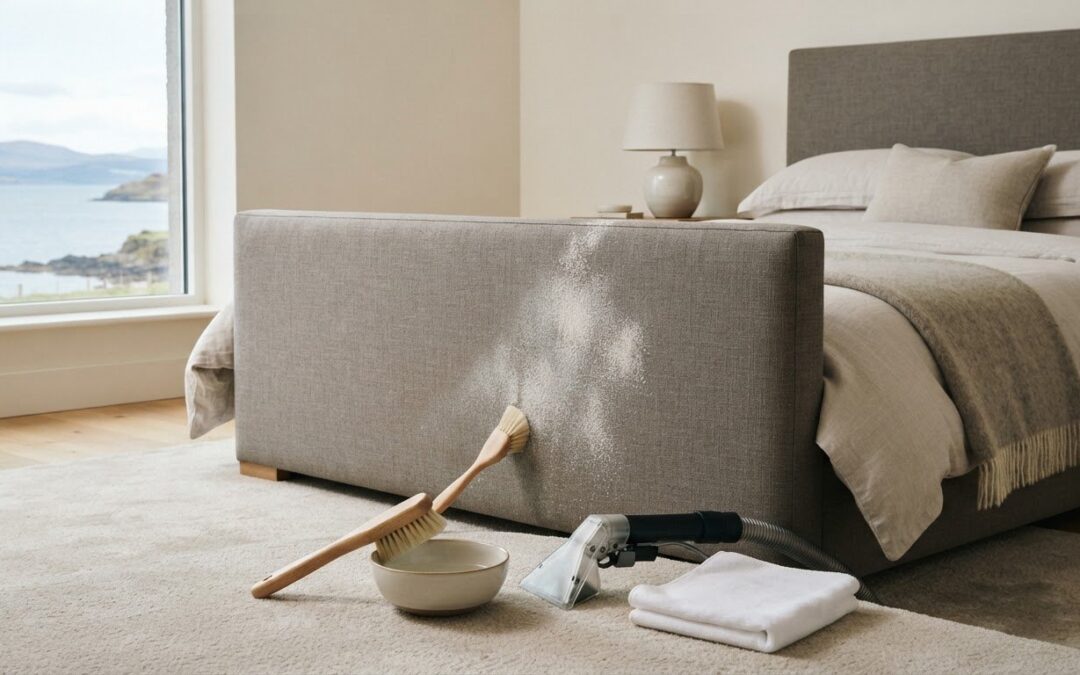
The quickest way to ruin a luxury upholstered headboard isn’t everyday neglect; it’s reaching for a soaking sponge. When natural oils, evening reading, and coastal dampness combine to leave shadowy discolouration behind your pillows, the impulse to scrub is completely understandable. Yet saturation is the silent enemy of fine linen, velvet, and tailored weaves. If you’re wondering how to clean a fabric headboard Fife homes can keep pristine, the secret lies in staged moisture control rather than heavy-handed washing.
You shouldn’t have to compromise between hygienic freshness and preserving your bedroom’s calm sanctuary. In this complete care guide, you’ll discover how to safely clean, deodorise, and maintain your fabric headboard without causing watermarks, fabric shrinkage, or moisture damage. We break down standard manufacturer care codes, provide safe step-by-step methods matched to specific upholstery fabrics, and offer the confidence of knowing exactly when gentle home care is safe and when specialist extraction is required.
Key Takeaways
- Decode your upholstery care code (W, S, WS, or X) to select the correct cleaning chemistry and protect delicate weaves from permanent fibre distortion.
- Learn how to clean a fabric headboard Fife homes require through staged, low-moisture methods that lift embedded soil without creating dark water tide-marks.
- Guard against foam mildew and coastal dampness by pairing deep dry extraction with prompt, well-ventilated drying practices.
- Safely neutralise persistent sebum, hair oils, and cosmetic smudges using targeted dry-powder absorption rather than aggressive scrubbing.
- Identify the exact point where delicate luxury textiles like velvet, silk, or widespread body grease call for specialist low-moisture extraction.
Understanding Your Fabric Headboard: Soil Types and Fabric Codes
Headboards serve as the aesthetic anchor of a restful bedroom, yet they endure more sustained contact with human skin than almost any other upholstered piece. Night after night, fabrics accumulate natural skin sebum, perspiration, cosmetic residues, and loose airborne dust. As explored in the history of upholstery, backing materials have shifted from traditional horsehair stuffing to dense modern polyurethane foam. When faced with surface grime, reaching hastily for a wet sponge merely forces greasy residues deep into this absorbent foam backing. Never apply liquid cleaning solutions without first consulting the manufacturer care label. Learning how to clean a fabric headboard Fife homeowners treasure begins with respecting these underlying materials.
Decoding Upholstery Cleaning Symbols (W, S, WS, X)
Every textile demands tailored chemistry. Mainstream advice that suggests wiping every bedhead with warm water ignores the universal care tags that dictate fabric safety:
- Code W: Permits water-based cleaning agents and mild, aerated foam detergents. Synthetic fabrics usually tolerate this method well.
- Code S: Strictly requires pure dry-cleaning solvents. Applying tap water creates immediate fibre distortion and permanent circular ring marks.
- Code WS: Offers flexibility, tolerating either mild water-based shampoo or gentle dry-cleaning solvents depending on the spill.
- Code X: Demands dry maintenance exclusively. Only gentle brushing or vacuum extraction is safe; any liquid will ruin the weave or pile.
Common Headboard Fabrics Found in Fife Homes
Textile composition dictates how your headboard responds to environmental moisture and spot treatments. Luxurious velvet and chenille feature raised, directional piles that crush under heavy pressure and water-spot instantly. Breathable natural linens and wool weaves offer timeless tactile elegance, but their open, absorbent fibres readily drink in natural scalp oils, making oil removal delicate. Contemporary polyester blends and microfibres found on modern divans resist water penetration, yet they hold onto body oils tenaciously. Mastering how to clean a fabric headboard Fife properties feature means treating each distinct weave with calibrated care rather than brute force.
How to Clean a Fabric Headboard at Home: A 5-Step Guide
Transforming your headboard into a fresh, immaculate centrepiece requires a measured technique. Begin by gently easing your bed frame away from the wall to give yourself unhindered access to every seam and backing fold. When exploring how to clean a fabric headboard Fife homes can preserve for decades, a disciplined, staged routine prevents surface soil from migrating deeper into internal batting.
Step 1: Thorough Dry Vacuuming and Agitation
Fit a dedicated upholstery nozzle with soft bristles to avoid catching fragile threads. Systematically trace deep diamond tufting, button recesses, and edge seams where dead skin cells, pet dander, and dust mites quietly accumulate. Next, gently agitate flattened fabric fibres with a soft horsehair brush before introducing any moisture. This vital step releases dry grit before dampness can turn it into stubborn mud.
Step 2: Spot Testing and Microfoam Treatment
Aligning your approach with established upholstery cleaning codes safeguards both dye stability and fibre strength. Always conduct a discreet patch test on the lower rear backing first. Rather than misting liquid cleaners directly onto the face fabric, whisk a mild upholstery shampoo in a bowl until it creates a dense, dry microfoam. Scoop only the aerated foam onto a clean white microfibre cloth. Work in smooth, linear strokes from the outer perimeter of stains inward to avoid expanding the mark.
Step 3: Rinsing, Blotting, and Controlled Air Drying
Follow your foam treatment by dabbing the area with a fresh microfibre towel, barely moistened with distilled water, to lift suspended detergent. Then, firmly press dry, thick cotton towels against the textile to draw residual moisture out of the deep foam padding. Because Fife’s cool coastal humidity can slow evaporation, avoid leaving the room stagnant. Open bedroom windows for cross-ventilation, or run a small domestic fan directly toward the headboard to secure complete drying within hours. For delicate headrests requiring tailored preservation, turning to the trusted specialists at Darcy Bespoke Cleaning guarantees refined, low-moisture care without the guesswork.
Common DIY Mistakes: Avoiding Water Stains and Fife Dampness
Good intentions often lead to upholstery heartbreak. When tackling marks on an upholstered headboard, reaching for standard supermarket spray bottles or soaking rags creates far more damage than the original spot. Generic foam sprays leave behind sticky surfactants that actively attract loose fibres and bedroom dust, causing treated patches to re-soil within weeks. For velvet or plush chenille, vigorous back-and-forth scrubbing snaps delicate fibres and permanently distorts the pile reflection. Reviewing our expert fabric and carpet care tips helps preserve these tactile surfaces before well-meaning errors cause permanent harm.
The Science of Water Rings and How to Prevent Them
Water marks are essentially miniature tides of soil. When moisture sinks into upholstery, it dissolves internal dust, cellulosic fibres, and tap water minerals, carrying them outward as the liquid spreads. As the damp patch evaporates, those dissolved particles remain deposited at the outer perimeter, drying into dark, visible rings. To prevent this, always work with deionised or distilled water rather than mineral-rich tap water. When blotting, gently feather the damp edges outward into the surrounding dry weave using clean, dry microfibre cloths to disperse moisture gradients invisibly.
Managing Indoor Humidity in Coastal Fife Properties
Local geography plays a decisive role when exploring how to clean a fabric headboard Fife bedrooms house comfortably. The Kingdom’s temperate coastal climate brings higher relative humidity that drastically extends internal evaporation times. While standard upholstery may dry briskly elsewhere, dense foam headboards in coastal stone cottages or airtight contemporary flats can stay damp for days if soaked. That trapped wetness creates a breeding ground for mould, dust mites, and persistent mustiness deep inside backing layers.
Avoid wet DIY cleaning during cold, damp Scottish winters or misty East Neuk sea frets unless you have active climate control. If spot cleaning, always rely on non-toxic DIY cleaning solutions applied sparingly as dry foam, run a domestic dehumidifier nearby, and ensure continuous airflow until the backing feels bone dry to the touch.

Targeted Removal: Tackling Hair Oils, Makeup, and Bedroom Odours
Everyday relaxation leaves subtle traces on bedroom upholstery. A leisurely weekend coffee, morning moisturiser transfers, and natural hair sebum create complex blemishes that simple wiping cannot lift. Greasy cosmetic oils and organic tannins behave quite differently across woven threads. Heat or excessive scrubbing will set these pigments permanently. For stubborn spillages, explore an expert stain removal service in Fife before setting fibres irreparably. Navigating how to clean a fabric headboard Fife homeowners love begins by separating oil-based lipids from delicate liquid spills.
Breaking Down Head Grease and Sebum Deposits
Nightly rest transfers scalp oils directly to the central fabric panel. Over months, these biological lipids oxidise into persistent dark halos behind pillows. To dissolve these oily deposits without drenching inner batting, spray a mild enzyme-based textile treatment onto a damp microfibre cloth rather than directly onto the headboard. Allow several minutes of dwell time so the enzymes can safely break down the hardened lipids. Next, press firmly into the fibres with warm cotton terry towelling, rocking the cloth gently to lift the dissolved oil out of the weave. For oil-based cosmetics like foundation or lipstick, dab lightly with a solvent spotter formulated for upholstery, blotting repeatedly until transfer stops.
Neutralising Stale Bedroom Odours and Dust
Well-meaning advice often recommends coating headboards in dry bicarbonate of soda to extract stale odours. In coastal Scotland, ambient moisture quickly turns dry baking powder into a sticky paste that embeds deep inside textile grooves and divan crevices. Instead, choose fine atomising deodorising sprays that encapsulate odour particles chemically rather than masking them with overpowering artificial perfumes. Couple this with active cross-ventilation to prevent damp coastal air from settling into plush velvet or woven linen. When deep-seated sebum, stubborn odours, or heavy makeup marks resist gentle home techniques, schedule professional stain removal and deodorising care to restore pristine balance to your private sanctuary.
When to Call a Fife Specialist for Bespoke Headboard Care
Home care has clear practical limits. When valuable furnishings feature intricate damask weaves, pure silk, or tailored velvets, DIY dabbling risks irreversible pile damage. The same caution applies when dark head grease expands across broad fabric spans behind sleeping pillows. Rubbing widespread discolouration by hand spreads dissolved oils deeper into the padding. Choosing how to clean a fabric headboard Fife homes showcase means knowing when home remedies give way to calibrated machinery. Discover how professional upholstery cleaners in Cupar restore fine headboards across the region with surgical care.
The Darcy Bespoke Approach to Bedroom Upholstery
Preserving fine furniture demands specialized stewardship rather than aggressive saturation. As an independent, family-run textile care specialist founded circa 2018, Darcy Bespoke Cleaning utilizes advanced Alltec Advance 600 extraction equipment paired with dedicated upholstery hand tools. These precision instruments isolate the face fabric, flushing embedded sebum and biological soils instantly without saturating deep foam backing or dampening wooden framework. Every restoration concludes with balanced pH rinses that eliminate detergent residues entirely, accompanied by an optional fabric protection treatment to repel future oil marks. Every commission carries complete peace of mind, backed by a 100% satisfaction guarantee promising a complimentary re-clean if you aren’t completely delighted.
Restoring Furnishings Across St Andrews, Cupar, and Fife
You needn’t dismantle your bed or haul heavy furnishings across town. Specialist low-moisture care takes place right inside your master suite with absolute discretion. By combining micro-misted cleaning chemistry with high-velocity airflow management, fabrics dry cleanly within hours, eliminating mould risks in coastal Scottish microclimates. Rather than discarding luxury items that simply need expert renewal, protect your bedroom investment: request a bespoke upholstery consultation today.
Restoring Freshness and Harmony to Your Bedroom Sanctuary
Caring for an upholstered bedhead isn’t about vigorous scrubbing; it’s an art of gentle stewardship. By honouring manufacturer cleaning codes, opting for aerated microfoam over heavy saturation, and ensuring swift cross-ventilation, you protect fine weaves against tide-marks and coastal dampness. Thoughtful, regular dry maintenance preserves hygiene and aesthetic elegance, keeping your private environment truly restful.
When persistent sebum marks, delicate velvet pile, or vintage linens demand deeper attention, you don’t have to shoulder the risk alone. True mastery over how to clean a fabric headboard Fife homeowners cherish often means relying on calibrated equipment. As a family-run, independent upholstery care specialist serving Fife homes, we employ specialized low-moisture hand tools that flush embedded oils without wetting inner foam. Every commission is safeguarded by our 100% satisfaction guarantee, promising a complimentary re-clean if you aren’t completely delighted.
Revive your fine bedroom fabrics with Darcy Bespoke Cleaning today and wake up to the immaculate comfort your bedroom deserves.
Frequently Asked Questions
Can you clean a fabric headboard without taking it off the wall or bed?
Yes, you can thoroughly clean most fabric headboards in place simply by pulling the bed frame a few inches forward. This gives you comfortable access to seams, tufting, and edges without dismantling brackets or unbolting wall fixings. When considering how to clean a fabric headboard Fife bedrooms accommodate, applying low-moisture dry foam or booking in-situ professional extraction cleans the face fabric completely while protecting your decor.
How do I remove greasy hair and head oil stains from my fabric headboard?
Dissolving accumulated body lipids requires an enzyme-based fabric cleaner or upholstery-safe solvent applied via a damp microfibre cloth. Never spray solutions directly onto the textile, as liquid seeps into backing foam. Allow the formulation three to five minutes to break down sebum bonds, then firmly press dry terry towelling against the area to draw out the emulsified grease. Avoid aggressive scrubbing to protect woven fibres from fraying.
What should I do if my fabric headboard gets a water stain or watermark?
Address water tide-marks by dampening a fresh microfibre cloth with pure distilled water, lightly working from the mark’s outer edge inward. Tap water minerals cause dark rings, so distilled water re-emulsifies dissolved cellulosic matter without adding new deposits. Feather the damp perimeter outward into surrounding dry fabric using a dry towel to disperse moisture borders smoothly, then run a desk fan to accelerate evaporation.
Is it safe to use a domestic steam cleaner on a fabric headboard?
Using a domestic steam cleaner is generally risky for delicate headboards. Unregulated heat can melt synthetic glues, set oil stains permanently, and shrink wool or linen threads. More critically, high-output steam injects excessive moisture deep into underlying polyurethane foam, where it struggles to escape in Scotland’s humid coastal climate. Controlled low-moisture extraction hand tools provide a safer, cleaner alternative without saturation hazards.
How often should an upholstered fabric headboard be professionally cleaned?
Headboards benefit from professional textile care every twelve to eighteen months to maintain proper indoor hygiene. While regular vacuuming lifts surface dust, skin contact deposits sebum continuously where you rest your head. If someone in your home experiences dust-mite allergies, or if you live along the Fife coast where indoor dampness lingers, scheduling an annual deep extraction preserves textile health and keeps your bedroom looking pristine.
Can professional upholstery cleaning remove stale odours and dust mites from headboards?
Yes, professional cleaning targets the root causes of stale bedroom odours rather than masking them. Specialists utilize industrial extraction machinery alongside dedicated sanitising and deodorising treatments to lift dust-mite allergens, dead skin cells, and trapped moisture. Because this tailored process extracts suspended contaminants instantly with minimal water, headboards emerge fresh, hygienic, and thoroughly dried, elevating the air quality in your private sleeping space.