
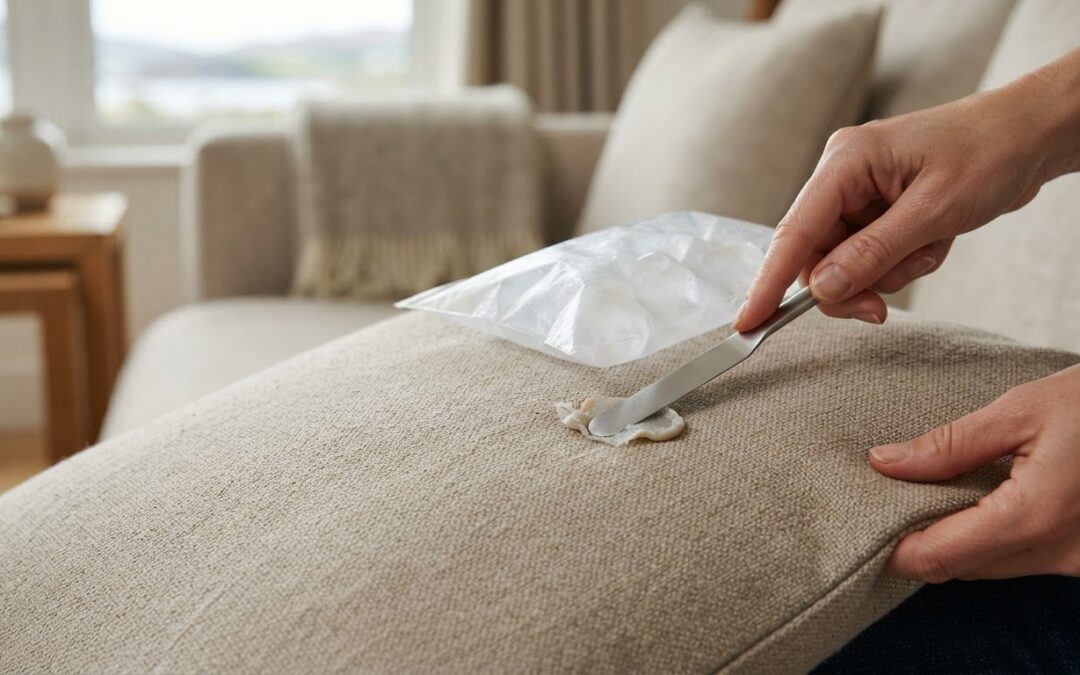
For removing chewing gum from upholstery, the safest first step is usually to harden it with an ice cube sealed in a plastic bag, then lift it gently with a blunt-edged tool held almost parallel to the fabric. Keep the ice in place for at least 5 minutes, and stop if the fibres begin to pull or the gum spreads. Professional treatment is the safer choice for delicate fabrics, unstable dyes, valuable furniture or gum that’s deeply embedded.
When chewing gum sticks to upholstery, it’s tempting to reach for a household cleaner, but the wrong treatment can stain or damage the fabric. A careful approach matters because upholstery materials vary, and a method that suits one may not suit another.
This guide explains how to freeze and lift gum, how to approach remaining residue with oil soap or smooth peanut butter, and what to consider before using a specialist remover. You’ll also learn when a DIY attempt is best left aside, so you can protect the upholstery while working towards a cleaner finish.
Key Takeaways
- Choose a removal method with the upholstery fabric in mind, and test cleaning products on a hidden area before treating the visible mark.
- Lift hardened gum gently with a blunt-edged tool; avoid forceful scraping that can pull or roughen fibres.
- For stubborn residue, use oil soap or smooth peanut butter sparingly, then blot rather than scrub and avoid saturating the fabric.
- Use specialist removers according to their instructions, taking particular care with solvent-based products and delicate or valuable upholstery.
- Consider professional cleaning when gum is deeply embedded, covers a large area or remains after a careful home treatment.
Why is chewing gum difficult to remove from carpets and upholstery?
To remove gum from upholstery, cool it in a sealed plastic bag, then lift it gently with a blunt-edged tool. For fabric, hold an ice cube against the gum for at least 5 minutes, scrape almost parallel to the surface, and refreeze if it softens. Leather and faux leather need a different approach: avoid scraping or applying fabric treatments, and follow the material’s care instructions.
- Assess the gum and the material. Check whether the gum is fresh, hardened or pressed into the fabric. Gum becomes harder to lift when it has been walked into carpets, pushed into upholstery or softened by heat. Look for the upholstery care label before applying anything. A woven dining chair, velvet cushion and faux leather seat can react differently to moisture, friction and cleaning agents.
- Cool the gum before lifting it. Place an ice cube inside a sealed plastic bag, then hold it over the gum for at least 5 minutes. The bag keeps melting ice away from the fabric while the cold makes the gum firmer and less sticky. An ice pack can also be pressed against the mark for up to 15 minutes, until the gum feels hard and brittle.
- Scrape with a shallow, gentle motion. Use a blunt-edged tool, such as a metal spoon or butter knife, and hold it almost parallel to the upholstery. Lift the hardened gum from its outer edge in small pieces rather than digging down into the fabric. Aggressive scraping can pull fibres, leave a rough-looking patch or drive residue deeper. Refreeze the gum if it turns sticky before you finish.
- Work carefully on loose gum and fabric fibres. For a small, accessible piece, lift the edge with your fingers after cooling it, then use the spoon to ease away remaining fragments. Avoid sharp blades, stiff brushes and repeated forceful strokes. These can snag a weave or distort a raised pile, particularly on velvet. If gum has spread across carpet fibres, lift from the edges towards the centre instead of smearing it outward.
- Keep leather and faux leather separate from fabric methods. Don’t scrape these surfaces with a knife or use ice, oil soap or peanut butter as fabric treatments. Gently lift loose gum with your fingers, without stretching or abrading the surface, and use only a method suited to the material’s care instructions. If gum remains firmly attached, stop before repeated rubbing dulls, scratches or marks the finish.
After removing the solid gum, blot washable upholstery with warm soapy water, then blot again with warm clean water. Use a clean cloth and avoid soaking the fabric. Don’t use warm water until the solid pieces are gone, as heat can soften residue and make it spread.
When is professional chewing gum removal the safer option?
Identify the upholstery before choosing a cleaner. Read its care label and check for fabric details beneath a cushion or seat. If the material or dye is uncertain, don’t apply solvent or other treatments to the visible gum. Delicate, valuable or already damaged upholstery is better left to professional cleaning.
- Identify the fabric and inspect the affected area. Check the manufacturer’s label, then examine the surface in good light. Velvet has a raised pile, while a woven fabric shows visible threads; leather and faux leather have smooth finishes. Look for loose fibres, fading or previous marks around the gum. These clues help you judge whether moisture or friction could alter the surface.
- Test any cleaning product out of sight. Choose a hidden area, such as the back of a skirted chair or beneath a removable cushion. Apply a small amount of the product as directed, then blot with a clean white cloth. Check for colour transfer, fading, texture changes or a new mark before treating the gum. A hidden test makes it easier to spot an adverse reaction before it reaches a prominent area.
- Use dry-cleaning solvent with restraint. If hardened gum has been lifted but residue remains, apply a small amount of commercial dry-cleaning solvent to a cloth or sponge. Dab the residue rather than pouring solvent onto the upholstery, and blot with absorbent material such as a paper towel. Keep the fabric and its foam padding from becoming wet; excess solvent or moisture can affect the filling and complicate drying.
- Blot and rinse without saturating the fabric. After the residue treatment, blot the spot with warm soapy water, then use a fresh cloth with warm clean water to remove soap. Press gently and work from the outer edge towards the centre. Don’t scrub: friction can disturb fibres and spread the mark. Replace the cloth or paper towel as it picks up residue, so you’re not transferring it back.
- Stop when the risk outweighs another home attempt. Seek professional cleaning if gum is deeply embedded, covers a large area, or remains after careful treatment. Wool, velvet, unstable dyes, antique furniture and loose or damaged fibres need extra care. The same applies when a test changes colour or texture. For persistent marks on a sofa or chair, professional upholstery stain treatment can be a more considered next step.
Repeated DIY applications can leave product in the fabric, while excess moisture may reach the foam. If the surface changes during a test or treatment, stop rather than rubbing or applying more product. A controlled approach helps protect both the fabric and the layers beneath it.

Freezing gum with ice or compressed air
Cooling makes gum firmer and less sticky, so it can separate more cleanly from upholstery fibres. Work in stages and check that the gum is hard before trying to lift it.
-
Choose ice or compressed air
A sealed bag of ice is a simple way to cool gum on furniture. A compressed-air gum remover is another option, but use it on upholstery only if the product instructions allow it. Follow the stated application method and keep the spray on the affected patch. The aim is to harden the gum without soaking or abrading the fabric.
-
Freeze gum on upholstered furniture
Place an ice cube inside a plastic bag, then hold it directly over the gum. Keep the cube in contact for at least 5 minutes; an ice pack or another cold item can be held against the mark for up to 15 minutes. Check whether the gum feels hard and brittle before moving on. The bag helps keep melting ice from wetting the upholstery.
-
Check the gum and surrounding fibres
After cooling, gently touch the edge with a blunt tool to check whether it is firm. If it still bends, feels tacky or smears, cool it again before scraping. Check the fabric around the mark: raised pile, loose threads or delicate fibres can catch on a tool. Keep the cold item over the gum and avoid pressing hard enough to crush the upholstery.
-
Lift the frozen gum in small pieces
Hold a blunt-edged spoon or butter knife almost parallel to the surface. Ease it under the outer edge with light strokes, lifting small fragments rather than digging in. A shallow angle helps limit pulling on the fibres. Don’t twist the tool or scrape back and forth over a wide area. Remove loosened pieces as you go so they don’t stick elsewhere.
-
Refreeze whenever the gum softens
Pause if a fragment turns sticky or stretches instead of breaking away. Press the bagged ice against that section until the gum firms up, then resume with short, gentle lifts. Repeat across the mark rather than rushing. Stop if the fabric snags or distorts, since continued scraping can worsen the damage even when little gum remains.
Once the solid pieces are lifted, check for residue before choosing another treatment. Avoid heat, which can soften leftover gum and make it spread into the fabric. Keep the area dry while freezing, and promptly blot any condensation with a clean cloth.
Freezing can turn the gum solid enough for removal with a blunt object, such as a butter knife. The goal is to lift the hardened material rather than continue while it is soft. A butter knife or metal spoon can be used for scraping frozen gum from upholstery. If it starts becoming sticky again, pause and refreeze it; cooling helps gum stay firmer and less sticky as it breaks away from upholstery or carpet fibres.
Treating gum residue with oil soap or peanut butter
Use oil soap or smooth peanut butter only on residue left after removing the solid gum. Test the product on a hidden area of the upholstery first, then apply it sparingly.
-
Test the treatment on a hidden patch
Dab a small amount of oil soap or smooth peanut butter beneath a cushion or on an unseen seam. Check for colour transfer, fading or a change in texture before treating the gum. Upholstery fabrics and dyes can respond differently. If the test area changes, don’t apply the product to the visible mark.
-
Apply oil soap or peanut butter
Apply a small amount of the tested product directly to the remaining gum. Work gently with your fingertips or a soft toothbrush, keeping the movement centred on the sticky patch. Don’t press hard, spread the product onto clean fabric or saturate the upholstery. A light application helps you control the treatment.
- Watch the residue as you work. Oil soap or smooth peanut butter may loosen stubborn gum, but repeated brushing can disturb the fabric or pull loose fibres. If the gum starts to release, lift it gently rather than rubbing it into the weave. Stop if the mark spreads, the fabric changes appearance or the product leaves a visible trace.
-
Treat sticky residue and stains
Blot the loosened gum and treatment with a clean, absorbent cloth. Press and lift rather than scrubbing, which can spread sticky residue into a wider stain. Use a fresh section of cloth as it picks up residue, and keep the product away from unaffected areas.
- After lifting the residue, blot the spot with warm soapy water, then blot again with warm clean water. Use only enough liquid for the treated area. Excess moisture can spread the mark and make drying harder. Check the fabric as you blot. If a greasy trace remains or the stain grows, don’t add more household products or brush harder.
Oil soap and peanut butter are residue treatments, not suitable choices for every upholstery fabric. A hidden test, careful application and controlled blotting help limit the risk of a second mark. For gum that remains embedded after these steps, professional stain treatment can address the affected upholstery without repeated home applications.
A small amount of WD40 is another option for treating gum residue on upholstery. Apply it to the stain and work it in with your fingers or a soft toothbrush. It joins oil soap and smooth peanut butter as a treatment that can be worked into the gum residue. Keep the application focused on the stain, and use your fingers or a soft toothbrush to work the chosen treatment into the sticky area. These are the listed options for applying a treatment to upholstery gum residue; WD40 is used in the same way as oil soap or smooth peanut butter, by applying it to the stain and working it in.
Specialist chewing gum removers
A specialist remover may loosen gum or residue, but products work differently. Choose a method suited to both the fabric and the residue, and follow the product label closely.
- Identify what the remover is designed to do. Read the label before applying anything. A product intended to freeze gum works differently from a solvent designed to treat residue after scraping. Don’t assume a general-purpose cleaner is suitable for upholstery. Match the method to the remaining problem: solid gum needs lifting, while a sticky trace may need careful spot treatment.
- Test the product on a hidden area. Apply it to an inconspicuous patch, following the label, then check for colour transfer or a change in texture. Upholstery dyes and fibres can react differently, so don’t move to the visible mark if the test alters the material. A hidden test is especially important before using a solvent-based remover on a coloured sofa or chair.
- Apply only to the affected spot. Use the remover as directed and keep it off surrounding fabric. For solvent-based treatment, avoid over-wetting: solvent can damage foam padding beneath upholstery. If the label directs application with a cloth or sponge, use that method rather than pouring liquid directly onto the furniture. Stop if the gum spreads or the fabric changes appearance.
- Blot residue instead of scrubbing. Lift loosened gum and product with absorbent material, replacing it as it picks up residue. Scrubbing can push sticky material into fibres or enlarge the affected area. Don’t saturate the upholstery with remover or rinse water, since excess liquid can spread the mark and create drying problems. Follow any label instructions for removing product from the surface.
- Take extra care with hazardous formulations. If a remover is caustic, toxic, aromatic or flammable, provide adequate ventilation, wear rubber gloves and keep it away from open flames. Don’t combine products or add another cleaning method immediately. Give the first treatment time to work as directed, then assess the surface before deciding whether another step is appropriate.
Stop trying household products if a test patch changes, the gum remains embedded, or residue returns after blotting. Repeated applications may add liquid and product to the fabric without lifting the stain. For persistent upholstery marks, request professional stain removal treatment instead of escalating to a stronger remover.
Darcy Bespoke Cleaning: Domestic Carpet Cleaning
Darcy Bespoke Cleaning can help when gum is deeply embedded, affects a large area or remains after careful home treatment. Its Sofa Cleaning and Armchair Cleaning services cover upholstered seating, while Domestic Carpet Cleaning addresses gum and soiling on carpets. Professional cleaning is a sensible next step if more scraping or household products could damage the fabric.
For a sofa or armchair, professional cleaning can address the surrounding area as well as the visible gum. For carpet, it can treat the affected section as part of the wider floor covering.
For help with upholstery or carpet cleaning, visit darcybespokecleaning.co.uk.
Choose a Careful Next Step for Your Upholstery
A gum mark can be a prompt to consider the condition of the whole seating area. If the fabric also has stains or accumulated soil, broader cleaning may make more sense than repeated spot treatments. The next step depends on the material, the mark’s location and whether home treatment has changed the surface.
Darcy Bespoke Cleaning provides Sofa Cleaning, Domestic Carpet Cleaning and Commercial Carpet Cleaning in Fife and the surrounding areas. If removing chewing gum from upholstery has become difficult, professional cleaning can help treat the affected seating while taking the wider fabric into account. Stop applying products if the surface is becoming harder to assess.
Contact Darcy Bespoke Cleaning to discuss cleaning for your upholstery or carpets. Take the next step with care, and give your furnishings thoughtful attention.
Frequently Asked Questions
When should you be particularly careful?
Take extra care with velvet, wool, unstable dyes, antique furniture and upholstery with loose or damaged fibres. Rubbing gum on a velvet cushion can disturb its pile, while a weak seam may snag during scraping. Check the care label and inspect the fabric in good light before treatment. If the upholstery is valuable or worn, avoid testing household products on its visible surface.