
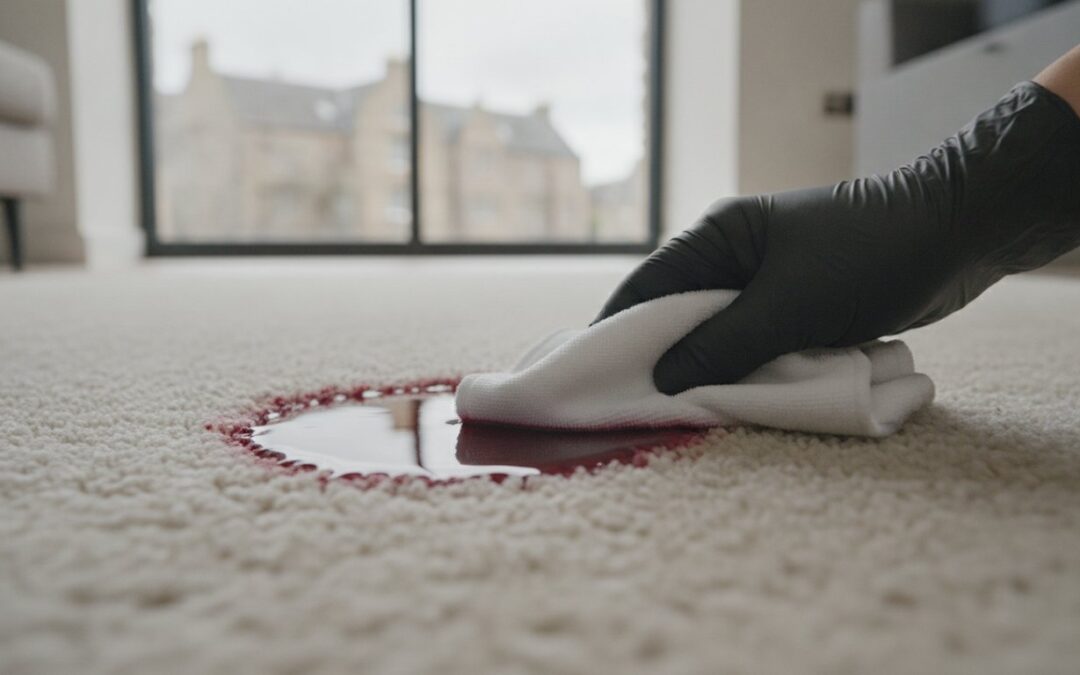
Your favorite evening vintage shouldn’t dictate the lifespan of your flooring. Most homeowners believe a spill marks the end of their pristine interior, yet the real danger isn’t the liquid; it’s the frantic, uninformed attempt to fix it. Understanding how to remove red wine from carpet is less about force and more about a refined, custodial approach to fibre care. Whether you’re in a modern apartment in St Andrews or a traditional home in Fife, your carpet deserves a response that respects its delicate composition and high-end quality.
It’s natural to feel a sense of dread when a deep crimson stain meets a light wool pile, especially when online advice is often contradictory and potentially damaging to expensive materials. We understand that your home is a sanctuary where every detail matters. This guide promises to replace that anxiety with a professional-grade methodology designed to lift pigments completely while preserving the soft, luxurious texture of your carpet pile. We will walk through the precise sequence of blotting, the science of pH-neutral chemistry, and the specialized stewardship techniques that ensure no lingering odours or shadows remain behind.
Key Takeaways
- Master the art of the “Golden Hour” by learning why gentle blotting is the only way to protect the structural integrity of your carpet fibres.
- Uncover the scientific reality of how to remove red wine from carpet by identifying why porous materials like wool require a different approach than synthetics.
- Protect your investment by avoiding common household myths, such as salt or white wine, which often act as mordants and lock pigment into the pile forever.
- See how professional stewardship through multi-directional extraction provides a level of restoration that manual cleaning simply cannot achieve.
- Learn how a proactive fabric protection treatment creates a resilient barrier to maintain the refined atmosphere and longevity of your home’s interior.
Immediate Response: The ‘Golden Hour’ of Red Wine Spills
The first sixty minutes following a spill are the most critical for the survival of your carpet. When red wine is still in its liquid state, the pigments are suspended in a solution of water and alcohol, making them accessible for extraction. Once that moisture evaporates, the tannins and anthocyanins undergo a chemical transition, binding stubbornly to the delicate fibres of your flooring. Understanding how to remove red wine from carpet begins with this window of opportunity. This isn’t a time for panic, but for precise, deliberate action that respects the integrity of your home’s interior.
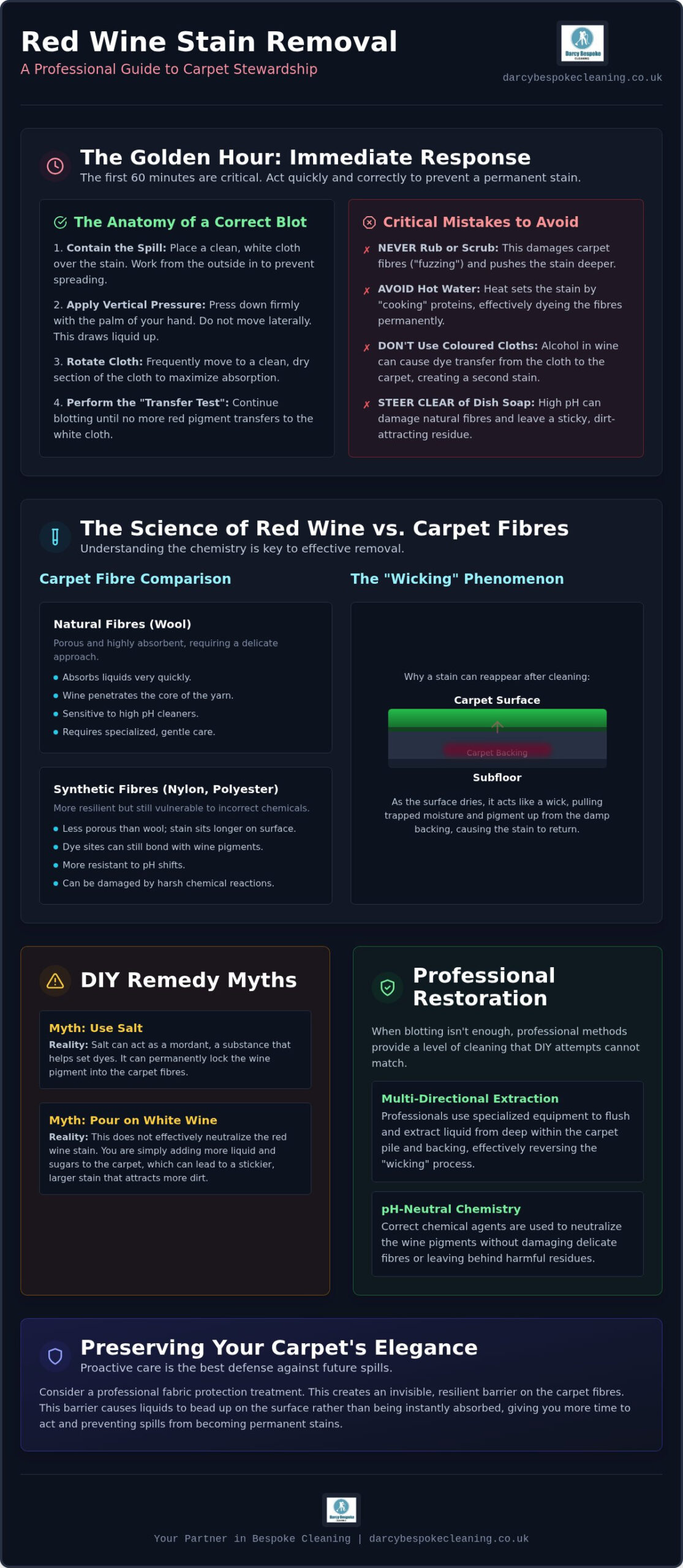
The most vital rule of carpet stewardship is simple: blot, never rub. Aggressive scrubbing creates friction that generates heat and physically distorts the carpet pile, a process known as “fuzzing.” This damage is often irreversible. Instead, you must focus on containment. By establishing a perimeter around the spill and working inward, you prevent the liquid from migrating deeper into the backing or spreading horizontally through the secondary fibres. Using a clean, white microfibre cloth or high-quality paper towels ensures you can monitor the pigment transfer without the risk of adding new dyes to the area.
The Anatomy of a Correct Blot
Effective blotting requires vertical pressure and patience. Place your white cloth over the spill and apply firm, downward weight using the palm of your hand. Don’t move your hand laterally. This movement draws the liquid upward into the absorbent material through capillary action. The science of stain removal suggests that this mechanical extraction is most effective when you rotate to a fresh, dry section of the cloth frequently. Continue this process until the “transfer test” shows no more crimson pigment appearing on the white fabric. At this stage, you’ve successfully removed the majority of the surface liquid.
What to Avoid in the First 60 Seconds
Mistakes made in the first minute often turn a temporary spill into a permanent feature. Never use hot water. Heat acts as a catalyst that “cooks” the organic proteins in the wine, effectively dyeing the fibres forever. Similarly, avoid using coloured kitchen towels or rags; the alcohol in the wine can dissolve the dyes in the cloth, leading to a secondary “dye transfer” stain that is notoriously difficult to treat. Finally, resist the urge to reach for generic dish soaps. Many of these products have high pH levels that can strip the natural oils from wool carpets or leave behind a sticky residue that attracts dirt long after the wine is gone.
The Science of Red Wine vs. Carpet Fibres
Red wine isn’t merely a beverage; it’s a sophisticated solution of natural organic dyes. When we consider how to remove red wine from carpet, we’re actually looking at a process of chemical extraction rather than simple cleaning. The primary culprits are tannins and anthocyanins. These natural compounds act as powerful dyes that seek out the protein structures in natural fibres or the open dye sites in synthetic materials. Once they find a home, they begin to bond, making immediate and scientific intervention essential to preserve the aesthetic of your flooring.
The movement of the liquid is just as important as its chemistry. Through a process known as capillary action, the wine travels down the carpet pile and into the backing material. This is where the phenomenon of “wicking” begins. You might spend an hour blotting the surface until it looks pristine, only to find the stain has returned two days later. This happens because as the surface fibres dry, they pull the remaining liquid up from the damp backing like a candle wick, bringing the pigment back to the surface. Preventing this requires a deep, professional understanding of moisture control and fibre density.
Wool vs. Synthetic: A Fife Homeowner’s Guide
In many homes across St Andrews and the wider Fife area, high-end wool carpets are the standard. Wool is a porous, living fibre that absorbs liquids much faster than synthetic nylon or polyester. This porosity means the wine doesn’t just sit on the surface; it penetrates the very core of the yarn. For those with delicate floor coverings, specialized wool rug cleaning in St Andrews is often the only way to ensure the pigment is removed without causing “bleeding” or structural damage. Synthetic carpets are generally more resilient to pH shifts, but they still require a gentle touch to avoid melting the plastic-based fibres with incorrect chemical reactions.
pH Balance and Pigment Neutralisation
The key to successful restoration lies in the pH scale. Red wine is naturally acidic, typically sitting between a 3.0 and 4.0 on the scale. To neutralise this without damaging the carpet, you must aim for a neutral 7.0 pH balance. Using an overly alkaline cleaner can “set” the stain or strip the protective lanolin from wool fibres. Anthocyanins are the water-soluble vacuolar pigments that require specific solvent extraction. Achieving this balance is a delicate task that requires a bespoke touch. If you find the pigment is proving stubborn, a professional stain removal treatment can safely reset the chemistry of your carpet fibres to their original, pristine state.
DIY Home Remedies: The Good, The Bad, and The Dangerous
In the immediate aftermath of a spill, the temptation to reach for a pantry staple is overwhelming. The internet is saturated with anecdotal advice promising that common household items can work miracles. However, many of these suggestions prioritize a quick visual fix over the long-term health of your carpet. When you are looking for how to remove red wine from carpet, it is essential to distinguish between methods that actually extract pigment and those that merely hide or, worse, permanentise the damage. Your carpet is a significant investment in your home’s aesthetic, and it deserves a response rooted in textile science rather than folklore.
Two of the most common myths involve white wine and the combination of baking soda and vinegar. Pouring white wine over a red wine spill is often touted as a way to “dilute” the colour. In reality, you are simply adding more acidity and organic sugars to the area. This creates a sticky environment that attracts bacteria and future soil. Similarly, the “volcano” reaction produced by mixing baking soda and vinegar is visually impressive but chemically ineffective for deep-seated tannins. While the fizzing might move some surface liquid, it rarely reaches the core of the fibres and can leave the carpet backing dangerously damp, leading to the wicking issues discussed earlier.
Why Salt is the Carpet Cleaner’s Enemy
Salt is perhaps the most destructive “remedy” recommended online. While it appears to soak up the liquid, sodium chloride actually acts as a mordant. In the textile industry, mordants are chemicals used specifically to set dyes and make them permanent. By applying salt, you may be chemically bonding the wine’s pigment to your carpet fibres forever. Beyond the chemistry, salt crystals are incredibly abrasive. Under the pressure of blotting, these jagged crystals act like miniature saws, cutting into the protective cuticle of wool and synthetic fibres. This physical damage creates a dull, frayed texture that cannot be repaired once the salt is removed.
Safe Household Alternatives
If you feel compelled to act before a specialist arrives, the most sophisticated DIY approach is the “Cold Water Extraction.” This method focuses on gentle dilution without introducing reactive chemicals.
- Lightly mist the blotted area with cold water mixed with a single drop of clear, pH-neutral detergent.
- Blot the moisture upward using a fresh, white microfibre cloth.
- If you have a wet-dry vacuum, use the suction tool to lift the liquid vertically without moving the head across the pile.
Stop your efforts if the pigment does not shift after two attempts. Over-working the area leads to fibre fatigue and saturation of the underlay. At this stage, the most responsible course of action is to secure a professional stain removal treatment to ensure the integrity of your carpet is maintained.
When to Call the Custodians: Professional Extraction
While manual blotting is a vital first step, it has physical limitations that even the most diligent homeowner cannot overcome. Household vacuums and manual pressure simply lack the power to reach the base of the carpet pile where tannins often settle. This is the moment where professional stewardship becomes necessary. Understanding how to remove red wine from carpet at a professional level involves harnessing industrial-grade heat and vacuum pressure to lift pigments that have migrated toward the backing. Our expert stain removal service in Fife utilizes the Rotovac 360i, a piece of machinery that provides multi-directional agitation. Unlike manual scrubbing, which distorts fibres, the Rotovac gently massages the pile from multiple angles, ensuring every side of the yarn is cleansed of pigment.
Complementing this agitation is the Alltec Advance 600. This high-powered extraction unit provides the significant vacuum pressure required for deep moisture recovery. The true secret of how to remove red wine from carpet lies in the recovery of deep-seated moisture. It ensures that the wine, along with the cleaning agents used to neutralise it, is completely removed from the environment. This level of extraction is crucial for preventing the wicking issues mentioned in earlier sections. Without this industrial-grade suction, moisture can linger in the underlay, creating a breeding ground for odours and potential structural damage to the carpet’s foundation.
The Professional Extraction Process
Our approach is methodical and tailored to the specific material of your flooring. We begin with a pre-treatment using professional-grade tannin transformers. These specialized solutions are designed to break the chemical bond between the anthocyanins and the carpet fibres. Once the surface tension is broken, we employ mechanical agitation to ensure the treatment penetrates deeply without causing “fuzzing.” The process concludes with a high-temperature rinse using deionised water, followed by immediate high-airflow drying to restore the carpet’s natural loft and texture.
The Darcy Bespoke Guarantee
We believe that luxury service is defined by peace of mind. Every stain removal treatment we perform is backed by our 100% satisfaction guarantee. This commitment reflects our role as custodians of your private environment. Beyond pigment removal, we focus on the sensory experience of your home, providing professional deodorising to ensure no vinegary or fermented scents remain. If a spill has reached the backing, we provide the specialized care needed to treat the secondary fibres, ensuring your environment remains healthy and refined. For a restorative clean that respects your home’s standards, contact our professional team today.
Post-Stain Stewardship: Preserving Your Carpet’s Elegance
Once the crisis of a spill has passed, the focus shifts from rescue to resilience. While mastering how to remove red wine from carpet is essential for any homeowner, the most sophisticated approach involves ensuring that such pigments never find a permanent home in your fibres again. This is where the concept of stewardship truly begins. It’s about moving beyond reactive cleaning and into a proactive cycle of care that maintains the refined atmosphere of your private environment. By treating your flooring as a long-term investment, you preserve the harmony and order of your home.
Understanding how to remove red wine from carpet is a vital skill, but preventing the pigment from bonding in the first place is the hallmark of professional stewardship. This proactive stance ensures that your home remains a sanctuary, free from the anxiety of accidental spills. It’s about creating a defensive layer that respects the quality of your materials while providing a practical safety net for daily life.
Investing in Fabric Protection
We often refer to our professional-grade fabric protection as an “invisible shield.” These advanced fluorochemical treatments work by lowering the surface energy of the carpet fibres, creating a powerful tension that resists liquids. Instead of soaking into the pile, red wine will “bead” on the surface. This effect is transformative. It changes your reaction window from frantic seconds to calm minutes, allowing you to blot the spill before it ever reaches the core of the yarn. You should ensure this protection is re-applied after every professional deep clean to maintain consistent guardianship over your flooring.
Long-term Maintenance for Fife Homes
Living in Fife presents unique challenges for textile longevity. The local climate, characterized by coastal dampness and high humidity, can slow down natural drying times and impact indoor hygiene. Establishing a consistent routine for carpet care in your Fife home is the best way to combat these environmental factors. Most high-end carpet manufacturers require a documented professional carpet cleaning in Fife at least every twelve months to maintain warranty compliance. This is a rigorous standard designed to preserve the structural integrity and soft texture of the pile.
Ultimately, your home is a sanctuary of order and comfort. By partnering with a specialized custodial service, you ensure that every detail, from the softest wool rug to the most resilient synthetic carpet, is handled with grace and technical precision. Red wine spills may be inevitable, but permanent damage is not. With the right tools, the correct chemistry, and a commitment to long-term stewardship, you can preserve the elegance of your environment for years to come.
Restoring the Harmony of Your Home
Maintaining a pristine environment requires a blend of immediate action and professional expertise. Success lies in respecting the delicate chemistry of your carpet’s fibres. By prioritizing gentle blotting during the golden hour and avoiding abrasive myths like salt, you safeguard the structural integrity of your flooring. Understanding how to remove red wine from carpet is the first step toward preservation, but for a result that truly mirrors the original beauty of your interior, specialized intervention is the most responsible choice.
Our independent family-run business in Fife understands that your home is a sanctuary where every detail matters. We combine personal stewardship with industrial power, utilizing specialist Rotovac 360i technology to lift deep-seated pigments that manual cleaning simply cannot reach. Every service is backed by our 100% satisfaction guarantee, ensuring your peace of mind is restored along with your carpet’s elegance.
Request a Bespoke Stain Removal Quote from Darcy Cleaning and return your home to its state of quiet, refined confidence. We’re here to serve as the expert guardians of your private environment.
Frequently Asked Questions
Is it true that white wine removes red wine stains?
No, using white wine to treat a red wine spill is a common misconception that can complicate the restoration process. While it may appear to dilute the colour, you’re essentially introducing more organic sugars and acids into the carpet pile. This creates a sticky residue that attracts bacteria and future soil, potentially leading to lingering odours. It’s far more effective to use pure, cold water for any necessary dilution.
Can I use salt to soak up a red wine spill?
You should avoid using salt as it can permanently set the pigment and cause physical damage to the fibres. Salt acts as a mordant, a chemical agent that binds dyes to fabric, which can make the crimson hue impossible to lift later. Additionally, the jagged edges of salt crystals can scratch and fray delicate wool or synthetic yarns during the blotting process, leading to a dull, worn appearance.
What is the best household product for red wine on carpet?
The most reliable household solution for how to remove red wine from carpet is a simple mixture of cold water and a single drop of clear, pH-neutral detergent. This approach avoids the harsh chemicals found in many commercial cleaners that can strip protective coatings or alter the carpet’s pH balance. By focusing on gentle dilution and vertical blotting, you can manage the spill without risking the integrity of the material.
Will a professional cleaner be able to remove an old, dried red wine stain?
Yes, professional custodians can often successfully treat old, dried stains through the use of advanced tannin transformers and industrial extraction. While dried pigments have had more time to bond with the fibres, our specialist machinery, such as the Rotovac 360i, provides the necessary agitation and heat to break those bonds. Success depends on the fibre type and whether any previous DIY attempts have accidentally set the stain.
How much does professional stain removal cost in Fife?
Professional stain removal costs in Fife are determined by the complexity of the task, the carpet material, and the size of the affected area. Because every environment is unique, we provide bespoke assessments to ensure the treatment plan is perfectly suited to your needs. This tailored approach ensures you receive the most effective restoration without paying for unnecessary services, maintaining the high standards of your home.
Does baking soda ruin carpet fibres?
Baking soda itself may not ruin fibres instantly, but it often leaves behind a powdery residue that is difficult to extract with a standard domestic vacuum. Its high pH can also react poorly with the natural oils in wool rugs, potentially causing the pile to feel stiff or crunchy. When mixed with vinegar, the resulting reaction is often too superficial to address the deep-seated pigments of a significant spill.
Why does a wine stain sometimes come back after I’ve cleaned it?
A stain often reappears because of a phenomenon known as wicking, where liquid trapped in the carpet backing travels back up the fibres as the surface dries. This occurs when the initial cleaning only addresses the visible tips of the pile, leaving a reservoir of pigment below. Professional high-powered extraction is the most effective way to remove this hidden moisture and prevent the stain from returning days later.
Is red wine permanent on a wool rug?
Red wine is not necessarily permanent on a wool rug, though the porous nature of natural fibres makes them more susceptible to deep staining. Wool absorbs liquids quickly, meaning the pigment can reach the core of the yarn in a short amount of time. However, with a prompt response and a professional how to remove red wine from carpet methodology, even delicate wool pieces can be restored to their original, elegant condition.