
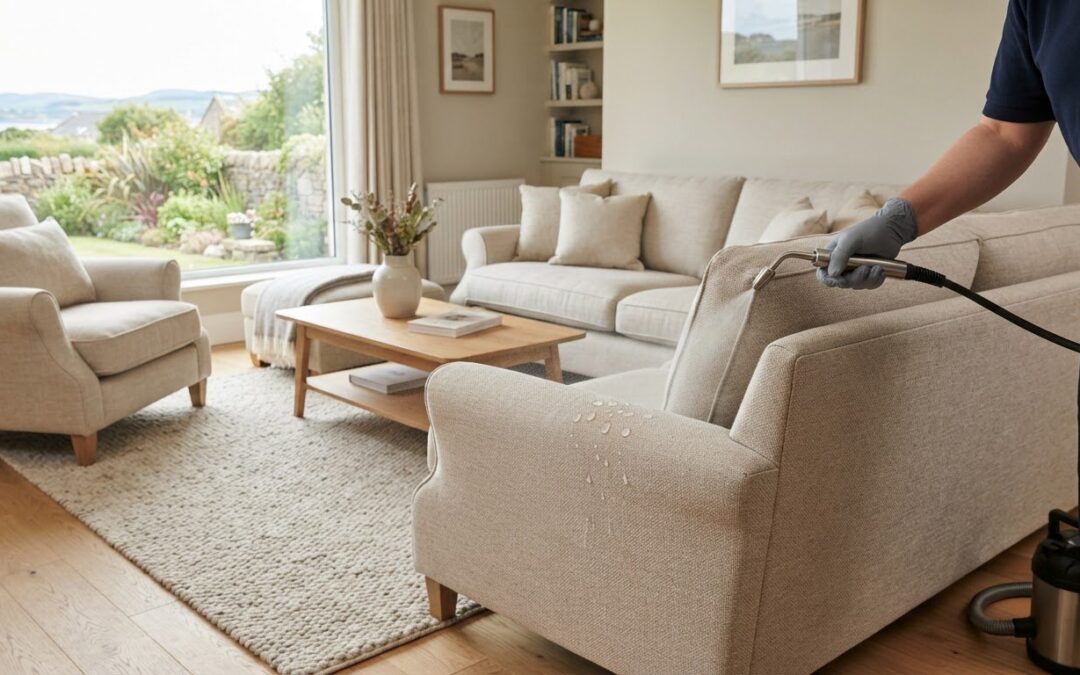
The protector itself is only part of the cost. Fabric and upholstery protector products are available at different prices, and the product cost is separate from any professional application fee. The professional fabric protection cost in the UK in 2026 depends on the item, its fabric, size and condition, with the professional price provided after a quote request.
It’s understandable to compare DIY treatment with professional fabric protection. A product bought off the shelf may seem straightforward, but the right approach depends on the material and the finish you want to preserve.
This guide explains how fabric protection works, what affects its cost in the UK, and when DIY may suit you better than professional care. It also covers commercial settings, where protecting carpets and upholstery is part of caring for a working environment.
Key Takeaways
- Protection helps spills bead on treated fibres, but allow the treatment time to become effective before relying on it.
- Cleaning can remove existing protection, so consider the timing of a fresh treatment when planning carpet or upholstery care.
- For DIY or professional application, weigh the fabric, the item’s condition and the level of coverage you need.
- Commercial spaces have different demands from homes; the right protection plan depends on how furnishings and carpets are used.
How fabric protection works against spills and stains
Fabric protection coats fibres to help liquid spills bead on the surface instead of soaking in immediately. It gives you time to blot, but doesn’t make fabric stain-proof or remove existing soiling. After professional cleaning, previous protection may have been removed, so fresh treatment can be applied to the clean material. Allow 24 hours for the product to fully repel liquids.
Act promptly when a spill happens: lift away solids, then blot liquid with a clean cloth. Do not scrub, as rubbing can push the stain deeper into the weave. Follow the fabric’s care instructions before using a cleaning solution. A protected sofa still needs careful attention to a coffee spill: protection helps repel stains but does not remove them.
Stain protection is different from treatments such as deodorising or sanitising, and from stain removal, which targets existing marks. Check whether a quote includes stain treatment or lists it separately. Protection alone will not remove a mark or cover every stain-removal service.
To compare quotes, check that each covers the same items, preparation, protection treatment and after-care. A clear written scope makes it easier to compare like with like and understand whether existing stains are included in the work.
Fabric protection does not replace the manufacturer’s care instructions or automatically determine warranty or insurance coverage. Keep the treatment details and follow the upholstery maker’s guidance, especially before applying products to delicate fabrics or making an insurance claim.
The main risks are using a product that is unsuitable for the fabric or skipping its care requirements. Either can affect the material’s appearance or finish. Check the care label and test an inconspicuous area first, and follow the product label for safe use.
Car-seat and interior fabrics also need material-specific care. Identify the fabric and check the vehicle’s care guidance before treating a seat, rather than assuming a household upholstery product is suitable.
For after-care, blot fresh spills, use approved cleaning methods and avoid aggressive scrubbing. Protection can wear with use and cleaning, so consider refreshing it after a later professional clean. Around a tenancy, keep treatment and cleaning records with other property-care documents.
Professional fabric protection for carpets and upholstery
Professional protection starts with assessing the material and its condition. Carpet pile, a sofa’s weave and an upholstery lining can each respond differently to cleaning products. The treatment needs to suit the fibres, not just the item’s colour or age. A wool rug and a synthetic carpet, for example, need separate assessments before treatment.
Product choice matters. Carpet and upholstery protectors are designed to help resist everyday soiling, but their suitability depends on the fabric and the product label. “Invisible” should mean no intended visible coating, not an assurance that every material will look or feel unchanged. A small, inconspicuous test can reveal a change in colour or texture before treating the full surface.
A considered application starts with inspecting the fabric, removing loose soil and cleaning the surface where needed. Once it is clean and dry, apply a compatible protector evenly, following the product instructions. Applying treatment over dirt can trap soiling, while uneven application may leave patchy protection. Darcy Bespoke Cleaning provides carpet and upholstery cleaning and applies Professional Stain Shield to help protect suitable surfaces.
Fine fabrics need particular care. Silk, delicate blends and fabrics with special finishes may have specific cleaning instructions, so check the care label before choosing a product. Assess contrasting piping or delicate cushion panels separately, and do not assume a protector suitable for a sofa is right for every cushion or armchair.
For sofas, focus on contact areas such as seat cushions and armrests, where daily use can bring more soil. Carpets may need attention along walkways and around entrances. A suitable professional fabric protection service can help coordinate cleaning and protection for the materials in your home, rather than treating every surface alike.
Carpet protector and Scotchgard treatment prices
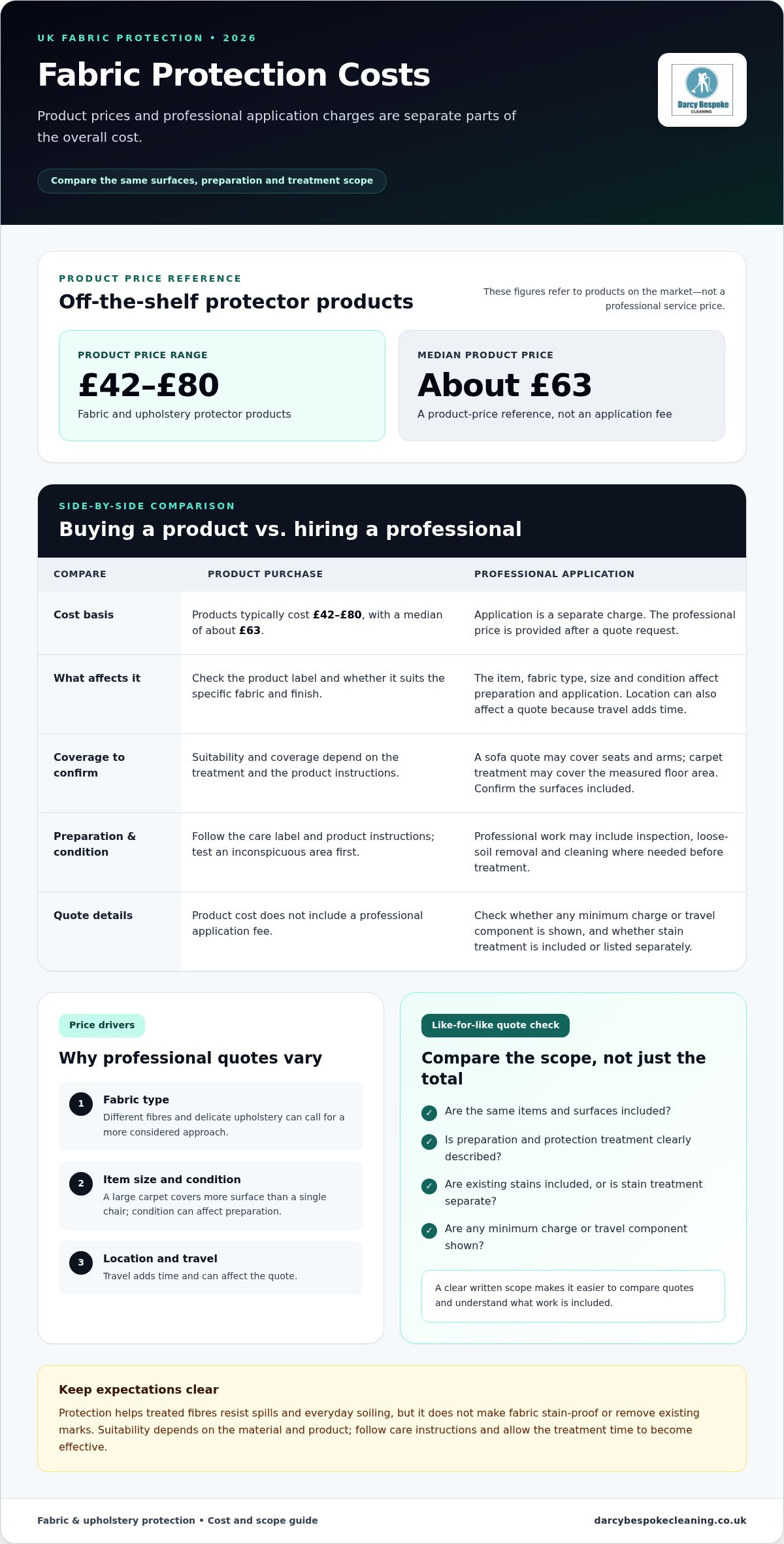
Professional fabric protection cost in the UK varies with the surface and scope of work. Product prices and professional application charges are separate parts of the overall cost.
Treatment and Product Coverage
Professional stain protection is applied to clean carpets or upholstery to help resist spills and everyday soiling. Coverage depends on the treatment and the areas included. A sofa quote, for example, may cover its seats and arms, while carpet treatment may cover the measured floor area. Check what each quote includes before comparing totals.
On the market, fabric and upholstery protector products typically cost £42 to £80, with a median of about £63. That is a product-price range, not a professional service price. A carpet treatment described as Scotchgard or stain protection may differ in coverage and application, so look at the stated product and surfaces treated.
Price Factors
Fabric type, item size and condition affect preparation and application. A large carpet needs treatment across more surface than a single chair, while delicate upholstery may call for a more considered approach. Location can also affect a quote because travel adds time. The professional fabric protection cost in the UK therefore depends on the items and work involved.
The total is case-dependent and is provided after a quote request. A minimum charge or travel component should be clearly shown in the quote; compare the included surfaces and preparation, not just the headline figure.
Protection may help reduce staining, but it shouldn’t be treated as a guaranteed way to extend carpet lifespan. Regular vacuuming and prompt attention to spills still matter. Professional cleaning, including extraction where appropriate, can remove accumulated soil, but cleaning may also affect existing protection.
Protection wears with use and cleaning, so consider reapplication after a later professional clean or when its effectiveness has diminished. The right timing depends on how heavily the carpet or furniture is used and the product’s care instructions.
What is the average cost to protect a sofa or armchair professionally in the UK?
There is no single useful average for every sofa or armchair. The professional fabric protection cost depends on the item, fabric, condition and treatment required. A compact armchair and a large sofa have different surface areas, while delicate upholstery may need more careful preparation. Request a quote based on the specific items and work.
For a useful comparison, describe each item clearly. Say whether the sofa is a two-seater, three-seater or corner style, and whether protection is needed across every upholstered surface. For an armchair, mention loose cushions or contrasting fabric panels. These details define the work more clearly than a vague per-item estimate.
Cleaning and protection can be considered together. If upholstery needs cleaning first, the quote may cover both preparation and treatment. Existing marks, accumulated soiling and the fabric’s care instructions can also affect the process. Ask for the scope to distinguish cleaning, stain treatment and protector application, so you know what the work covers.
Location and travel can affect the overall cost, as can the number of items treated in one visit. Compare quotes for the same furniture and preparation, and check whether treatment covers the full sofa or only selected sections. A clear written scope makes differences easier to understand.
Protection is not permanent. Lancaster Cleaning Services recommends reapplying stain protection every year for optimal coverage. Regular use, spills and subsequent cleaning can affect how long treatment remains effective, so follow the product’s care guidance and consider the timing after upholstery cleaning.
If an armchair needs attention before protection, arrange a suitable armchair cleaning service as the next step. Starting with a clean surface helps make the sequence of care clear, from assessing the upholstery to applying its protective treatment.
There is no single average cost: the price depends on the furniture and treatment required. Request a quote based on the items and areas you want treated.
Darcy Bespoke Cleaning: Domestic Carpet Cleaning
Darcy Bespoke Cleaning provides professional carpet, rug and upholstery cleaning in Fife and surrounding areas, as well as Stain Protection Services using Professional Stain Shield. Its Carpet Cleaning can help when everyday soiling has built up, while Upholstery Cleaning addresses sofas and armchairs that see regular use. For workplaces, Commercial Carpet Cleaning supports the care of carpeted areas.
Choose the service that matches the surface needing attention, whether that’s a carpet, sofa or armchair. If you’re preparing for professional cleaning before considering fabric protection, describe the items and their condition when requesting a quote. This gives the work a clear starting point and helps establish the appropriate care for your home or business.
For a tailored next step, contact Darcy Bespoke Cleaning to discuss your carpet or upholstery cleaning needs.
Plan the next step for your fabrics
Choose your next step based on the condition and use of each surface, rather than treating every carpet or piece of furniture alike. A home carpet, a frequently used sofa and a commercial floor each need care suited to their setting. This helps you decide whether cleaning, protection or both should come first.
For anyone weighing the professional fabric protection cost in the UK for 2026, a tailored quote request is the practical way to move from general guidance to a plan for your own items. Darcy Bespoke Cleaning offers Domestic Carpet Cleaning, Commercial Carpet Cleaning and Sofa Cleaning, helping you address the surfaces that matter in your home or workplace.
Share which items need attention and what you hope to protect, so the conversation can focus on the right next step. Contact Darcy Bespoke Cleaning to discuss your cleaning needs and take a considered approach to caring for your fabrics.
Frequently Asked Questions
Should you DIY or hire a pro?
DIY may suit a small, straightforward area if the product is compatible with the fabric and can be applied evenly. For delicate upholstery, multiple items or a large carpet, professional treatment can make assessment and coverage easier to manage. An intricate sofa with contrasting panels, for example, may need more care than a simple removable cushion. Follow the care label either way.
How much does professional fabric protection cost in the UK in 2026?
The professional fabric protection cost in the UK in 2026 depends on the item, its fabric, condition and treatment scope. Product prices and professional application charges are separate: fabric and upholstery protector products on the market typically cost £42 to £80, with a median of about £63. That is not a professional service price. Application pricing depends on the case and is given after a quote request.
How much does professional carpet and rug fabric protection cost per room or square metre in the UK?
Per-room or per-square-metre costs depend on a carpet or rug’s dimensions, material, condition and the area needing treatment. A small rug and a broad fitted carpet require different coverage, while a delicate natural fibre may need a different approach from a synthetic surface. For a useful quote, describe the measurements, material and areas you want treated.
What is included in professional fabric protection, and how is it applied?
Professional protection involves assessing the material, preparing the surface and applying a compatible treatment according to its instructions. Ask for the written scope to identify which items and sections are included, such as sofa cushions, arms or carpeted areas. If a spill or existing mark needs attention first, clarify whether stain treatment is included or separate. For carpet and upholstery cleaning and Stain Protection Services in Fife, contact Darcy Bespoke Cleaning to request a quote.
How do professional fabric protection costs compare with DIY sprays in the UK?
A DIY spray means buying the product and applying it yourself; professional treatment includes an application service. Fabric and upholstery protector products on the market typically cost £42 to £80, with a median of about £63, before considering any tools or additional products. Professional application costs depend on the items and work involved, so compare the same surfaces and treatment scope rather than product price alone.