
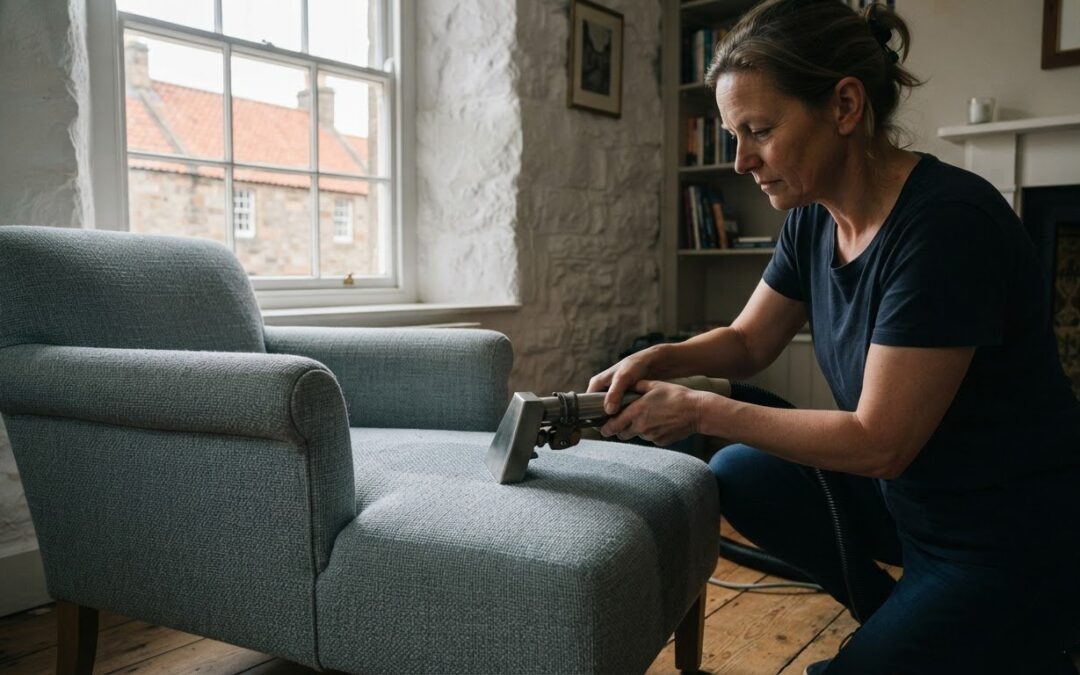
A clean-looking sofa can still benefit from a deeper refresh. For most upholstered furniture, a deep clean every 12-18 months is a sensible interval, and professional fabric sanitisation in Fife can help refresh furnishings while addressing embedded dirt and odours.
It’s natural to want a clear idea of what will happen before inviting a cleaning professional into your home or workplace. This guide explains which fabrics and furnishings may be suitable, how to prepare, what affects drying time, and what to look for when comparing payment options, customer reviews and awards. You’ll also learn how a tailored cleaning approach can help care for the materials you live and work with, so you can make your next decision with greater confidence.
Key Takeaways
- Learn which upholstered furnishings may suit professional treatment and what details about the fabric matter before cleaning.
- Understand how cleaning methods differ, so you can see what a sanitising treatment is intended to address.
- Plan around drying time by considering the cleaning method and the conditions affecting moisture in the fabric.
- Use the article’s guidance on preparation, payment options, reviews and awards to make a more informed decision.
What fabrics and furnishings can be professionally sanitised?
Professional fabric sanitisation in Fife may be relevant for upholstered sofas, armchairs, dining chairs and fabric-covered cushions. Darcy Bespoke Cleaning provides upholstery cleaning in Fife, including these furnishings. The suitable method depends on the fibre, colour, construction and condition, not just the type of furniture. A woven cotton seat, for example, may need a different approach from a delicate wool blend.
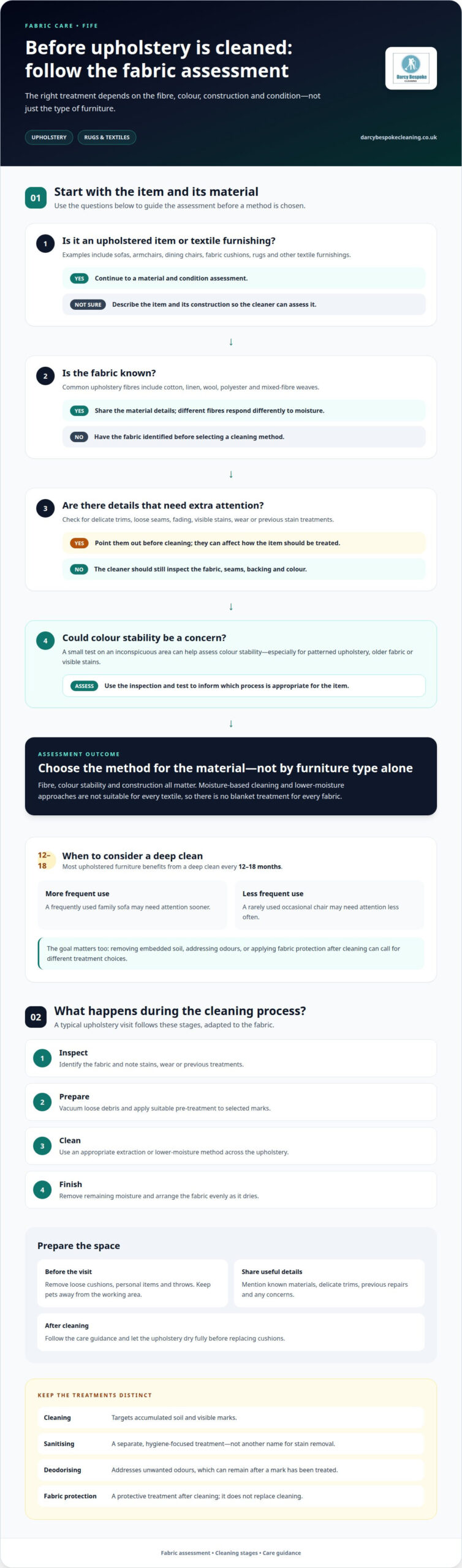
Common upholstery fabrics include cotton, linen, wool, polyester and mixed-fibre weaves. Each has its own texture and response to moisture, so a professional should identify the material and inspect its seams, backing and colour before choosing a process. A small test on an inconspicuous area can help assess colour stability. This step is especially relevant for patterned upholstery, older fabric or visible stains.
- Sofas and armchairs: Seat cushions, arms and back panels can collect everyday soil through regular contact.
- Dining chairs: Upholstered seats may need attention where food or drink marks are present.
- Fabric cushions: Removable or fixed cushions require an approach suited to their covers and construction.
Rugs and other textile furnishings also need care suited to their fibre and construction. A wool rug, for example, calls for a different assessment from a synthetic one. Delicate trims, loose seams, fading and previous stain treatments can affect how it should be cleaned. Darcy Bespoke Cleaning offers rug cleaning in Fife; share any known material details and concerns when arranging the service.
Frequency depends on use and household conditions. Most upholstered furniture benefits from a deep clean every 12-18 months. A frequently used family sofa may need attention sooner than a rarely used occasional chair. The right treatment also depends on the goal: removing embedded soil, addressing odours, or applying fabric protection after cleaning. Sanitisation is not a blanket treatment for every textile, so material assessment is an important first step.
What methods do fabric sanitisation companies use in Fife?
A professional visit starts with an inspection of the upholstery. The cleaner considers the fabric, seams and visible marks before choosing a method. A pale dining-chair seat, for example, may need a different approach from a tightly woven sofa. This assessment helps determine the cleaning solution and equipment suited to the item.
Upholstery cleaning can involve several stages. Loose soil is removed first, then visible marks may receive targeted attention before the main clean. The method depends on the fabric: moisture-based cleaning and lower-moisture approaches are not suitable for every textile. Fibre type, colour stability and construction all matter when choosing how to clean.
- Inspect: Identify the fabric and note stains, wear or previous treatments.
- Prepare: Vacuum loose debris and apply suitable pre-treatment to selected marks.
- Clean: Use an appropriate extraction or lower-moisture method across the upholstery.
- Finish: Remove remaining moisture and arrange the fabric evenly as it dries.
Cleaning and sanitising are different treatments, even when discussed together. Cleaning targets soil and marks on the fabric, while sanitising is a separate hygiene-focused treatment. Darcy Bespoke Cleaning offers sanitising treatment alongside its fabric cleaning services in Fife. Ask for a clear explanation of the intended stages so you know what each is designed to address.
A little preparation makes the work area easier to access. Remove loose cushions, personal items and throws from the sofa before the appointment. Keep pets away from the working area and point out delicate trims or previous repairs. After cleaning, follow the care guidance and let the upholstery dry fully before replacing cushions.
If you’re considering a protective finish after cleaning, explore fabric protection treatment as a related option for caring for upholstery.
How does professional fabric sanitisation differ from upholstery cleaning?
Upholstery cleaning focuses on removing soil, marks and odours from fabric. Fabric sanitisation is a separate, hygiene-focused treatment. The terms can describe stages during the same visit, but they do not mean the same thing. Treating a visible drink spill, for example, addresses the mark and surrounding soil; sanitising has a different purpose.
Think of a sofa with a tea stain on one cushion. Cleaning targets the visible mark and material around it, using a method suited to the fabric. Sanitisation is not simply another name for stain removal. It refers to a separate treatment intended to address hygiene on the textile. The precise process depends on the fabric and treatment used, so the service label alone doesn’t describe every step.
- Cleaning: Removes accumulated soil and treats visible marks, such as food spills on dining-chair seats.
- Sanitising: Adds a hygiene-focused stage to fabric care, rather than acting as a stain-removal method.
- Deodorising: Addresses unwanted odours, which can remain after a mark has been treated.
- Fabric protection: Applies a protective treatment after cleaning, rather than replacing the cleaning itself.
Cleaning and sanitising may be combined, but each has a distinct role. A sofa cushion could be cleaned first, followed by a sanitising treatment suited to its material. If odour is the main concern, deodorising is another separate option. The appropriate combination depends on the upholstery’s condition and the result you want.
When arranging a service, ask what each treatment includes. Find out whether it covers soil removal, targeted stain work, sanitising or odour treatment. Clear descriptions make it easier to understand the work and set realistic expectations. Sanitising should not be assumed to remove a set-in stain, and cleaning alone is not the same as a separate hygiene-focused treatment. Match the service to the concern.
These figures describe cleaning, not necessarily a separate sanitising stage.
How long does fabric sanitisation take to dry
Upholstery may take several hours to dry, depending on the cleaning method. A sofa cleaned using moisture may feel damp afterwards. Fabric thickness and the amount of moisture used affect drying, and a tightly padded cushion may take longer than a thin chair seat. Leave treated furnishings unused until the fabric feels dry throughout.
Room conditions also affect drying. Air circulation helps moisture disperse, while still air can slow the process. After treatment, separate cushions where possible and leave space around the furniture. Don’t put throws or decorative cushions back onto damp upholstery, so air can reach more of the fabric.
The cleaning method matters because it determines how much moisture reaches the material. Lower-moisture processes use less water than water-based extraction, while fabric type and cushion construction also shape the result. A technician’s aftercare guidance should reflect the treatment used. For instance, a removable seat cushion can be positioned to expose more fabric to circulating air.
- Before treatment: Clear items from the sofa and plan an alternative seat.
- After treatment: Keep cushions apart and maintain airflow around the upholstery.
- Before reuse: Check the seat, seams and cushion edges for remaining dampness.
Don’t speed drying with direct heat from a radiator or hairdryer. Concentrated heat can affect delicate upholstery; gentle room ventilation supports even drying. Keep pets and children away from freshly treated fabric until it is dry. If seams still feel damp, allow them more time exposed to air.
For upholstery care that includes a protective finish, arrange fabric protection treatment as part of your fabric-care plans.
Cleaning time is separate from drying time: Most sofas take 1 – 2 hours to clean. The treatment duration does not indicate when upholstery is ready to use; check the fabric throughout, especially seams and cushion edges, and wait until all areas feel dry.
Darcy Bespoke Cleaning: Domestic Carpet Cleaning
Darcy Bespoke Cleaning provides domestic carpet cleaning and upholstery care for homes in Fife. If both your carpets and a sofa or armchair need attention, you can discuss the relevant services together. The cleaning approach depends on the material and the areas you want addressed.
For rooms with regular foot traffic, domestic carpet cleaning can address accumulated soil. Sofa and armchair cleaning focus on upholstered seating, while commercial carpet cleaning serves business premises. Choose the service that matches the furnishings needing care.
To discuss carpet or upholstery cleaning for your home in Fife, contact Darcy Bespoke Cleaning.
Make fabric care part of your home’s upkeep
Start by identifying the result you want: refreshed seating, cleaner carpets or attention to a particular concern. For professional fabric sanitisation in Fife, describe the furnishings and the outcome you have in mind to Darcy Bespoke Cleaning. This helps identify an appropriate service for your home.
Darcy Bespoke Cleaning offers Domestic Carpet Cleaning, Commercial Carpet Cleaning and Sofa Cleaning. Whether you’re caring for a living room or planning a wider refresh, these services can help maintain the carpets and upholstery you use every day.
Contact Darcy Bespoke Cleaning to discuss your home’s cleaning needs. A considered first step can make caring for your surroundings feel straightforward and reassuring.
Frequently Asked Questions
Which Fife companies offer professional upholstery and fabric sanitisation?
Darcy Bespoke Cleaning offers sanitising treatment and upholstery cleaning in Fife, including sofa, armchair and dining chair cleaning, as well as rug cleaning. If you’re arranging care for several items, describe each furnishing and its material when discussing the work. This helps clarify which treatment suits your needs.
How much does professional fabric sanitisation cost in Fife?
How should I prepare furniture and fabrics for a sanitisation appointment?
Before the appointment, clear a route to the furniture and move fragile objects nearby. Keep children and pets away from the treatment area while work is underway. If you have fabric care labels or product instructions for a furnishing, set them aside to share with the cleaner. These details can help guide how the item is handled.
How can I compare reviews, qualifications and guarantees for Fife fabric sanitisation companies?
Look for reviews that describe specific experiences, such as communication, care with furnishings and the completed work. Darcy Bespoke Cleaning is professionally trained and fully insured, with a 100% satisfaction guarantee that includes a free re-clean if you’re unhappy. Its Google profile shows a 5.0 out of 5 rating based on 45 reviews. Consider these details together when assessing the service.