
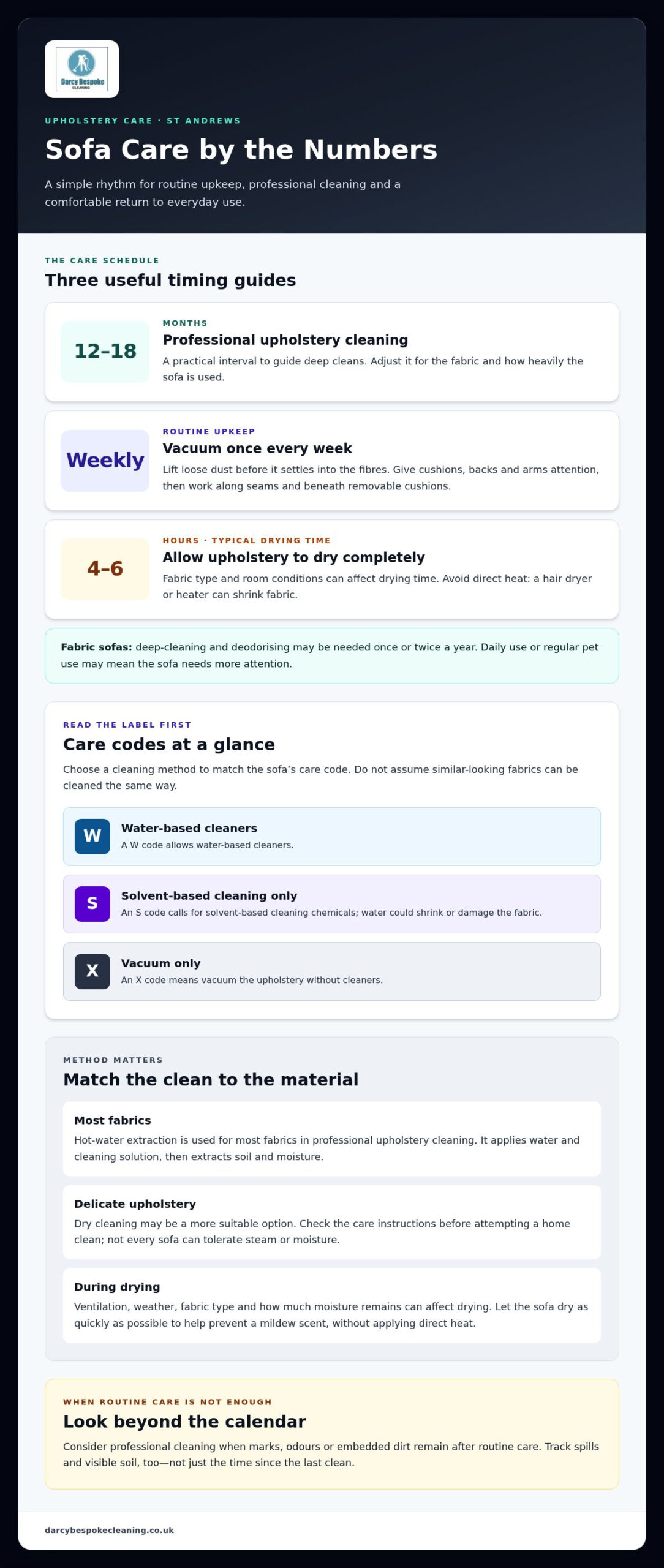
A clean-looking sofa still needs regular care. For quick-drying sofa cleaning in St Andrews, a useful guide is to arrange professional upholstery cleaning every 12 to 18 months, with the fabric and how heavily it’s used helping determine the right interval. Vacuuming once every week helps keep everyday dust and debris from settling into the upholstery.
It’s understandable to want your sofa refreshed without having to plan around a long drying period. Upholstery cleaning in St Andrews typically takes about 4-6 hours to dry completely, although fabric type and room conditions can affect the time. This guide explains how often to clean upholstery, which fabric care codes matter, and how to vacuum sofa crevices effectively. You’ll also learn when professional help is useful and how to support a quicker, more comfortable return to everyday use.
Key Takeaways
- Plan professional upholstery cleaning every 12 to 18 months, adjusting for fabric type and how heavily the sofa is used.
- Read the care code before cleaning: W allows water-based cleaners, S requires solvent-based cleaning, and X means vacuum only.
- Vacuum cushions, seams and crevices carefully to lift dust and loose debris from less visible areas.
- Allow about 4-6 hours for upholstery to dry completely, and avoid direct heat while it dries.
- Consider professional cleaning when marks, odours or embedded dirt remain after routine care.
How often should I get my upholstery cleaned?
A practical guide is professional upholstery cleaning every 12 to 18 months. Vacuum your sofa once every week, and adjust the deep-cleaning interval for fabric type and everyday use.
- Set a cleaning rhythm for each upholstered item. Book a professional sofa clean once every year as a straightforward routine. A 12 to 18-month interval is also a useful guide for upholstery, depending on its fabric and use. Fabric sofas may need deep-cleaning and deodorising once or twice a year. A sofa used daily, or regularly occupied by pets, may need more attention than a rarely used occasional chair. Track spills, visible soil and lingering odours, rather than relying only on the calendar.
- Vacuum upholstery once every week. Use an upholstery attachment on cushions, backs and arms, then work along seams and under removable cushions. This lifts loose dust before it settles into the fibres or becomes harder to remove. Use a gentle setting on delicate fabric, and avoid dragging the nozzle across the surface. A narrow attachment can reach crevices where crumbs and pet hair collect. Weekly vacuuming supports routine care, but it doesn’t replace a deeper clean when grime or stubborn marks remain.
- Choose a cleaning method that suits the fabric. Hot-water extraction is used for most fabrics in professional upholstery cleaning. It applies water and cleaning solution, then extracts soil and moisture from the material. Delicate upholstery may need a dry-cleaning method instead. The correct approach depends on the fabric and its care instructions, so check the label before attempting a home clean. Steam cleaning also introduces heat and moisture; don’t assume every sofa can tolerate it. The wrong method can affect fibres, colour or shape.
- Prepare the sofa and room before cleaning. Remove loose cushions, throws and nearby items, then vacuum the sofa, including its crevices. Clear access around the furniture and open a window when conditions allow. Drying time depends on fabric type, how much moisture remains, room ventilation and weather. Upholstery in St Andrews typically takes about 4-6 hours to dry completely. Sofas should dry as quickly as possible to help prevent a mildew scent. Don’t use a hair dryer or heater, as direct heat can shrink fabric.
- Include the upholstery you use most. Sofa cleaning is only one part of caring for fabric furnishings. Armchairs and dining chairs also collect dust, body oils and spills on their seats, backs and arms. Give these items the same weekly vacuuming attention, especially around seams and under cushions. When several pieces show embedded dirt or stubborn staining, consider cleaning them as part of the same upholstery routine. That keeps the care plan consistent across the room.
What types of fabrics can you clean?
Quick-drying sofa cleaning in St Andrews can involve low-moisture methods or dry cleaning for delicate fabrics. Check the sofa’s care code first: water can damage some fibres, so the right method depends on the material.
- Read the care label before choosing a cleaner. A W code means water-based cleaners can be used. An S code calls for solvent-based cleaning chemicals only, because water could shrink or damage the fabric. An X code means vacuum only, without cleaners. Follow the label rather than assuming similar-looking upholstery uses the same method. If the label is missing, avoid experimenting with water or solvent on a visible area.
- Match the cleaning method to the fabric. Hot-water extraction is used for most fabrics in professional upholstery cleaning, while dry cleaning is an option for delicate fabric. A W or WS code can be suitable for steam cleaning, but the care instructions still guide the choice. These methods differ in moisture and application, so a delicate weave may need a different approach from a robust fabric. Correct treatment helps protect colour, texture and fibres.
- Test any home product discreetly. Apply a small amount to a hidden spot, following the product directions, then let it dry completely before assessing the result. Check for colour transfer, changes in texture or a visible ring. For a W or W/S fabric, a suggested spot-cleaning mixture uses one teaspoon each of mild dish detergent, white vinegar and baking soda with warm water. Leave it for about 10 minutes, then assess the hidden test area first.
- Deep-clean and deodorise without over-wetting. For suitable fabric, use the cleaning method indicated by its care code rather than saturating the sofa. To refresh odours, bicarbonate of soda or dry carpet cleaner can sit on the surface for 20 minutes before vacuuming. Keep powder away from delicate or damp areas, and remove it thoroughly with an upholstery attachment. Blot stains instead of scrubbing, which can push soil further into the fibres.
- Consider fabric protection after cleaning. Protection is a treatment to discuss for compatible upholstery, not a substitute for checking the code or treating stains correctly. Fabric type, existing finishes and the cleaning method all matter. For a sofa with stubborn stains or persistent odours, professional upholstery cleaning can match the approach to the material. Careful method selection helps maintain the fabric while addressing the soil.
Vacuuming cushions, seams and crevices
- Prepare the sofa before switching on the vacuum. Remove throws, loose cushions and toys, then check each surface for coins or small objects. Read the upholstery care label and choose a suitable vacuum setting. Fit an upholstery attachment for broad fabric panels, rather than pressing a hard floor head against the weave. If cushions are removable, place them nearby so you can clean both their faces and the exposed seat beneath them.
- Vacuum each cushion with controlled, overlapping passes. Start at one edge and move the upholstery attachment steadily across the fabric. Turn reversible cushions and repeat on the other side, following the nap where the fabric has a visible direction. Use light pressure on delicate fibres; forceful strokes can distort the surface. For piping or tufted details, guide the attachment around the edges instead of scraping across raised seams.
- Work along seams and crevices with a narrow tool. Lift each cushion and vacuum the gap between the seat and back, where crumbs, dust and pet hair collect. Trace the nozzle beside piping and along stitched seams without stretching the fabric. Check the joins between arms and seat, then reach beneath the front edge. A torch can reveal debris lodged in dark corners, making it easier to remove loose particles before they settle.
- Use a soft brush for delicate or detailed areas. A vacuum brush attachment can loosen surface dust from textured upholstery, buttoned backs and fabric-covered arms. Test it on an inconspicuous patch first, especially on a loose weave or raised pile. Keep the brush moving; holding it in one place may pull at fibres. For fringe or decorative trim, vacuum nearby fabric carefully and avoid drawing loose threads into the nozzle.
- Handle marks separately from dry debris. Vacuuming lifts loose particles, but it won’t remove a set stain or sticky residue. Don’t pour detergent onto upholstery after vacuuming, since excess moisture may leave a ring or affect the fabric. Check the care code before any spot treatment, then blot a fresh spill with a clean cloth rather than rubbing. Once the sofa is clear, return cushions to their positions and note any stubborn marks needing separate attention.
Keep the care code in view when planning routine maintenance. Fabric sofas marked X should be vacuumed only, without using cleaners. Experts recommend vacuuming a sofa once every week. Choose a consistent time for that pass, and keep the sofa’s care limits in mind when deciding whether to add another treatment. For X-marked fabric, stay with vacuuming and do not use a cleaner as part of the routine. A regular schedule also makes it easier to remember the sofa between more occasional care tasks.
For odours, baking soda can be left on a sofa for a few hours or overnight to absorb odours before being vacuumed up. Follow the fabric’s care instructions when considering this option, and keep the X-marked vacuum-only guidance in mind. When the waiting period is over, vacuum the baking soda from the upholstery rather than leaving it there. If odours are not a concern, continue with the weekly vacuuming routine without adding this step.
When to consider professional cleaning
- Book help when routine care leaves visible soil. Weekly vacuuming removes loose dust, but it won’t extract grime embedded deeper in sofa fibres. If the seat still looks dull after vacuuming, or armrests feel soiled, a professional clean can address more than the surface. Professionals use powerful equipment and specialised products to treat upholstery. Describe which areas look affected, such as seat cushions, headrests or the arms, so the cleaning can focus on the problem.
- Act carefully when a stain persists. A fresh spill may respond to careful blotting, but a stubborn mark can remain after it dries. Repeated rubbing or adding different detergents may spread residue or affect the fabric. Consider professional cleaning when a stain returns after home treatment, covers a broad area or sits on a delicate material. Note what caused the mark, if known, and what you’ve already applied. That detail helps guide a suitable cleaning approach.
- Get specialist treatment for odours that linger. A sofa can look clean while an odour remains in its upholstery. If airing the room and vacuuming haven’t resolved smells from food, pets or spills, cleaning may need to reach beyond the visible surface. Tell the cleaner where the odour is strongest, such as one cushion or the lower front edge. Avoid masking it with fragrance or soaking the area, which can add residue and complicate treatment.
- Choose professional care for delicate or unfamiliar upholstery. Consider help if the label is unclear, the fabric has a distinctive finish, or a home test changes its colour or texture. Velvet-like pile, textured weaves and patterned upholstery can respond differently to moisture and agitation. A professional can assess the material and select suitable equipment and products. This is especially useful before cleaning a full sofa, where an unsuitable method could leave marks across a visible panel.
- Arrange a clean when several furnishings need attention. A sofa, armchair and dining chairs can accumulate soil at different rates, particularly in a heavily used room. If several pieces show dull patches, persistent smells or marks, professional treatment can address the upholstery as a coordinated task. Make a short list of affected items and problem areas before the appointment. This helps clarify priorities, including which furniture is most used and which stains need particular attention.
If you clean an affected area yourself, work carefully and follow the sofa’s care instructions. When steam-cleaning, work in sections to help prevent streaks. If the result is unsatisfactory or you are unsure how the material will respond, stop rather than continuing with a method that may not suit the fabric.
When cleaning sofa upholstery with a detergent solution, use a clean sponge that has been wrung out so it is only slightly wet. Keep that guidance in mind throughout the application, rather than using a sponge carrying excess moisture. If soil, a mark or an odour persists, or you remain unsure how the fabric will respond, professional cleaning remains an option. Explain what you have tried and where the problem remains so the cleaner can assess the affected upholstery.
Booking and appointment selection
- List the furniture and areas needing attention. Before arranging a visit, note whether you need one sofa cleaned or several pieces treated. Describe where spills, dull patches or odours appear, such as a seat cushion or armrest. Mention whether stains are fresh or previously treated. These details help define the work and plan the appointment around the furniture needing the most care.
- Gather the sofa’s care information. Find the fabric label and record its cleaning code, if present. Note delicate finishes, removable cushions and products already used. A water-based method suits W-coded fabric, while S-coded upholstery needs solvent-based cleaning. Sharing the code and material helps determine a suitable approach before equipment is used. Record each item’s fabric separately if you have several pieces.
- Choose a day that allows natural drying. Upholstery in St Andrews typically takes about 4-6 hours to dry completely. Fabric, ventilation and weather affect drying time, so consider how easily you can ventilate the room. For quick-drying sofa cleaning in St Andrews, plan to leave the sofa unused while it dries. Direct heat from heaters or hair dryers can shrink fabric, so rely on airflow instead.
- Prepare access before the appointment. Move small tables, throws and nearby objects away from the sofa, and remove loose cushions where possible. Clear a route to the furniture so equipment can be brought into position without moving fragile belongings. Vacuuming beforehand removes loose debris, while noting stubborn marks helps distinguish them from general soiling. If carpet also needs attention, include it in your initial outline.
- Share priorities and arrange the next step. Explain whether your main concern is a spill, deeper soiling, odours or refreshing the sofa before guests arrive. Be specific about which seats are most used and whether the furniture needs to remain accessible that day. If you’re arranging quick-drying sofa cleaning in St Andrews, sharing your fabric details and drying plans helps shape a practical visit. Arrange a sofa-cleaning booking to discuss your needs.
Darcy Bespoke Cleaning: Domestic Carpet Cleaning
Darcy Bespoke Cleaning provides Sofa Cleaning for households seeking a considered refresh for fabric upholstery. Its equipment includes the Alltec Advance 600 and Rotovac 360i, used to remove dirt, allergens and stubborn stains from upholstery. If your sofa has persistent marks or odours, professional cleaning can be a practical next step after routine vacuuming and careful spot treatment.
Darcy Bespoke Cleaning also provides Domestic Carpet Cleaning in Fife when your carpets need attention alongside your sofa. For a coordinated clean, describe which surfaces need care and mention any stains or fabric concerns.
Contact Darcy Bespoke Cleaning to discuss sofa or domestic carpet cleaning, or visit darcybespokecleaning.co.uk.
Make sofa care part of your home routine
A well-kept sofa supports everyday life, from quiet evenings to time with family and friends. Make upholstery care part of your home routine: consider how each piece is used, respond promptly to spills, and follow the care guidance for each fabric. These habits help you choose suitable care before everyday marks become a bigger concern.
If you’re looking for quick drying sofa cleaning in St Andrews, Darcy Bespoke Cleaning offers Sofa Cleaning, alongside Domestic Carpet Cleaning and Commercial Carpet Cleaning. Whether you’re refreshing a favourite sofa or planning care for your home’s soft furnishings, a clear conversation about your priorities is a useful next step.
Contact Darcy Bespoke Cleaning to discuss your sofa or carpet cleaning needs. A considered approach can help your home feel ready for whatever comes next.
Frequently Asked Questions
How often should you clean your sofa?
Arrange professional cleaning every 12 to 18 months as a general guide, and vacuum your sofa once every week. A family sofa used throughout the day may need attention sooner than a settee in a spare room. Fabric and use influence the schedule. After a spill, address the mark promptly rather than waiting for the next planned clean, and reassess your routine if one seat starts looking darker.
Can you treat stains from my upholstery?
Yes. Darcy Bespoke Cleaning provides stain removal treatment for upholstery. Blot a fresh spill with absorbent towelling, working towards its centre, and never scrub or over-wet the area. When arranging treatment, describe what caused the stain and any products already applied. Food, oil and pet-related marks can need different treatment, and these details help guide the approach.
Are quick-drying sofa cleaning products safe for children, pets and delicate fabrics?
Quick-drying refers to drying time, not whether a product suits children, pets or delicate fabrics. Follow the product label and sofa care code, and choose a method compatible with the material. Keep children and pets off treated upholstery until it is completely dry and the product directions permit use. Avoid testing household cleaners on delicate fibres, as an unsuitable formula may affect colour or texture.