
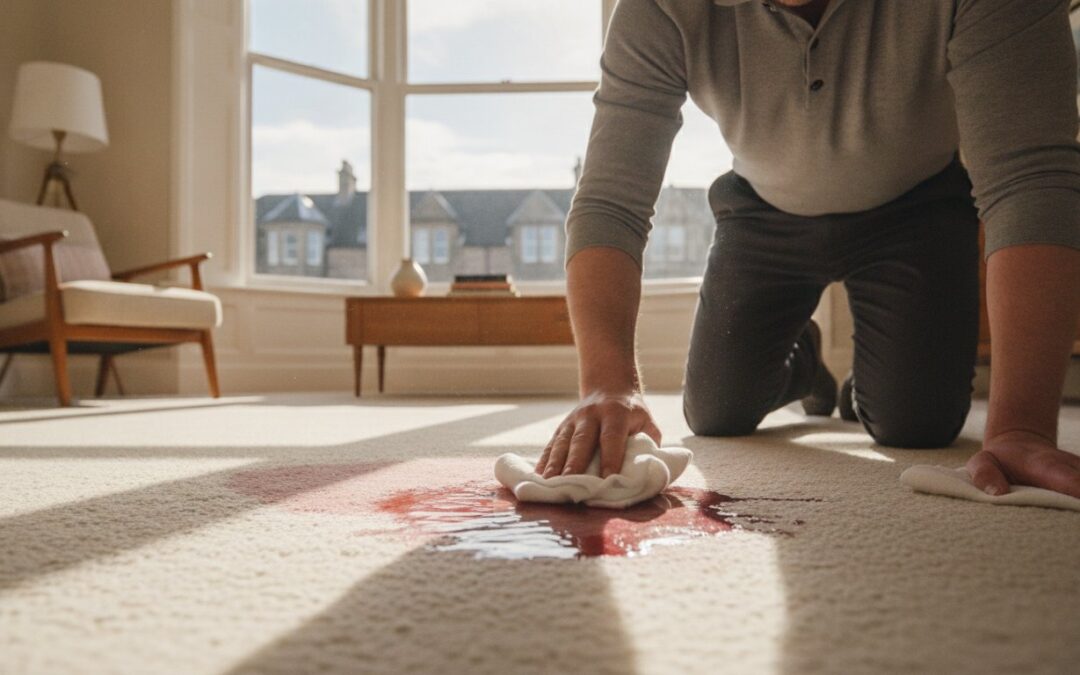
Imagine a relaxed evening in your St Andrews lounge suddenly interrupted by the sight of a full glass of Malbec tipping onto your cream wool rug. The immediate rush of adrenaline isn’t just about the mess; it’s the visceral fear that a red wine stain on carpet fife homeowners have invested in will become a permanent scar. You likely feel a pressing urgency to act, yet the conflicting advice found across the internet often creates a secondary layer of anxiety. Using the wrong household chemical can frequently cause more damage to delicate natural fibres than the wine itself.
We believe your home is a carefully curated sanctuary that deserves expert stewardship rather than frantic, trial and error methods. This professional restoration checklist provides a calm, methodical path to lifting deep pigments while preserving the intricate texture and colour of your flooring. By following these refined steps, you’ll gain the peace of mind that comes from handling a domestic crisis with the precision of a specialist, ensuring your living space remains as harmonious and elegant as intended.
Key Takeaways
- Learn the “Golden Hour” technique of gentle blotting to prevent red wine pigments from bonding permanently with the base of your carpet fibres.
- Understand how to identify your carpet’s specific material, as the restorative approach for delicate wool differs significantly from synthetic polypropylene.
- Master a safe, home-based solution for a red wine stain on carpet fife homes that avoids the aggressive, high-alkaline chemicals found in many supermarket products.
- Discover how to avoid the four most common DIY errors, including over-wetting, which can lead to structural browning or permanent fibre damage.
- Identify the threshold for professional intervention, where advanced extraction technology like the Alltec Advance 600 is required to preserve your home’s investment.
The Golden Hour: 5 Immediate Steps for a Fresh Red Wine Spill
The moment red wine meets your floor, a chemical clock begins to tick. To successfully manage a red wine stain on carpet fife homeowners must act within the “Golden Hour” to prevent permanent discolouration. This initial window is not a time for frantic scrubbing, but for controlled, rhythmic restoration. Your goal is to intercept the liquid before it migrates from the surface pile into the primary backing of the carpet. Approximately 57% of British homes feature carpeted floors, many of which are high-value wool blends that require a custodian’s touch rather than aggressive friction.
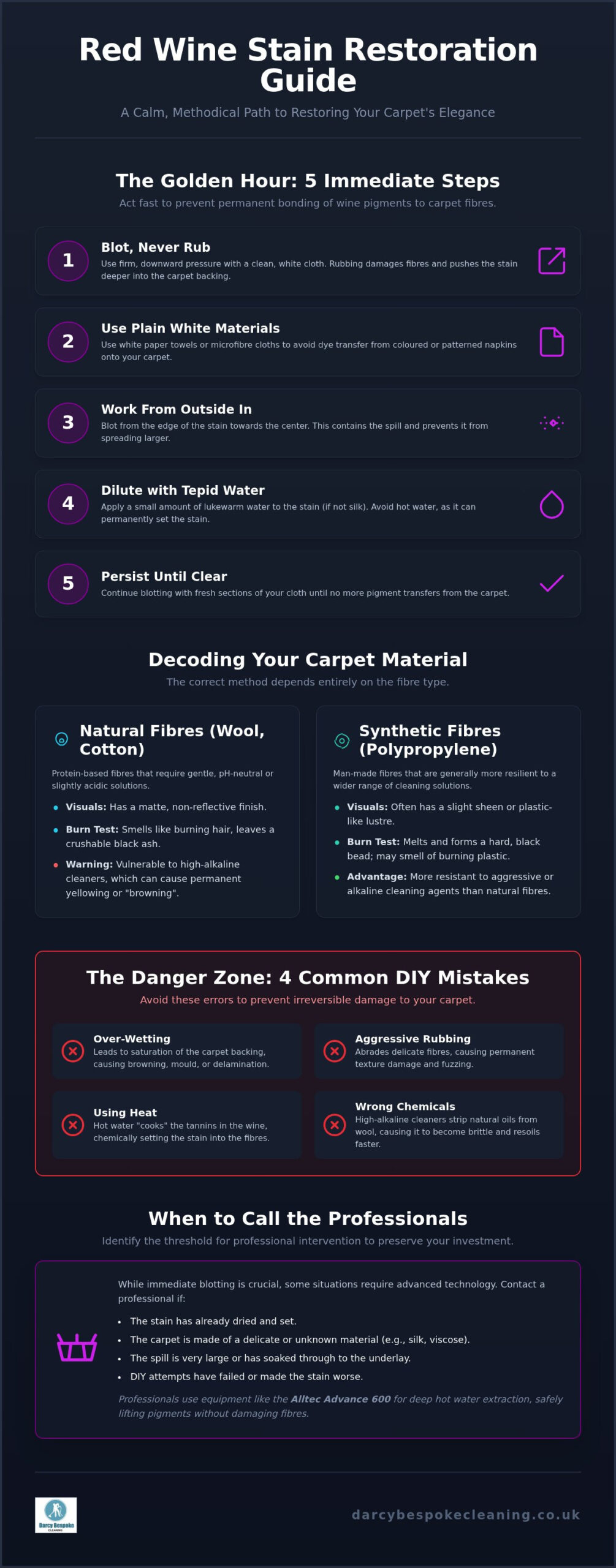
- Step 1: Blot, never rub. Use a firm, downward pressure to draw the wine into your cleaning material. Rubbing creates friction that abrades the fibres and forces the pigment deeper.
- Step 2: Use plain white materials. Reach for white paper towels or a clean microfibre cloth. Avoid patterned napkins or dyed cloths, as the wine can act as a solvent, causing the cloth’s dye to transfer onto your carpet.
- Step 3: Work from the outside in. Always begin at the edges of the spill and move toward the centre. This contains the liquid and prevents the “halo effect” where the stain spreads into a larger circle.
- Step 4: Dilute with tepid water. If the carpet is not silk, apply a small amount of lukewarm water to the area. Do not use hot water, as it can permanently set the tannins.
- Step 5: Persist until clear. Continue the blotting process with fresh towels until no more pink or purple hue transfers to the cloth.
Why Blotting is Non-Negotiable
Rubbing a spill is the most common error in domestic carpet care. When you rub, you aren’t removing the liquid; you’re pushing wine tannins into the microscopic crevices of the yarn. To understand the risk, it helps to consider what is a stain at a molecular level. It’s a chemical bond where the pigment becomes part of the fibre. Blotting utilizes capillary action to pull the liquid upward, away from the backing. Blotting is the gentle lifting of liquid without friction. This preservation of the carpet’s structural integrity ensures that if professional extraction is later required, the fibres remain healthy enough to respond to treatment.
The Dangers of Heat in the First 5 Minutes
There is a persistent myth that hot water helps “melt” a stain away. In reality, heat is a catalyst that accelerates the bonding process between red wine and natural proteins found in wool carpets. Boiling or very hot water effectively “cooks” the tannins into the heart of the fibre, making a red wine stain on carpet fife properties much more difficult to resolve. Tepid water is sufficient to keep the spill in a liquid state without triggering a permanent chemical set. Maintaining temperature control during these first few minutes is a vital tactic in your role as a steward of your home sanctuary.
Decoding Your Carpet Material: Why Fibre Type Dictates the Method
Before reaching for any cleaning agent, you must identify the canvas you are working on. A red wine stain on carpet fife homes often involves high-quality wool or modern synthetic blends, and each requires a tailored approach. Identifying your fibre is the foundation of professional stewardship. While a visual check for a matte finish (wool) versus a slight plastic sheen (synthetic) is helpful, professionals sometimes use a discrete “burn test” on a loose fibre. Wool smells like burning hair and leaves a crushable ash, whereas polypropylene melts like plastic and forms a hard bead. This distinction is vital because what saves a synthetic rug could potentially ruin a wool heirloom.
Understanding the pH factor is critical. Natural fibres like wool are protein-based and thrive in slightly acidic to neutral environments. High-alkaline supermarket cleaners can strip the natural lanolin from wool, leaving it brittle and prone to future resoiling. To understand why certain chemicals work better on specific materials, it’s helpful to study The Chemistry of Stain Removal. This scientific perspective highlights how oxidisable stains like red wine require precise chemical interactions that won’t compromise the fibre’s structural integrity. Using the wrong pH can lead to “browning,” a permanent discolouration of the fibre tips.
Caring for Natural Fibre Carpets (Wool & Cotton)
Wool is inherently resilient. Its natural protective layer provides a brief window of water repellency that you can use to your advantage during the blotting phase. However, these fibres are prone to “bleeding” if the dye isn’t stable. Always test a small, inconspicuous area with your cleaning solution first to ensure the colours remain crisp. For a deeper look at maintaining these premium materials, explore our Expert Carpet Care Tips to ensure your home remains a sanctuary of comfort and style. Proper care of natural fibres requires patience and a respect for the material’s organic origins.
Handling Synthetic and Modern Carpets
Synthetic materials like nylon or heat-set polypropylene are engineered for durability. They are less absorbent than wool, which often makes the initial removal of a red wine stain on carpet fife properties slightly more straightforward. However, they are susceptible to heat damage. Using excessively hot water can “set” the stain into the plastic-like fibres of polypropylene, making it nearly impossible to extract later. While these carpets can withstand slightly firmer blotting, they still require a delicate hand to avoid distorting the pile or creating a permanent “fuzzing” effect on the yarn surface. If you are uncertain about your carpet’s composition, seeking a bespoke consultation ensures your investment is protected by expert knowledge rather than guesswork.
The Professional DIY Checklist: Safe Restoration Solutions
Restoring a red wine stain on carpet fife properties requires a delicate balance of chemistry and restraint. While the temptation to use aggressive supermarket sprays is high, these products often contain optical brighteners. These are chemicals designed to mask soil rather than remove it, and they can leave a permanent, unsightly residue on natural fibres. Instead, we recommend a bespoke, gentle solution that aligns with the professional standards advocated by the Carpet and Rug Institute. This approach ensures you remain a responsible steward of your home sanctuary while effectively managing the spill without the risk of bleaching.
The safe-home formula relies on three simple components: white vinegar, clear dish soap, and distilled water. White vinegar is particularly effective because its mild acidity helps to neutralise and break down the complex tannins found in red wine. However, the ratio is paramount. Using too much soap creates a sticky residue that attracts dirt, leading to a dark patch appearing weeks after the initial cleaning. A precise mixture is the key to a clean that lasts and a texture that remains soft underfoot.
Mixing Your Gentle Cleaning Agent
To create this restorative blend, combine one tablespoon of clear liquid dish soap with one cup of distilled water. It’s essential to use clear soap to prevent secondary dye transfer from the liquid itself. Add one tablespoon of white vinegar to the mixture. Distilled water prevents mineral staining on light carpets, ensuring no phantom rings remain once the area dries. Apply this solution sparingly with a clean cloth, continuing the blotting technique we’ve already established to lift the pigment from the pile without over-saturating the backing.
The Patch Test Protocol
Before applying any solution to the heart of a red wine stain on carpet fife homeowners must perform a rigorous patch test. Choose a hidden corner or an area usually covered by furniture. Apply a small amount of the mixture and wait at least ten minutes. You’re looking for any signs of colour transfer onto your cloth or changes in the fibre’s texture. Only once you’re confident the material is stable should you proceed to the main spill. This patient, methodical approach is what separates professional-grade restoration from a rushed DIY attempt that might cause lasting harm to your investment.
The Danger Zone: 4 Common DIY Mistakes That Can Damage Your Carpet
In the frantic moments following a spill, panic often dictates action. Hasty decisions can transform a temporary mishap into a permanent scar on your flooring. When dealing with a red wine stain on carpet fife properties, avoiding these “panic errors” is as vital as the cleaning process itself. Professional stewardship requires a calm hand and an understanding of the risks associated with aggressive domestic interventions.
- Mistake 1: Over-wetting the pile. Flooding the area with water or cleaning solution can saturate the backing. This often leads to “browning,” where cellulosic materials in the carpet base wick to the surface, or worse, the development of mould within the underlay.
- Mistake 2: High-alkaline cleaners. Many supermarket “stain removers” have a high pH level. While effective on some synthetics, they can chemically burn wool fibres, stripping away protective oils and causing permanent yellowing.
- Mistake 3: Aggressive scrubbing. Friction is the enemy of fine yarn. Scrubbing “bursts” the natural twist of the fibre, creating a fuzzy, distorted texture that can’t be repaired once the structural integrity of the yarn is lost.
- Mistake 4: Poor airflow. Leaving a treated area to dry slowly encourages “wicking,” where deep-seated pigments travel back up the fibre as the moisture evaporates.
The Myth of Salt and Baking Soda
Internet “hacks” frequently suggest pouring salt or baking soda onto a fresh spill to absorb the wine. While these powders may soak up some liquid, they often leave a gritty, abrasive residue that settles at the very base of the pile. This grit acts like sandpaper against the fibres every time someone walks across the room. Chemically, baking soda does not possess the specific properties required to “lift” complex wine tannins. It often creates a stubborn paste that is difficult to extract without professional machinery, potentially causing long term texture damage to delicate carpets.
The Point of No Return
It’s essential to recognise when a red wine stain on carpet fife homes has moved beyond the reach of domestic care. If the area feels “crispy” to the touch or if the pigment has turned from a bright red to a dull, brownish hue, the stain has likely become “set” within the fibre’s core. At this stage, continued DIY attempts will only increase the risk of permanent fibre distortion. If your initial gentle efforts don’t yield results, it’s time to consult an Expert Stain Removal Service in Fife. Seeking professional intervention early is the most reliable way to protect your home’s sanctuary. If you’re concerned about the integrity of your carpet, we invite you to request a specialist assessment before the damage becomes irreversible.
When to Call the Custodians: Professional Red Wine Restoration in Fife
While your initial domestic efforts are vital for containment, domestic equipment often lacks the mechanical power to reach pigments trapped at the very base of the pile. To truly resolve a red wine stain on carpet fife properties, professional intervention utilizes high-powered extraction technology that far exceeds the capabilities of supermarket rentals. We utilize the Alltec Advance 600, a specialist machine that provides the vacuum pressure and precise heat control necessary to draw tannins out of the deepest fibres. This ensures that the wine isn’t just diluted or masked; it’s physically removed from your home sanctuary.
The restoration process also requires sophisticated agitation. While manual scrubbing can ruin the delicate twist of your yarn, our use of the Rotovac 360i allows for gentle, multi-directional agitation. This technology restores the carpet pile’s natural loft while simultaneously flushing out embedded molecules. Our approach remains bespoke, as we apply pre-treatments specifically formulated for the tannin profile of the spill and the age of your carpet. This level of precision is why we offer a 100% satisfaction guarantee, providing Fife homeowners with absolute peace of mind that their investment is being handled with expert care.
Our Specialist Restoration Process
Our methodology focuses on complete tannin extraction rather than surface cleaning. By utilizing industrial-grade machinery, we achieve deep soil removal that prevents the “wicking” effect where stains reappear days later. We also prioritize the health of your environment by creating controlled drying conditions. This prevents the risks of shrinkage or lingering damp odours that often follow DIY attempts. For a deeper understanding of our standards, you can explore our Professional Carpet Cleaning in Fife guide, which details how we maintain the elegance of local homes.
Why Professional Stewardship Matters
Choosing professional stewardship is an investment in the longevity of your home’s aesthetic. Beyond simple pigment removal, our service includes deodorising and sanitising treatments that are particularly beneficial for older spills that may have begun to affect the air quality of the room. We view ourselves as custodians of your private environment, ensuring that even a stubborn red wine stain on carpet fife homes can be managed without compromising the fabric’s integrity. When the spill is too significant for domestic solutions, we invite you to Contact Darcy Bespoke Cleaning for expert stain restoration in Fife and allow us to return your space to its original, harmonious state.
Preserving the Harmony of Your Fife Home
Managing a red wine stain on carpet fife properties doesn’t have to result in a permanent scar on your sanctuary. By acting decisively during the critical Golden Hour and respecting the unique chemistry of your carpet’s fibres, you can protect your home’s aesthetic investment from lasting damage. True restoration is a delicate balance of patience and precision, where the goal is always to lift the pigment while preserving the structural integrity of the yarn. While gentle domestic methods can contain the initial spill, there is a limit to what household solutions can achieve without risking texture distortion or wicking.
When you require a deeper level of care, professional stewardship provides the ultimate peace of mind. As an independent, family-run service in Fife, we utilize advanced industrial Alltec extraction and Rotovac technology to meticulously remove deep tannins that domestic machines simply can’t reach. Our approach is bespoke, ensuring that every natural or synthetic fibre is treated with the respect it deserves. We stand behind our results with a 100% satisfaction guarantee, ensuring your environment is returned to its pristine, harmonious state. Restore your carpet’s elegance with Darcy Bespoke Cleaning and enjoy a living space that feels truly renewed. Your home is your haven, and it’s our privilege to help you protect it.
Frequently Asked Questions
Can I use white wine to remove a red wine stain on my carpet?
Adding white wine to a spill is a common domestic myth that often complicates the restoration process. While some believe it neutralises the colour, you are actually adding more sugar and acid to the fibres, which can create a sticky residue. This residue attracts soil over time, leading to a secondary dark patch. It’s far more effective to stick to the methodical blotting techniques and the gentle vinegar solution we’ve previously outlined.
How do I get old, dried red wine stains out of a wool carpet?
Dried stains present a unique challenge because the tannins have had time to bond with the protein fibres of the wool. Attempting to scrub these out at home often results in permanent texture damage. To resolve an old red wine stain on carpet fife homes, we utilize high-powered extraction technology to gently break those bonds. While we can’t promise 100% removal for every aged spill, our bespoke pre-treatments offer the highest probability of restoration.
Is it safe to use Vanish or supermarket sprays on a high-quality rug?
Most supermarket sprays are formulated with high alkalinity and optical brighteners to provide an illusion of cleanliness. For high-quality rugs, particularly those made of wool or silk, these chemicals can be quite destructive. They strip away natural protective oils and can cause “browning” or permanent colour bleaching. We recommend avoiding these aggressive products in favour of a pH-neutral approach that respects the delicate nature of your rug’s craftsmanship and value.
Why does the red wine stain keep reappearing after I have cleaned it?
This phenomenon is known as “wicking.” It occurs when the liquid has penetrated the carpet backing or underlay. As the surface dries, the moisture from below is drawn upward through the fibres, bringing the dissolved wine pigment back to the surface. Professional restoration avoids this by using industrial-grade vacuum pressure to extract the liquid from the very base of the pile, ensuring a complete and permanent removal of the red wine stain on carpet fife properties.
What happens if I spilled red wine on a cream or white carpet?
Spilling red wine on a cream or white carpet naturally causes significant anxiety due to the high visual contrast. The immediate priority remains containment through gentle blotting to prevent the pigment from spreading. Light-coloured carpets are particularly susceptible to mineral staining and phantom rings. Using distilled water and a neutralising vinegar solution is vital, though we strongly suggest a professional assessment to ensure the pristine aesthetic of your flooring is fully protected from permanent discolouration.
Can red wine cause a permanent smell in my carpet if not cleaned properly?
If left untreated, the organic components in red wine can eventually ferment, leading to an unpleasant and lingering odour. This is especially common if the spill has reached the underlay where airflow is restricted. Our professional service includes specialized deodorising and sanitising treatments that go beyond surface cleaning. These treatments neutralize the odour-causing bacteria at the source, ensuring your home sanctuary remains fresh and welcoming for your family and guests without the need for harsh perfumes.
How long does it take for a carpet to dry after professional stain removal?
Thanks to the high-powered extraction of the Alltec Advance 600, drying times are significantly reduced compared to domestic machines. Most carpets will be touch-dry within four to six hours, though this can vary based on the fibre type and the ambient airflow in your room. We recommend keeping the area well-ventilated during this period to ensure the best results. We also provide specific advice on when it’s safe to move furniture back onto the restored area.
Do you offer red wine stain removal services in St Andrews and Cupar?
Yes, as an independent, family-run business based in Fife, we provide comprehensive restoration services throughout St Andrews, Cupar, and the surrounding villages. We understand the specific needs of homeowners in these historic areas, from modern apartments to traditional stone cottages with premium flooring. Whether you are dealing with a fresh spill or a stubborn red wine stain on carpet fife properties, our specialized team is available to provide the bespoke care and stewardship your home requires.