
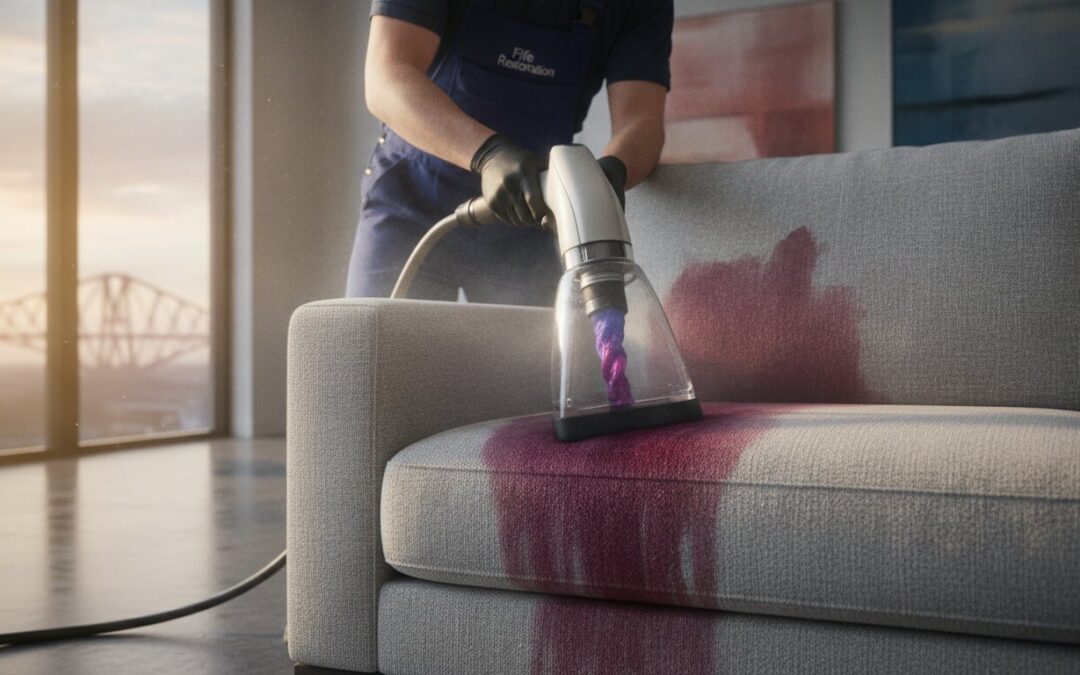
The moment a glass of vintage red meets your bespoke upholstery, the silence in the room becomes heavy with a very specific kind of anxiety. A red wine stain on your sofa in Fife isn’t just a spill; it’s a sudden threat to a significant investment and the harmony of your home sanctuary. You’ve likely encountered the conflicting noise of DIY advice, from salt applications to vinegar soaks, yet the fear of leaving a permanent ghost ring or scarring the delicate fabric texture remains a valid concern.
We understand that your furniture is an essential part of your private environment, requiring more than just a cursory clean. This guide reveals how to achieve flawless crimson pigment removal while protecting the integrity and colour of your premium materials. We’ll explore the forensic nature of professional extraction and why bespoke restoration techniques are the only way to ensure your investment is preserved. By the end, you’ll have total peace of mind that even the most daunting spill can be transformed back into a pristine surface through expert stewardship.
Key Takeaways
- Act within the critical 60-minute “Golden Hour” to prevent tannins from permanently bonding with your upholstery fibres.
- Understand why common household “hacks” like salt and white wine often act as dye-fixatives rather than effective cleaners.
- Learn the essential blotting techniques to manage a red wine stain on sofa fife without spreading the pigment or damaging the delicate weave.
- Identify your furniture’s specific cleaning codes to ensure any immediate first aid respects the material’s unique requirements.
- Discover how industrial-grade extraction restores your investment by removing deep-seated pigments that manual DIY methods cannot reach.
The ‘Golden Hour’ of Red Wine Spills on Luxury Upholstery
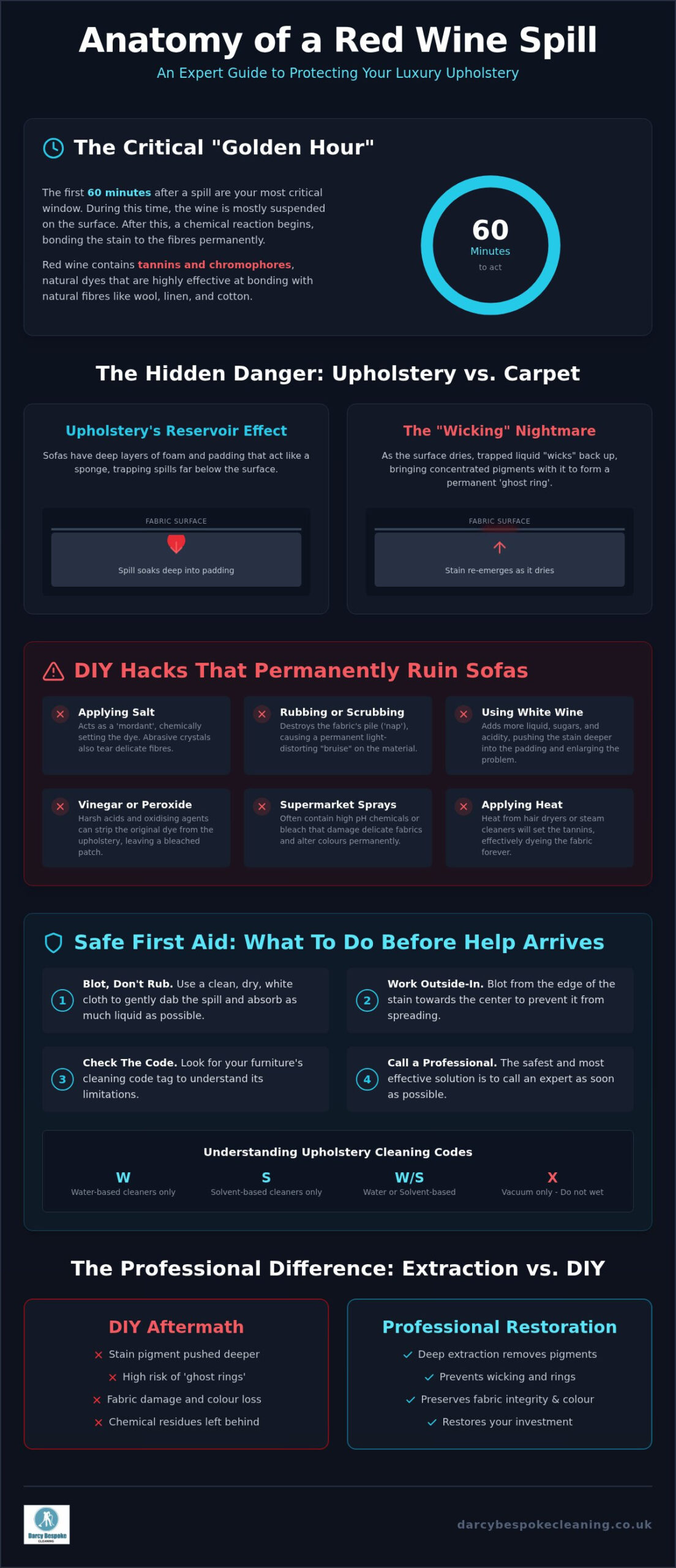
The first sixty minutes following a spill represent the most critical window for your furniture’s survival. In the professional cleaning industry, we call this the ‘Golden Hour’. During this brief period, the liquid remains suspended on the surface or within the upper layers of the weave. Once this window closes, the complex organic compounds in the wine begin to undergo a chemical transition, moving from a superficial spill to a structural part of the fabric.
When you face a red wine stain on sofa fife, the initial impulse is often panic. However, shifting from a reactive state to a structured restoration plan is essential for a successful outcome. Understanding the science behind the spill helps replace anxiety with a methodical approach. Red wine is essentially a natural dye, comprised of chromophores and tannins that are remarkably efficient at altering the appearance of textiles. While general stain removal principles apply to many household spills, red wine requires a more nuanced understanding of fibre chemistry.
Why Red Wine Acts as a Permanent Dye
The permanence of a wine stain is driven by the bonding of tannins. Tannins are polyphenolic compounds that naturally occur in grape skins and seeds, possessing a high affinity for bonding with natural protein and cellulose fibres such as wool and linen. As the wine evaporates, the concentration of these tannins increases, and the pH levels shift. This shift facilitates a stronger ionic bond between the pigment and the fibre. If heat is applied, or if the spill is left to dry completely, the pigment ‘sets’, effectively dyeing the sofa.
Upholstery vs. Carpet: The Hidden Danger
Many homeowners assume that a sofa is simply a carpet on legs, but the internal structure makes it far more vulnerable. While a carpet sits on a relatively thin underlay, a sofa contains deep layers of foam, polyester wrap, or even feather padding. These materials act like a reservoir. When wine is spilled, it doesn’t just sit on the fabric; it seeps into the interior.
This leads to ‘wicking’, a phenomenon where the liquid trapped in the padding slowly travels back up to the surface as the top layer dries. You might think you’ve cleared the mark, only for a dark ‘ghost ring’ to emerge forty-eight hours later. These rings are often more difficult to treat than the initial spill because they consist of concentrated pigments that have been pulled from the depths of the furniture.
Why Common DIY Hacks Often Ruin Fife Sofas
In the immediate aftermath of a spill, the internet offers a plethora of quick fixes. While these suggestions are often well-intentioned, they frequently result in permanent damage to high-end upholstery. When dealing with a red wine stain on sofa fife, the goal is extraction, not chemical alteration. Many common “hacks” actually facilitate the bonding process we discussed in the previous section, making professional restoration significantly more complex.
The white wine fallacy is perhaps the most pervasive. Adding white wine to a red wine spill simply introduces more liquid, acidity, and sugars into the fabric. This increases the volume of the spill, pushing the crimson pigment deeper into the internal padding and expanding the potential “wicking” area. Similarly, supermarket-grade sprays often contain high pH levels or bleaching agents. These chemicals might remove the colour, but they often do so by stripping the original dye from the bespoke fabric, leaving a permanent pale patch that no amount of cleaning can rectify.
Physical action is equally dangerous. Friction is the enemy of premium textiles. Rubbing the fabric with a cloth or brush destroys the “nap” or pile of the upholstery. Once these fibres are distorted or broken, the way they reflect light changes forever, creating a visible “bruise” on the sofa even if the pigment is eventually removed.
The Mordant Effect: How Salt Sets the Stain
Salt is widely recommended as an absorbent, yet its chemical role in textile history is that of a mordant. A mordant is a substance used to set dyes on fabrics. By applying sodium chloride to a fresh spill, you may inadvertently help the tannins bond to the fibres. On delicate materials like silk or viscose blends, salt crystals are also highly abrasive. They can lacerate the fine threads as you attempt to clear the area, causing structural weakening. The risk of a permanent red wine stain on sofa fife becomes much higher when these crystals are scrubbed into the weave. While some step-by-step red wine stain removal guides suggest household absorbents, the risk of “setting” the dye often outweighs the benefits for luxury items.
The Peroxide and Vinegar Risk
Acids like vinegar or oxidising agents like hydrogen peroxide are frequently touted as miracle cleaners. However, these substances can cause irreversible colour loss or “bleeding” in natural fibres. Uneven application often results in permanent “rings” where the solution has reacted differently with the fabric’s original dyes. To preserve the integrity of your furniture, it’s often safer to consult an Expert Stain Removal Service in Fife rather than risking a home remedy that might necessitate a full reupholstery.
Identifying Your Fabric: A Guide for Fife Homeowners
Before you reach for any cleaning agent, you must understand the DNA of your upholstery. Every red wine stain on sofa fife presents a unique challenge based entirely on the fabric’s composition. In the refined homes of St Andrews and coastal Fife, we frequently encounter premium natural fibres like wool, linen, and cotton. While these materials offer unparalleled breathability and aesthetic appeal, they are notoriously ‘stain-hungry’. Their porous nature means they drink in liquids, pulling the crimson pigment deep into the core of the fibre where it can bond permanently.
To begin your assessment, locate the care tag, usually tucked under the seat cushions or behind the frame. This label contains the ‘Cleaning Code’, a universal shorthand that dictates how the material should be handled. Interpreting this correctly is the difference between a successful recovery and a ruined piece of furniture:
- W: Safe for water-based cleaning agents.
- S: Solvent-based cleaning only (professional dry clean).
- WS: Suitable for either water or solvent-based methods.
- X: Professional vacuuming only; any liquid application risks permanent damage.
Natural Fibres: The High-Stakes Category
Wool and linen are particularly sensitive to moisture and pH changes. These organic materials are prone to fibre shrinkage or structural distortion if you saturate them with incorrect DIY solutions. If you apply excessive water to a linen sofa, you risk permanent ‘water-marking’. This is especially prevalent on viscose blends or velvet-effect fabrics, where the moisture collapses the pile and leaves unsightly brownish rings. Professional pH-neutral steam extraction is the only safe way to manage these sensitive weaves without compromising their structural integrity.
Synthetics and Blends: The Deceptive Safety
Polyester, nylon, and acrylic blends might seem more resilient, but they carry their own specific risks. While they are less absorbent than wool, they are prone to oil-based ‘shadows’ and can be easily damaged by heat. A common mistake is using a domestic ‘steam’ cleaner to tackle a red wine stain on sofa fife. High temperatures can actually melt synthetic micro-fibres, causing a permanent change in texture that feels rough or ‘crunchy’ to the touch. Even bespoke blends, which mix natural and synthetic threads to achieve a specific look, require specialist hand-tool care to ensure the tension of the weave remains uniform and the colour stays true.
Safe First Aid: What to Do Before the Professional Arrives
The actions you take in the first five minutes after a spill determine whether the fabric can be fully restored or if it will suffer permanent damage. While we have already established the dangers of DIY “hacks” like salt or vinegar, a structured first-aid approach is essential to stabilise the area. Managing a red wine stain on sofa fife requires a delicate touch and a focus on containment rather than aggressive cleaning.
Your goal is to remove as much pigment as possible while the wine is still in its liquid state. Follow this professional protocol to protect your investment:
- Step 1: Immediately blot the area using a clean, white, lint-free cloth. White towels are vital to ensure no dye from the cloth transfers onto your upholstery.
- Step 2: Always work from the outside of the spill toward the centre. This prevents the “bloom” of the wine from spreading into unaffected fibres.
- Step 3: Apply firm, gentle downward pressure. Avoid any lateral movement or rubbing, as friction will distort the pile and push the wine deeper into the padding.
- Step 4: If the stain is particularly stubborn, you may use a very small amount of cool, pH-neutral sparkling water to help lift the tannins. Do not saturate the fabric.
- Step 5: Contact a specialist for professional extraction while the area is still damp. A “set” stain is significantly harder to remove than one that is still moist.
The Art of the Blot
Precision is more effective than pressure. By placing a stack of dry white towels over the spill and applying steady weight, you utilise wicking to your advantage. The liquid naturally migrates from the damp upholstery into the drier, more absorbent towel. You must avoid using coloured napkins or patterned kitchen roll; the dyes and inks in these products often dissolve upon contact with wine, creating a secondary stain that is often impossible to remove. For more guidance on protecting your home’s interior, read our Expert Carpet Care Tips.
Maintaining the Environment
Once you have blotted the excess liquid, do not attempt to speed up the drying process. Never use a hair dryer or place the furniture in direct sunlight. Excessive heat “bakes” the tannins into the natural fibres, effectively setting the dye. Keep the room at a steady, moderate temperature to allow for controlled evaporation. If the spill has reached the internal padding, seek a professional sofa cleaning service immediately to perform a deep extraction before the wine begins to sour or permanent wicking occurs.
The Darcy Bespoke Method: Why Professional Extraction is Essential
While the first-aid steps outlined previously provide a vital stop-gap, they cannot address the liquid that has inevitably migrated into the internal layers of your furniture. A red wine stain on sofa fife requires a forensic level of extraction to ensure the crimson pigment is fully removed rather than just diluted. Our approach moves beyond surface cleaning, treating your upholstery with the same level of stewardship we apply to the finest environments in the region.
The core of our restoration process relies on industrial-grade technology that domestic machines simply cannot replicate. We utilise the Alltec Advance 600, which provides 600psi of vacuum pressure. This power is essential for reaching into the deep foam or feather padding where wine often hides, preventing the wicking issues discussed in our earlier sections. To ensure the fibres are thoroughly cleansed without damage, we employ Rotovac 360i technology. This system uses precise mechanical agitation to lift pigments from deep within the weave, restoring the fabric’s original vibrancy while maintaining its structural integrity.
Local environmental factors also play a significant role in our methodology. Fife is known for its hard water, which can leave behind mineral residues that make fibres feel stiff or ‘crunchy’ after cleaning. We use integrated water softeners to ensure every drop of moisture is pure, leaving your sofa as soft as the day it was delivered. This attention to detail is backed by our 100% satisfaction guarantee, reflecting our commitment to the harmony of your home sanctuary.
Forensic Stain Removal in Fife
Every restoration begins with a pH test of the affected area. Since red wine is acidic, we must select a precisely balanced counter-agent to neutralise the tannins before extraction begins. We only use solutions that are GB MCL-compliant, pet-safe, and eco-friendly, ensuring your living space remains healthy and chemical-free. Given our coastal humidity, we also employ high-velocity air movers to manage drying times, preventing the musty odours that can occur when natural fibres remain damp for too long.
Restoring the Harmony of Your Home
The final stage of our service is dedicated to the ‘hand’ or feel of the fabric. Through post-clean grooming, we align the pile and restore the original texture of the upholstery. For those seeking long-term peace of mind, we offer a Fabric Protection treatment. This breathable barrier prevents future spills from soaking into the fibres, giving you more time to react during that critical ‘Golden Hour’. Your furniture is an investment in your lifestyle, and it deserves the highest standard of care. Book your bespoke sofa restoration in Fife today and let us return your home to its pristine state.
Securing the Future of Your Premium Upholstery
A red wine stain on sofa fife doesn’t have to signal the end of your furniture’s elegance. By respecting the critical Golden Hour and avoiding the abrasive pitfalls of common DIY myths, you’ve already taken the first steps toward a successful recovery. True restoration, however, lies in the meticulous extraction of pigments from deep within the fibres; this is a task that requires specialized stewardship rather than mere surface cleaning.
As a family-run Fife specialist, we understand that your home is a sanctuary. We utilize industrial-grade Alltec Advance 600 technology to ensure every trace of tannin is removed without compromising the integrity of your bespoke fabrics. Our commitment to excellence is reflected in our 100% satisfaction guarantee, providing you with the peace of mind that your investment is in expert hands. Don’t leave the beauty of your living space to chance. Request a Bespoke Quote for Sofa Restoration today and restore the harmony of your home with quiet confidence. Your upholstery deserves nothing less than a professional touch to return it to its pristine state.
Frequently Asked Questions
Can you get a red wine stain out of a sofa if it has already dried?
Yes, dried stains can be removed, though they require a more intensive forensic approach. Once a red wine stain on sofa fife has dried, the tannins form a chemical bond with the upholstery fibres. We use specialized pH-neutral agents to break these bonds before employing high-powered extraction. This process lifts the crimson pigment from the weave without the risk of fabric distortion often associated with aggressive DIY scrubbing.
Is it true that white wine removes red wine stains from upholstery?
No, white wine is not an effective treatment and often complicates the restoration process. Introducing more liquid and sugar to the spill pushes the red pigment deeper into the sofa’s internal padding. This expansion increases the risk of wicking and can lead to larger, more stubborn marks. It is always safer to blot the area with a dry, white towel and seek professional extraction to protect the fabric.
Will professional cleaning cause my sofa fabric to shrink?
Professional cleaning will not cause shrinkage when performed by an expert who understands fibre tension. We carefully examine the cleaning code on your furniture’s tag to determine the appropriate moisture levels and temperature. By using controlled, low-moisture techniques and industrial air movers, we ensure your bespoke sofa maintains its original shape and structural harmony throughout the restoration process. Your investment remains protected through our methodical and respectful approach.
How much does professional red wine stain removal cost in Fife?
The investment for professional care in Fife reflects the specialized machinery and expertise required for a successful restoration. While basic services might offer lower entry points, they often lack the extraction power needed for a red wine stain on sofa fife. We provide bespoke quotes tailored to your specific fabric type and the extent of the spill. This ensures the most effective treatment for your unique home environment.
Can I use salt to stop a red wine stain from spreading on my sofa?
You should never use salt on your upholstery as it can permanently set the stain. In textile chemistry, salt acts as a mordant, which helps dyes bond to fibres. Additionally, salt crystals are abrasive and can lacerate delicate threads in silk or linen blends. The safest immediate response is to blot the spill with a clean, white, lint-free cloth using gentle downward pressure to contain the liquid.
How long does it take for a sofa to dry after professional stain removal?
Most upholstery is touch-dry within 4 to 12 hours depending on the material and room humidity. Fife’s coastal environment can sometimes slow natural evaporation, so we utilize high-velocity air movers to accelerate the process. We recommend keeping the room well-ventilated and avoiding use of the furniture until the fibres are completely dry to the touch. This ensures a flawless finish and prevents any secondary texture issues.
What should I do if a ‘ghost ring’ appears after I tried to clean it myself?
A ghost ring suggests that either the pigment or cleaning residue has wicked back to the surface from the padding. This is a common result of DIY attempts that involve too much liquid. To resolve this, we perform a deep extraction using the Alltec Advance 600. This machine pulls the trapped moisture and tannins out from the depths of the furniture, leaving the surface pristine and uniform once more.
Are the cleaning chemicals you use safe for pets and children?
Every solution we employ is GB MCL-compliant, eco-friendly, and entirely safe for both children and pets. We view ourselves as custodians of your home sanctuary, ensuring that our stain removal treatments are as gentle on your family as they are effective against spills. You can enjoy your restored living space immediately after drying with total peace of mind regarding the health and safety of your private environment.